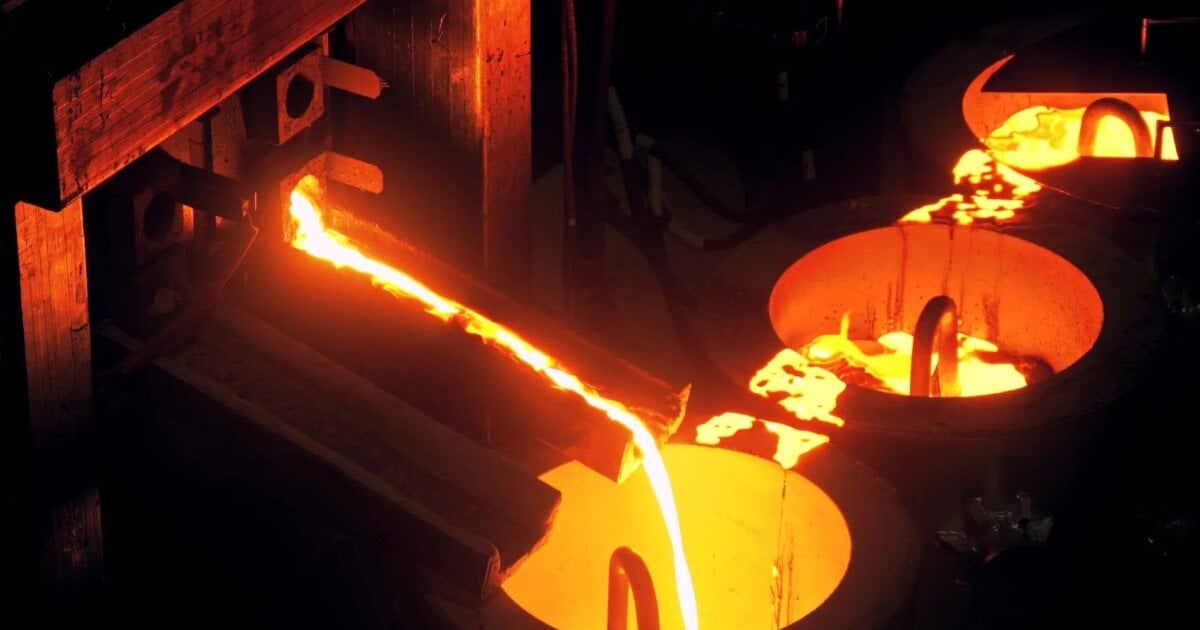
Green steel plant glugs out first ton of molten metal | With clean electricity, the process could make steel with zero CO2 emissions.
https://newatlas.com/energy/green-steel-plant-boston-metal/

Green steel plant glugs out first ton of molten metal | With clean electricity, the process could make steel with zero CO2 emissions.
https://newatlas.com/energy/green-steel-plant-boston-metal/
2 Comments
From the article: MIT spinout Boston Metal has powered up its electricity driven steel production reactor and made over a ton of metal in a crucial step toward commercializing its process. With clean electricity, the process could make steel with zero CO2 emissions.
According to the World Steel Association, steel production releases almost twice its weight in carbon dioxide (CO2) pollution. Specifically, it says, for every one metric tonne of the metal produced, 1.92 metric tonnes of the greenhouse gas is released. That accounts for between seven and nine percent of global CO2 emissions.
This is because in the ore found in nature, iron is bound to oxygen, creating iron oxide, more commonly known as rust. To begin its journey into steel, the ore is placed into blast furnaces where a type of coal known as coke is burned. Carbon monoxide from the burning coke combines with the oxygen to strip it away, purifying the iron for use as steel but also forming the planet warming greenhouse gas, carbon dioxide.
Joining other efforts to decarbonize the steel-production process such as those using hydrogen to refine iron ore, Boston Metal has pioneered a process known as molten oxide electrolysis (MOE).
This method of producing the metal involves combining iron ore with an electrolyte in a reactor and then using electricity instead of coke to heat the mix to about 1,600 °C (2,900 °F). Doing so causes electrons to split the bonds in the iron ore to purify it while outputting only oxygen. Not a single molecule of carbon dioxide is released during the process.
If the electricity that drives the reaction is provided via a clean method such as wind or solar, then the molten metal that results would be completely carbon neutral.
Um, Stegra in Sweden is currently building a full scale green steel plant in Boden powered by Hydrogen.