
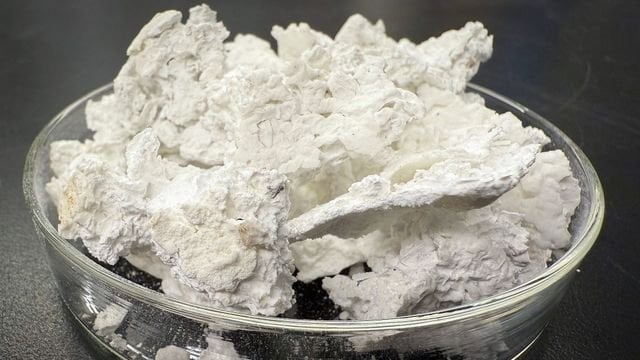
Researchers have successfully developed a new carbon-negative material using seawater, electricity and CO2. The material can store half its weight in trapped CO2 and can be used as a replacement for sand in the production of concrete, or in certain plasters and paints.
https://www.technologynetworks.com/tn/news/carbon-negative-building-material-made-from-seawater-and-co2-397532
2 Comments
Researchers have successfully developed a new carbon-negative material using seawater, electricity and carbon dioxide (CO2).
The material – a mineral precipitate formed during a modified seawater splitting process – can store half its weight in trapped CO2 and can be used as a replacement for sand in the production of concrete, or in certain plasters and paints.
The research, published in the journal Advanced Sustainable Systems, also found that altering the applied voltage, current and CO2 injection rate during the precipitation process can tailor the properties of such minerals.
This extra CO2 becomes effectively “trapped” as it interacts with the ions present in seawater – the formation of CaCO3 acts directly as a carbon sink, while the Mg(OH)2 produced can also sequester some carbon through additional interactions.
The researchers believe that this material, in addition to simply acting as a carbon sink, could also be used as a component in construction materials without compromising on their strength.
“The precipitated minerals can be utilized in the production of various cements, such as magnesium-based cements, as well as plasters and paints,” Rotta Loria said. “Additionally, these minerals can be cultivated as large-scale aggregates for use in concrete manufacturing.”
Producing enough cement to meet demand while also reducing emissions in line with a “Net Zero by 2050” target has already been identified as a particular challenge by the International Energy Agency, with current emissions figures remaining stubbornly high despite the required 4% annual reduction needed to meet that goal. Using carbon-negative materials in the production of cement and concrete could help to improve the footprint of this industry.
But what happens when its used on a huge scale and the temp goes up 1°C?