
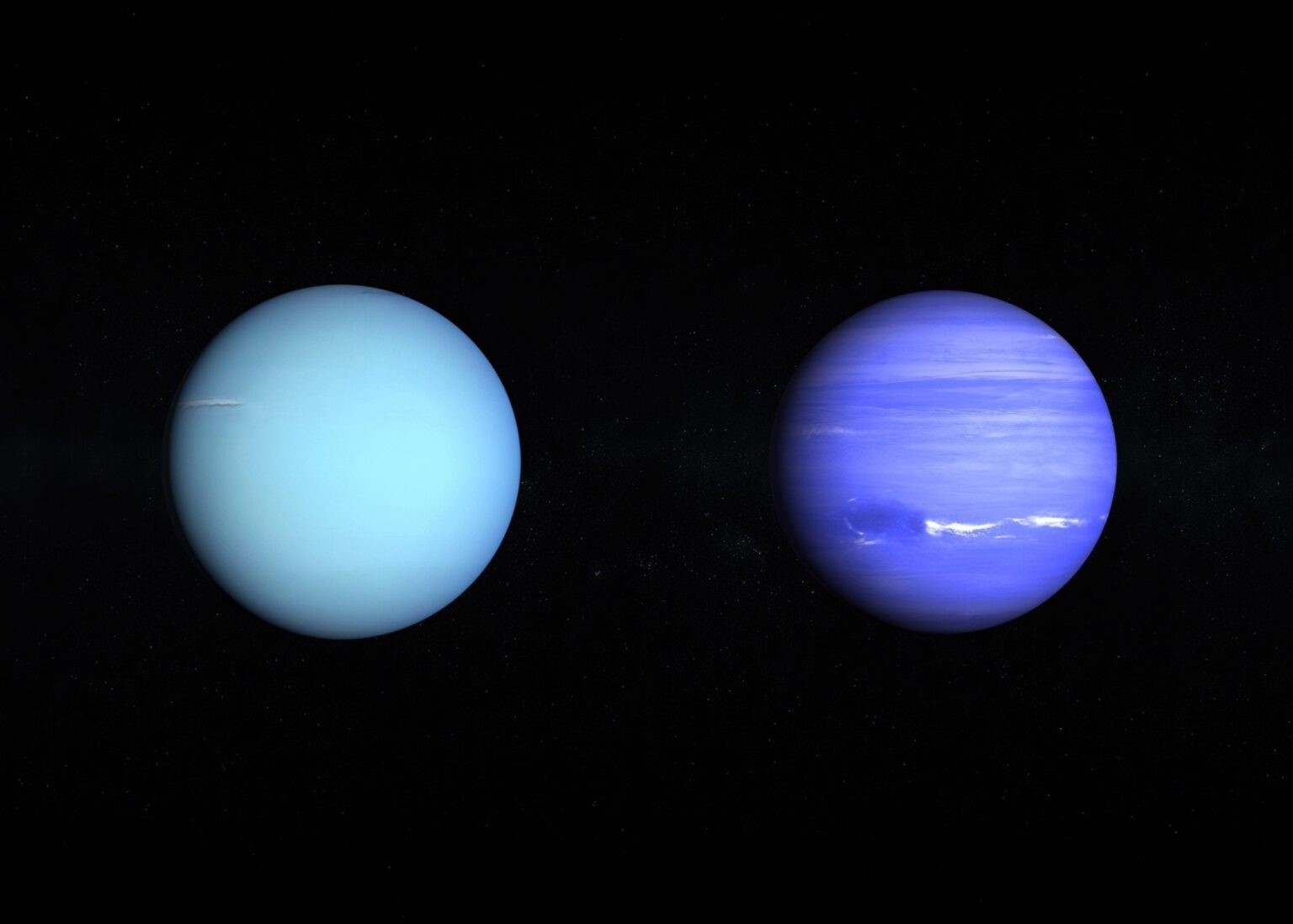
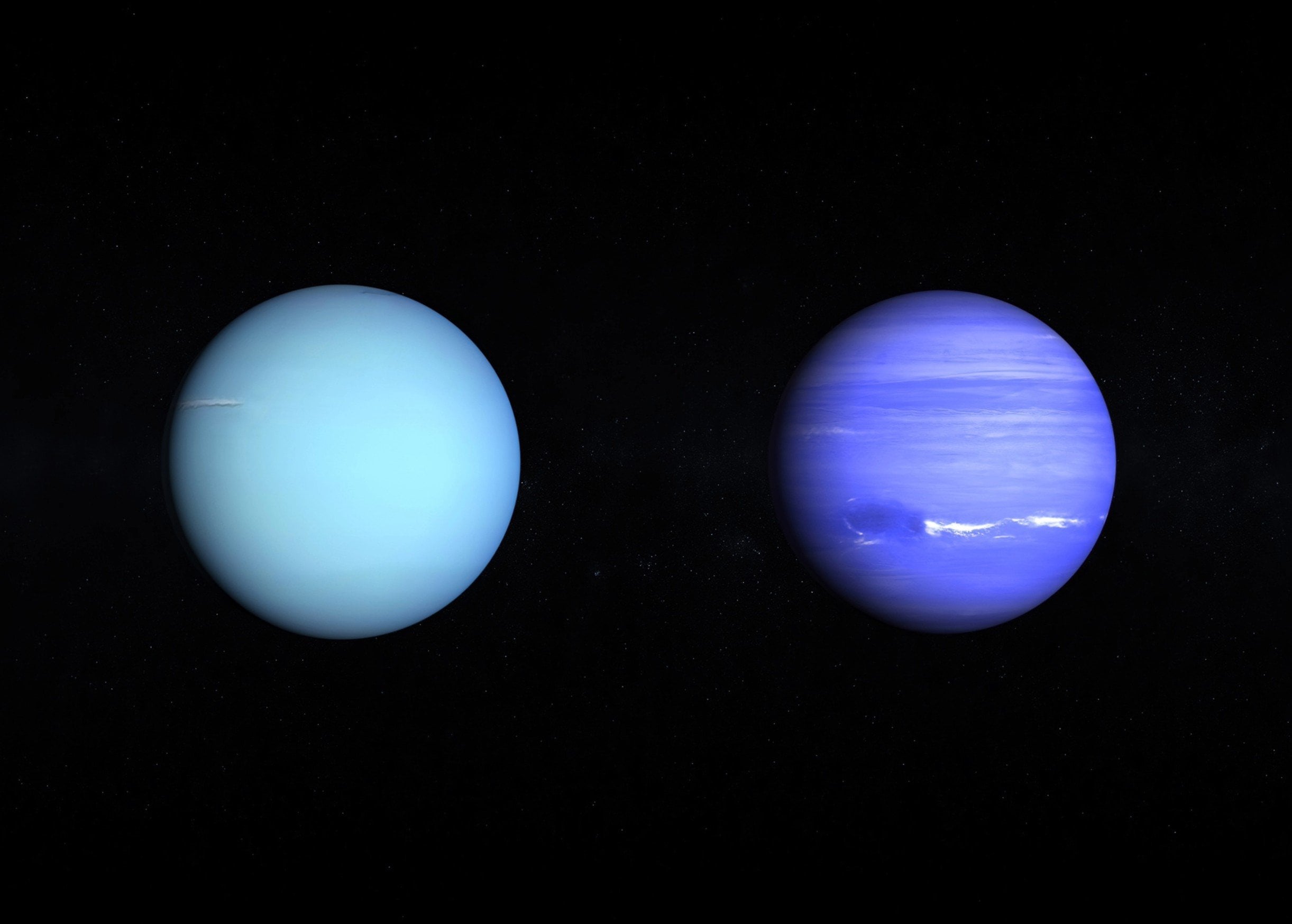
Burkhard Militzer, a professor of Earth and planetary science at the University of California, Berkeley, has put forth a model that challenges older notions and draws on the principles of immiscibility – when substances refuse to mix, like oil and water.
Militzer believes that under the extreme conditions found in the deep layers of these planets, ingredients such as water (H₂O), methane (CH₄), and ammonia (NH₃) behave in unexpected ways.
“We now have, I would say, a good theory about why Uranus and Neptune have really different fields, and it’s very different from Earth, Jupiter, and Saturn,” Militzer explained. …
His findings also align with magnetic field readings collected by NASA’s Voyager 2 in the 1980s. Instead of a tidy, dipolar field like Earth’s, Uranus and Neptune show disorganized magnetic fields. …
The full study was published in the journal Proceedings of the National Academy of Sciences.
https://www.earth.com/news/claim-uranus-and-neptune-have-oceans-5000-miles-deep/
2 Comments
I’m a bit ignorant: does this mean *liquid* oceans like on earth? Or something else?
Please tell me there is a plan to send something to these oceans!!!