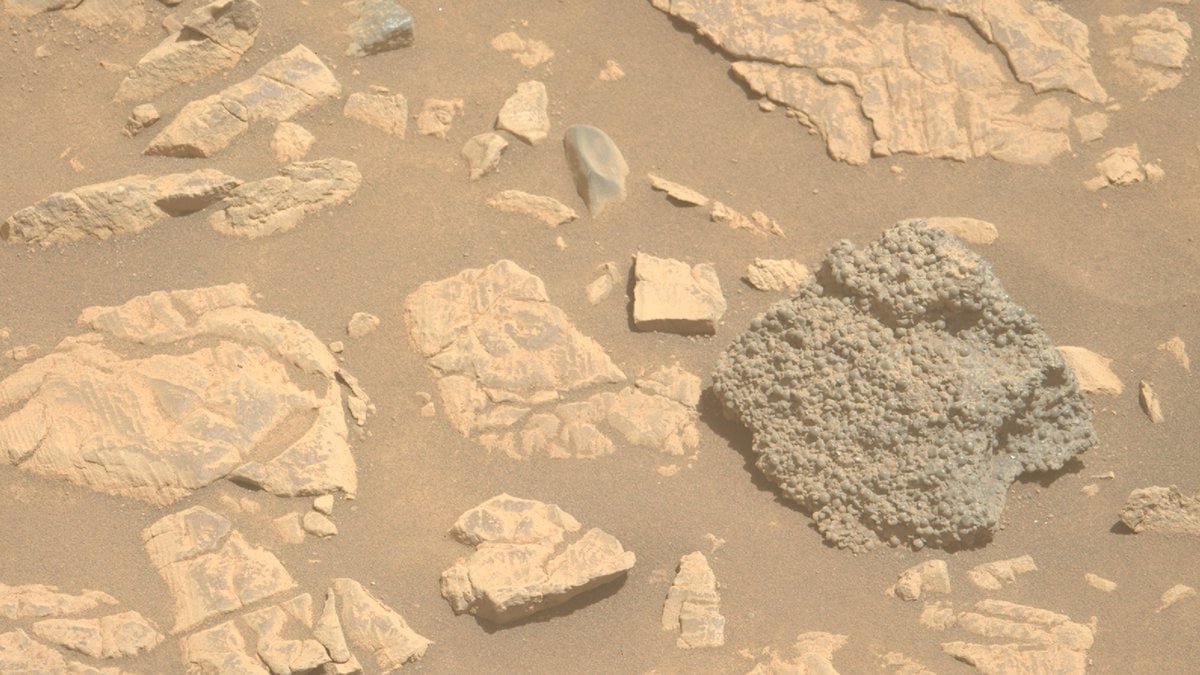
Strange sphere-studded rock on Mars found by NASA’s Perseverance rover
https://www.space.com/space-exploration/mars-rovers/strange-sphere-studded-rock-on-mars-found-by-nasas-perseverance-rover

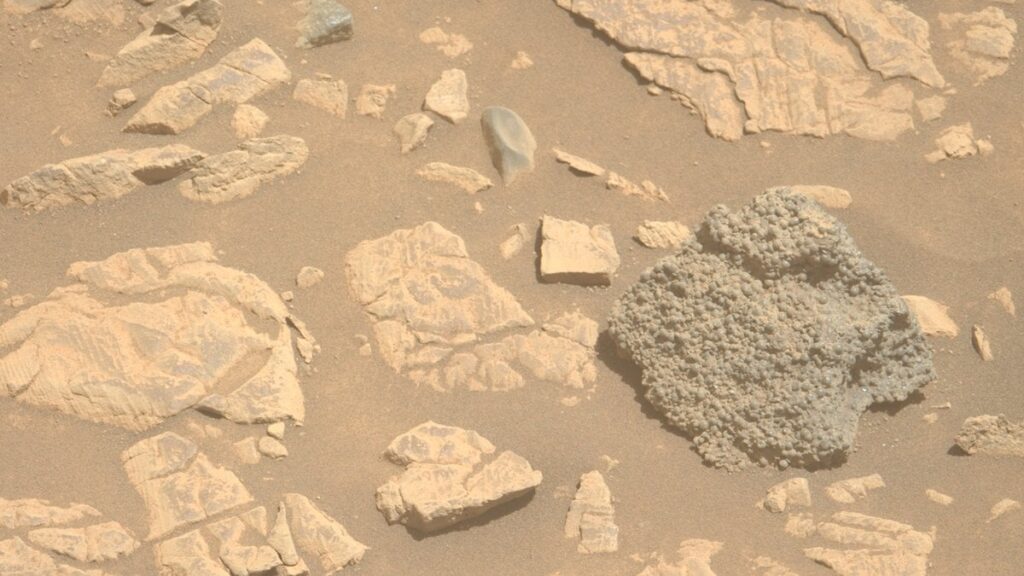
Strange sphere-studded rock on Mars found by NASA’s Perseverance rover
https://www.space.com/space-exploration/mars-rovers/strange-sphere-studded-rock-on-mars-found-by-nasas-perseverance-rover
11 Comments
The St. Pauls Bay rock is located on the slopes of the Witch Hazel Hill area, a scientifically significant rocky outcrop spanning more than 330 feet (101 meters), with each of its rock layers acting like a page in the book of Mars’ history. According to the statement about the new sphere-studded specimen, however, this rock may have floated in from elsewhere.
Scoop it up & bring it back to earth. Then stick your whole face close to it. Closer, closer…
Looks very similar to oolitic limestone which, funny enough, are formed by microbes. 🦠
There is a layer of rocks that look similar to this around antelope canyon in Arizona. Iys also around the horseshoe bend overlook.
It really looks like Uraninite, or pitchblend, we find here on earth. Are there other minerals that look like Uraninite here on earth? Not saying it’s Uraninite but it’s just interesting how similar it looks.
It’s a Trojan rock, studded for your pleasure.
Looks very similar to the hematite concretions (the blueberries) that the Opportunity rover found in abundance.
I’m generally delighted that a lot of our space exploration just boils down to “finding cool rocks.”
A pastime that is incredibly relatable to most humans
I remember seeing this circulated a few weeks back or so.
If I recall, a dominant theory was that it was a result of volcanic processes.
Gases get dissolved in magma, then as the resultant lava is made to cool rapidly, the gases precipitate out and start forming bubbles that themselves solidify. Basically the same process as pumice.
That’s an unrefined beryllium sphere. Really useful for thermians.
[Botryoidal Habit](https://en.wikipedia.org/wiki/Botryoidal)