
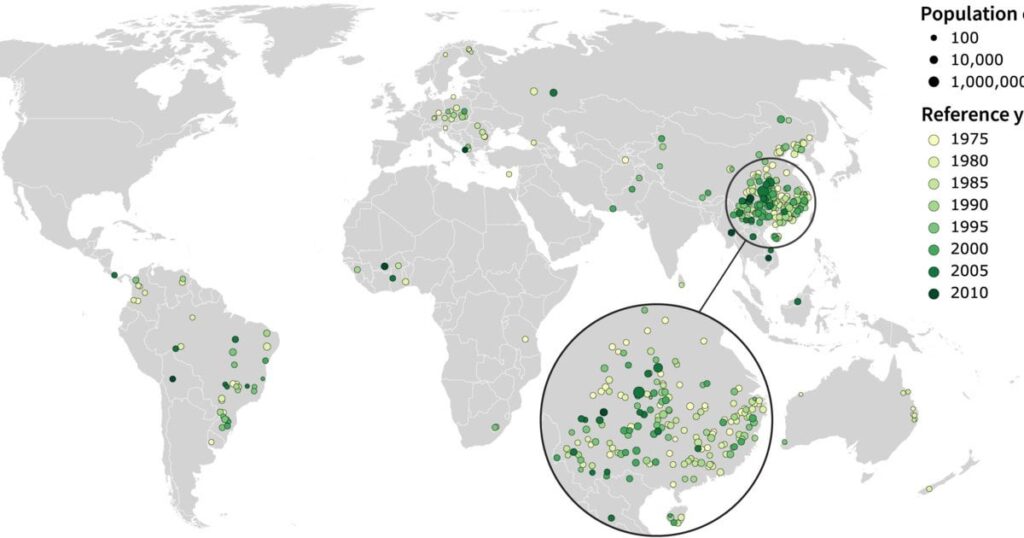
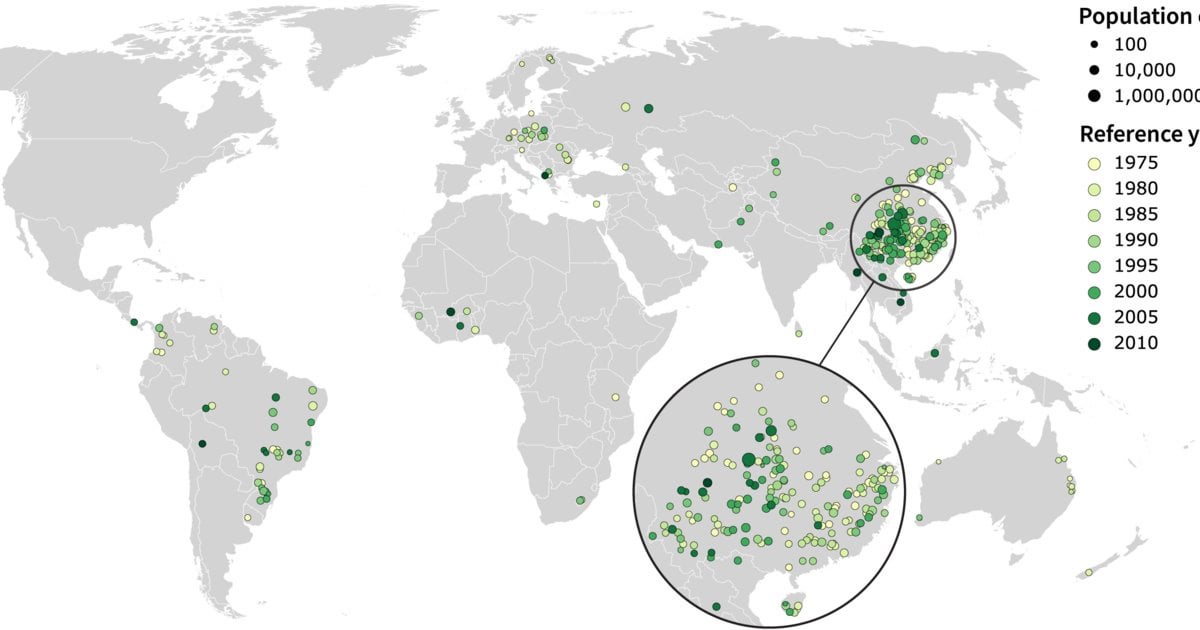
A new study from Aalto University suggests that current global population datasets might be drastically undercounting rural populations—by as much as 53% to 84%!
Most global demographic estimates rely on satellite imagery, census data, and machine learning models, but this research highlights how these methods can overlook sparsely populated areas. Factors like poor infrastructure, limited access to census-taking, and outdated mapping techniques could be causing massive blind spots in population data.
This has huge implications:
Resource allocation – Governments and NGOs might be underfunding healthcare, education, and infrastructure in rural areas.
Urbanization trends – If rural numbers are this off, are we overestimating global urbanization?
Climate and sustainability planning – Many policies assume population distributions that may not reflect reality.
If these findings hold, we might need a major rethink of how we track population data worldwide. What do you think—how could we improve rural population tracking?
Posted by Economy-Title4694
7 Comments
Geez, is it so hard to give a numerical estimate of the actual population in such a fluffy article?
Censuses confuse me. I saw a lady on Tiktok who was showing off her 4 passports. Does that mean she was counted 4 times? If that was true then the world population is way off.
I feel like the effects of this difference should be minimal because *population* is not a wise way to fund most things.
Resource allocation, pretty obviously the most undercounted areas are also the poorest so the government likely doesn’t have the money to be doing much anyway. It may affect how NGOs do things, but the list of things NGOs fund simply based on population data should be relatively low. Shouldn’t Doctors Without Borders be deciding where to expand access mostly based upon who’s showing up at the existing clinics? The Red Cross should be sending food when the food runs out, not based off population numbers.
Urbanization, this effect is probably pretty small, population estimates are just a data thing & data’s easier to come by when people are concentrated. Seeing how much food goes into an urban area is a pretty easy metric for population, that wouldn’t work in rural areas because the people could be growing their own food & hunting/foraging, but that’s not happening at large scale in a city.
Climate & Sustainability Planning, is very much being done on this currently? Isn’t the whole thing with climate change that we’re just not sure what happens at a macro level when the climate changes? Other variables will wind up affecting the climate as much or more than climate change. In many cases, it seems like the best answer will be to move people from this rural area to that rural area, sometimes we can mitigate but most of the time it’s going to be cheaper to move the people to the other side of that mountain or whatever. Again, you would move them when they can’t grow enough food or whatever.
On the one hand it feels a bit crazy to say getting something as basic as population wrong has minimal effects, but if it’s having large effects, I also think we’re not doing a good job of funding whatever we’re funding & that would be the bigger story.
Hello bot, how are you doing this morning? 1’s and 0’s treating you well?
Original projections assumed linear trends, but social factors like women’s education access have exponential impacts.
User is submitting AI junk, look at the submission history of OP please please please
This is the stupidest article I have seen this year. Considering the tight control in China, I am pretty sure Xi knows his population count down to the nearest thousand