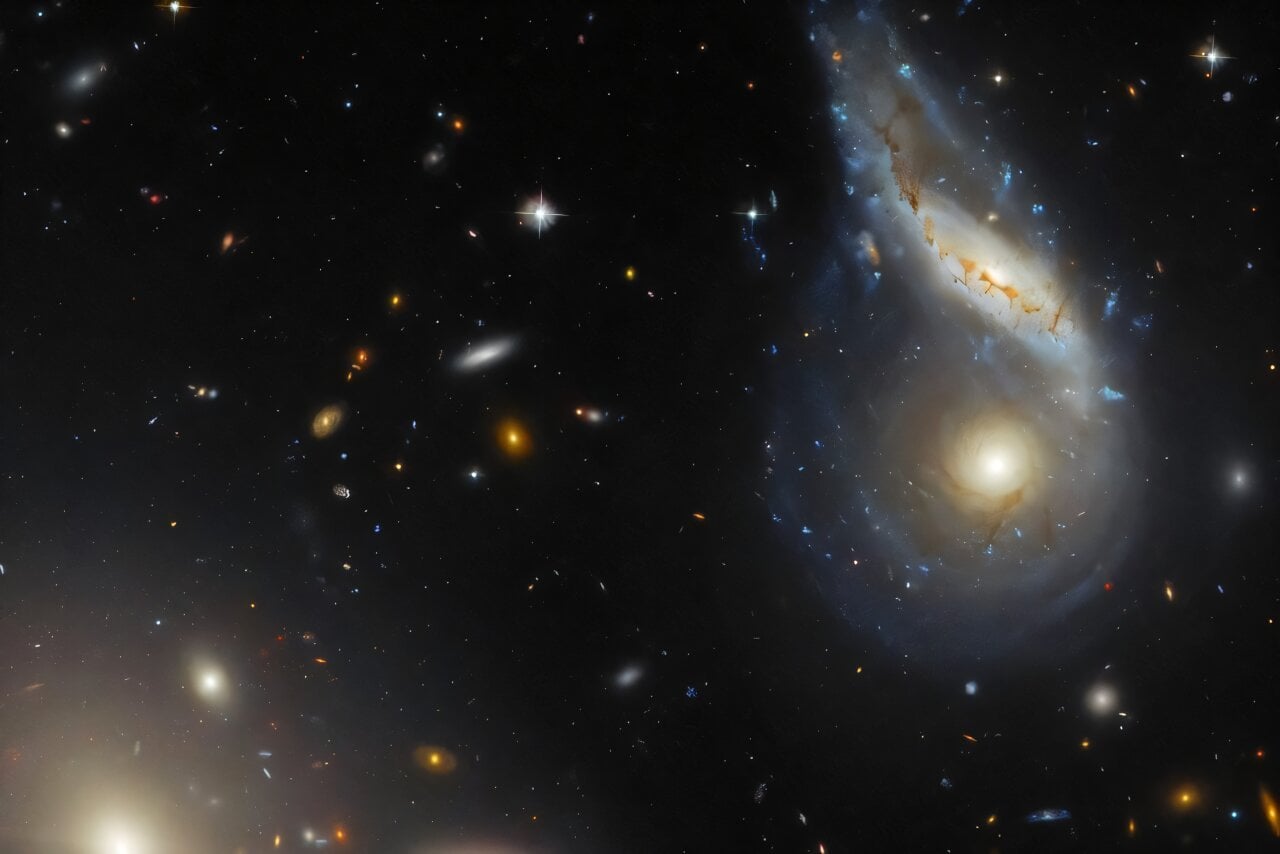
Astronomer proposes entirely new category of galaxy
https://www.newsweek.com/space-astronomy-galaxies-red-blue-post-starburst-2058525

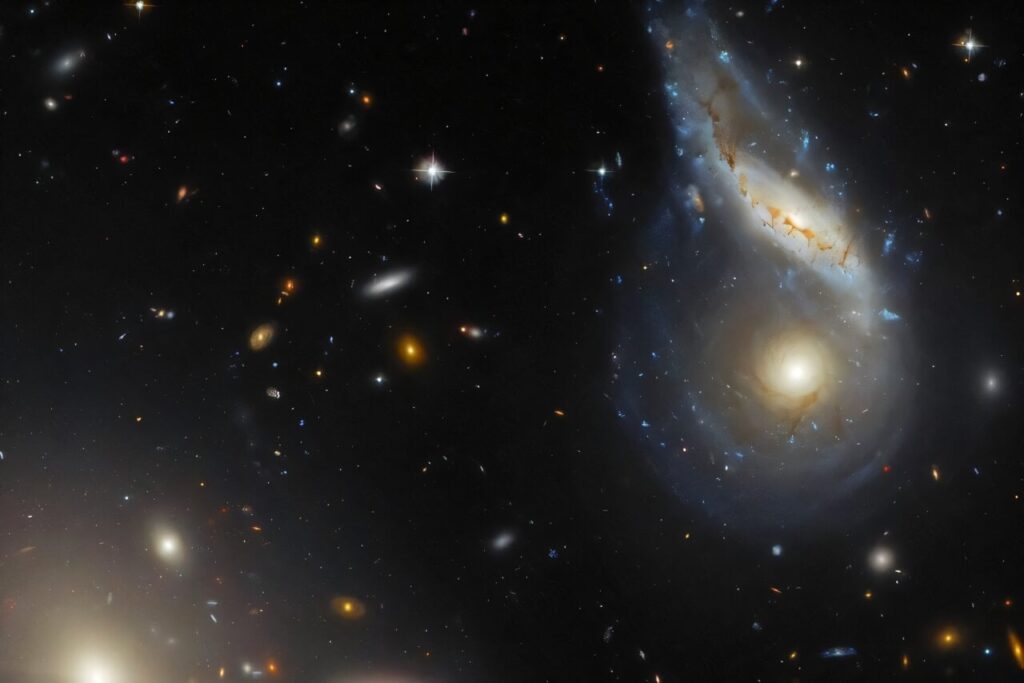
Astronomer proposes entirely new category of galaxy
https://www.newsweek.com/space-astronomy-galaxies-red-blue-post-starburst-2058525
4 Comments
By Ian Randall – Deputy Science Editor:
Despite appearing “dead”—i.e., forming no new stars—some red galaxies may secretly be alive, quietly birthing small stars under our noses.
This is the conclusion of astronomy professor Charles Steinhardt of the University of Missouri, who has said these red galaxies could have played a much larger role in the history of the universe than we realized.
Read more: [https://www.newsweek.com/space-astronomy-galaxies-red-blue-post-starburst-2058525](https://www.newsweek.com/space-astronomy-galaxies-red-blue-post-starburst-2058525)
Post Starburst galaxies? I didn’t even know there was such a category. I do wonder if red stars are being formed (albeit slowly) what is their purpose in the universe? I still can’t believe how much we don’t know about what’s out there.
This is pretty cool, thanks for sharing! Sounds like the premise for a whole genre of dystopian sci-fi stories!
The paper: https://iopscience.iop.org/article/10.3847/1538-4357/adb95b
Quick summary: traditionally astronomers have used galaxy color as a proxy for star formation activity. Young, massive stars tend to be blue, and also short-lived, their presence indicates recent star formation activity. However, it’s also theoretically possible for dwarf stars which are redder and much longer lived to have been formed recently, and this is what the authors believe is actually a much more common phenomenon than has been understood previously.