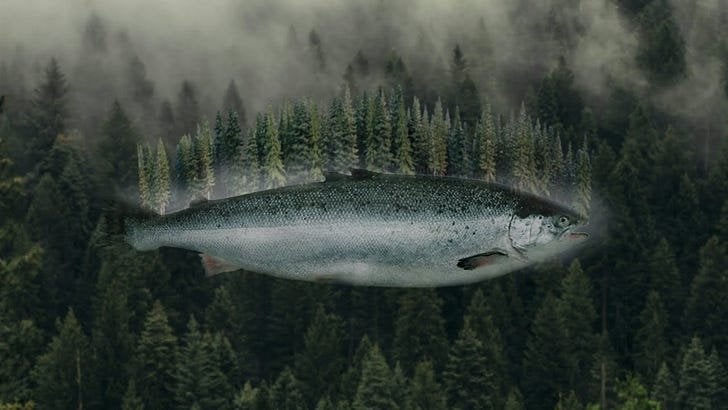
Salmon, Climate, and Generational Memory Loss
https://offtherails1828.substack.com/p/salmon-climate-and-generational-memory

Salmon, Climate, and Generational Memory Loss
https://offtherails1828.substack.com/p/salmon-climate-and-generational-memory
2 Comments
Generational memory loss or “generational amnesia,” our tendency to accept the world we inherit as “normal,” has shaped our understanding of salmon populations and river ecosystems.
Because we forget how abundant and vibrant these systems once were, our vision for the future is limited by a flawed baseline. But with large-scale dam removals now underway, we’re starting to glimpse what ecological recovery could look like. How might overcoming generational memory loss allow us to imagine—and build—a radically different environmental future? What other systems could we restore if we could only remember what we’ve lost?
This already had a name: shifting baseline syndrome.