
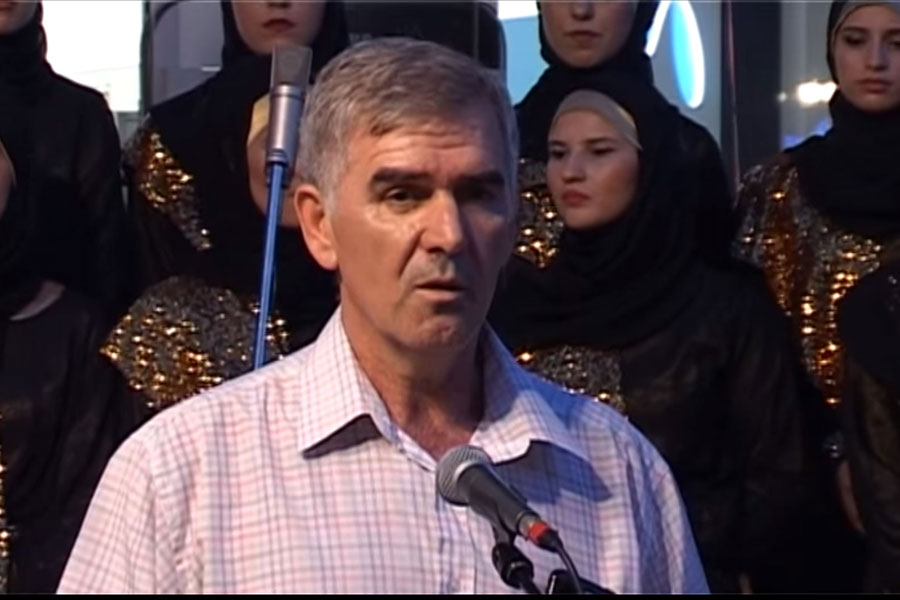
Who is Demo Berisha, the Albanian who does not know the Republic of Kosovo? (Video/Photo)
Even 26 years after the liberation, it seems that there are still Albanians living in Serbia and they continue not to recognize the reality that Kosovo is an independent and internationally recognized state. Some of them seem to have joined Serbian politics with the attempt to bring back the Serbian conqueror. One of them is Demo Berisha (he may have changed his name from Demë to Demo because there is no name Demo in Kosovo).
Demo Berisha, an Albanian originally from Peja and former Yugoslav army officer, was proposed yesterday (April 14, 2025) for the position of Minister for Human and Minority Rights in the Government of Serbia.
Berisha is a well-known name to public opinion due to his outspoken stances against Kosovo’s independence.
Albanian MP in the Serbian Parliament, Shaip Kamberi, said yesterday that Demo Berisha’s proposal for the position of Minister for Human and Minority Rights is a heavy blow to every Albanian who has suffered, resisted and sacrificed for their rights in Serbia.
According to him, this appointment is not only politically unacceptable, but also morally shameful, because Demo Berisha is not a representative of human rights, but a symbol of the denial of the national and political identity of the Albanians of Kosovo and the Presevo Valley.
Who is Demo Berisha?
Demo Berisha states that he was born in Peja and now lives in Vojvodina, but does not recognize the Republic of Kosovo and that his homeland is Serbia.
In an interview that he has done for Vojvodina television (RTV Panonia and channel 9), he says that he completed primary school in Kosovo, then he continued in Sarajevo, where he completed military school, then in Novi Sad.
He says he was a member of the Yugoslav army and finished his career in the Serbian army, working for a long time in the military police.
KosovaPress years ago compiled a summary of some of his statements given to television, which you can see below.
For Berisha, his homeland is Serbia and it includes the Republic of Kosovo.
The crimes that the Serbian army committed before the war and during the 1999 war in Kosovo did not prevent Berisha from staying in the Serbian army, and for him Kosovo is part of Serbia. He may also be a participant in crimes in Kosovo, since the entire Serbian army was engaged in Kosovo. He even continues to call Kosovo “Kosova e Metoh”.
He thinks that he is not the only Albanian who thinks like this, therefore, and founded in 2014, in Serbia, the non-governmental organization “Mother of the Albanians of Serbia” (Matica Albanaca Srbije – MAS), which according to him has 4600 members in the territory of Vojvodina by 6000 Albanians, which according to Berisha there are in Vojvodina, while in the entire territory of Serbia he says there are over 180.000 Albanians. It declares that the association deals with Albanian-Serbian relations, and for more, the advancement of some rights of Albanians in Serbia.
In fact, the official name of the NGO is Serbian. In issue 3 of this magazine, he dedicated the front page to the 100th anniversary of the passage of the Serbian army through Albania, devoting several pages to it inside (click on the link: http://maticaalbanaca.org.rs/p…), where praise to Esat Pasha Toptan (killed by Avni Rrustemi in Paris for the attempt to sell Albania) for the support he gave to the Serbs, for a road named after Esat Pasha.
The Albanian language in this magazine is very weak and the texts seem to have been translated from Serbo-Croatian into Albanian, in some texts many Albanian letters such as Ë and Ç are missing. Berisha goes even further by declaring that he plans to move from the association to a movement and then to a political party.
He says that he is looking for other collaborators, while he aims to take the electorate from the Albanian parties in Presheva and Bujanoce. He says that he has contacted some of the figures of these parties, but he is constantly in contact with other Albanian figures, who do not know his positions well. Among these contacts is the Albanian Embassy in Belgrade.
During the promotion of the “MAS” magazine, in addition to Serbian politicians and soldiers, the Albanian ambassador to Serbia, Ilir Bocka, was also present.
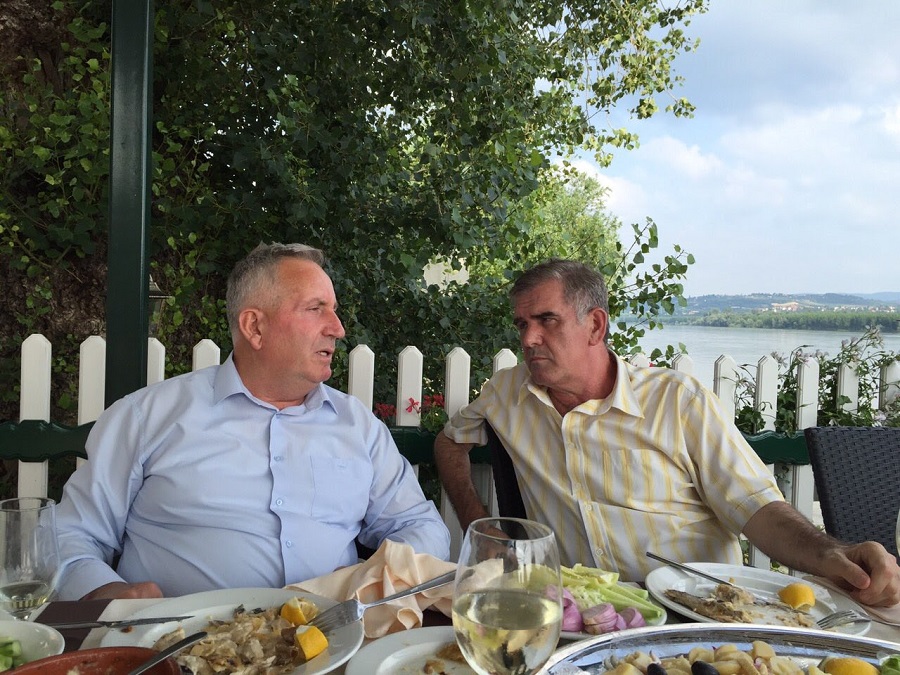
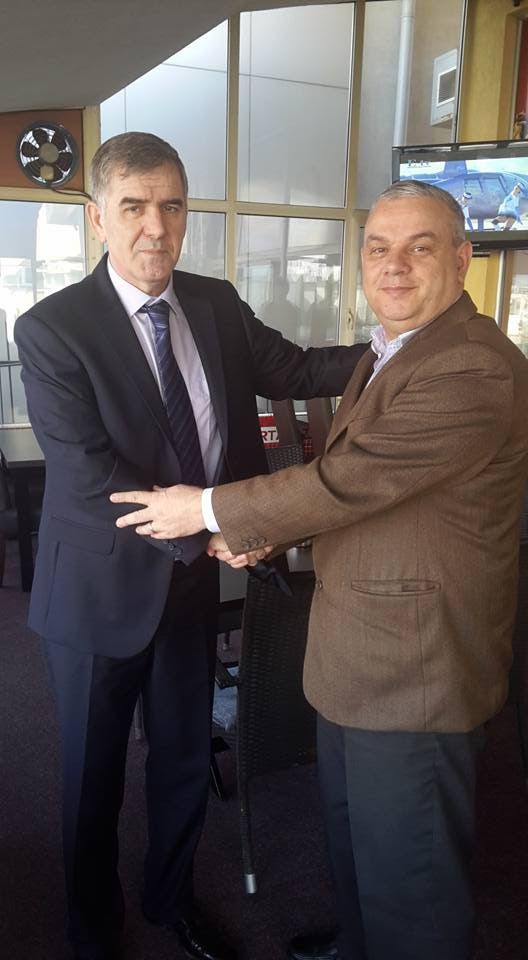
Here are some photos during the promotion of “MAS” magazine.
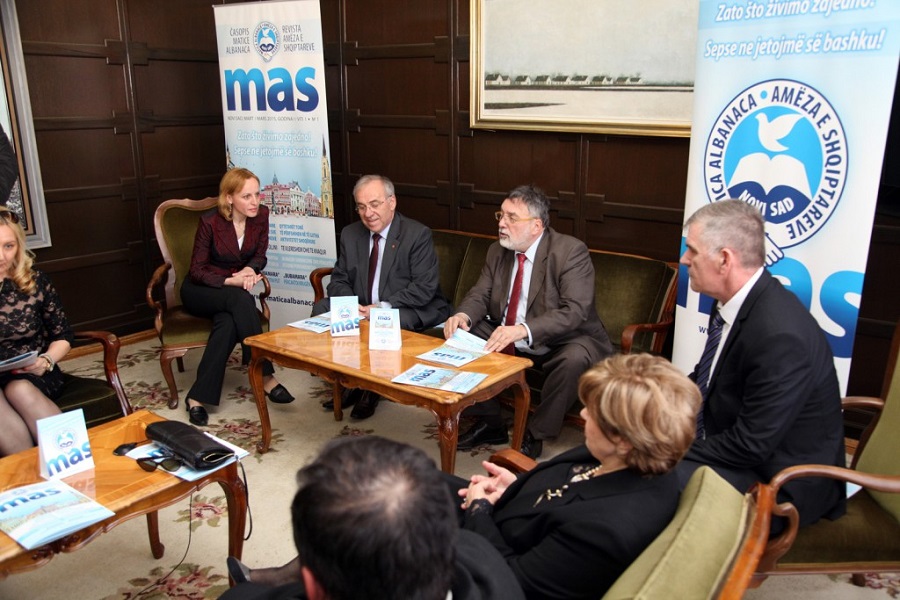
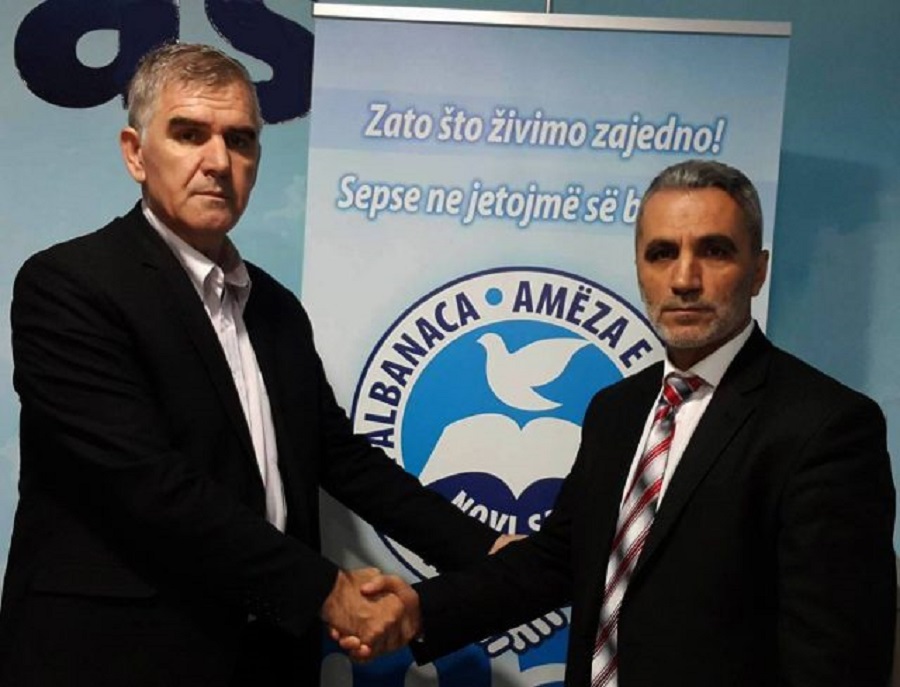
At the end of July of this year, he was also received at the Embassy of Albania in Belgrade, where according to the communique published on Facebook by Berisha, he also talked about mutual cooperation with the embassy and the organization of various forums.
Despite all his efforts, Berisha seems to have mistrust and fear even among the Serbs in Serbia.
A viewer who seems to know him and they worked together in the Serbian army, asks him during the debate on TV (see the video) why he declared that he is Goran and what has happened to his life now. A Serbian viewer from Kosovo, who asks him that after creating a party, does he think he will also seek a Republic in Vojvodina.
He says that in the association there is also an Albanian (Rudina Pero) from Albania, who according to him came from Albania and was assimilated in 1935.
During the interview, he agrees with the former mayor of Shtërpce municipality, Zvonko Mihajlović, that he cannot live in an independent Kosovo. A viewer asks if all the Serbs return to Kosovo, would they agree to return to the Republic of Kosovo and independent, Zvonko Mihajllović and Demo Berisha declare that this is impossible and they will not agree to return.
Read also: https://kosovapress.com/zgjedhja-e-qeverise-se-re-nderpritet-seanca-ne-kuvendin-e-serbise
Berisha in all interviews declares that Kosovo is part of Serbia, is against NATO bombings…etc.
Several hundred Albanians, former collaborators, supporters of Serbia and Milosevic’s policy, left Kosovo after the liberation war in 1999 and live in Serbia. Based on some statistics that were made public after the war, during the Yugoslav occupation, the violent separation of the Albanian lands from Albania in 1913 (read at: https://sq.wikipedia.org/wiki/… ), the former Yugoslav service has engaged as collaborators about 50.000 spies among Albanians (including Albanians in Kosovo, Macedonia, Montenegro and eastern Kosovo (Preševo, Mendvegja and Bujanoc).
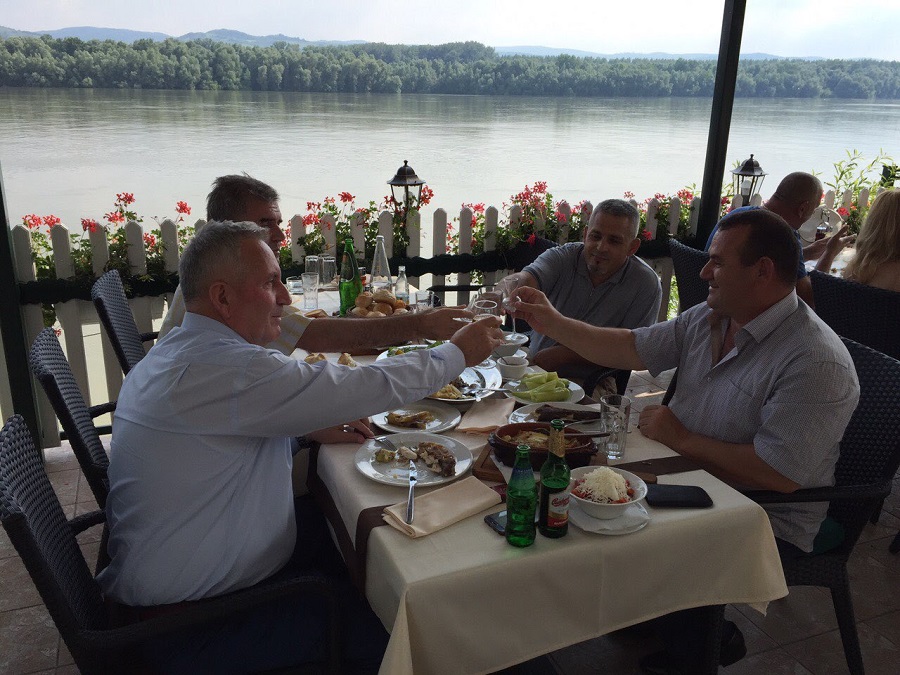
/Kosovapress/