

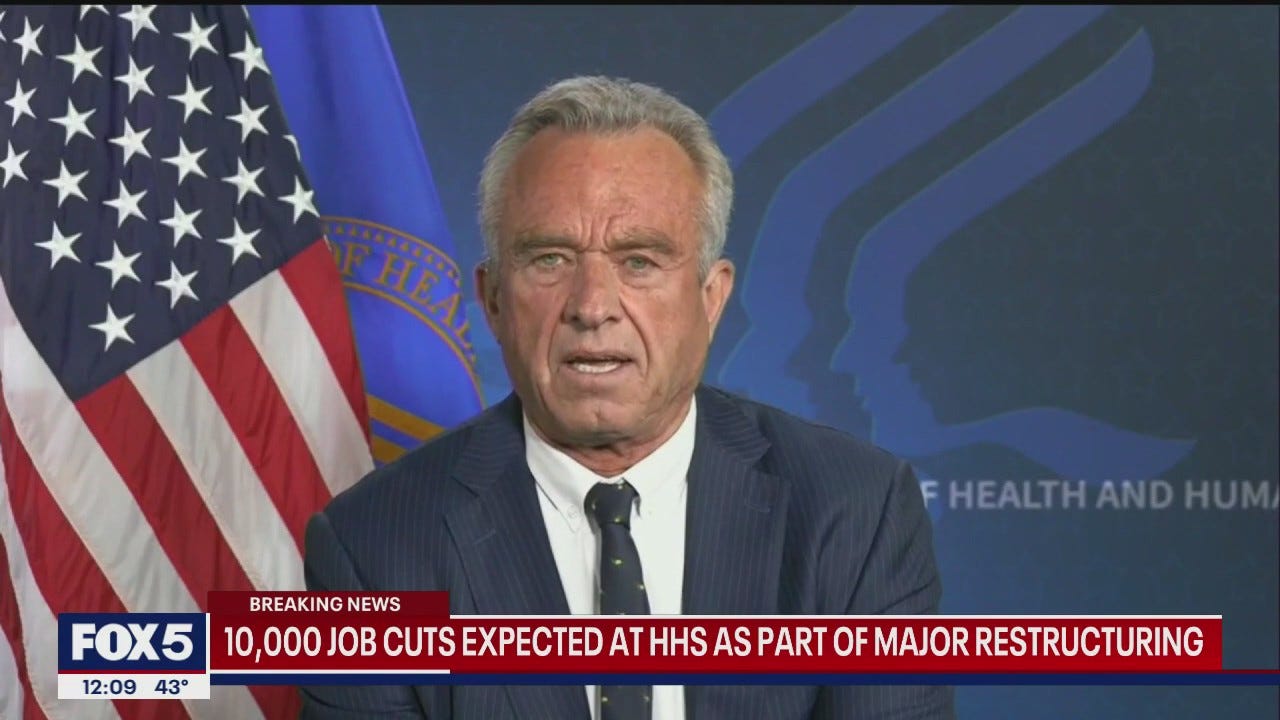

‘We’re going to consolidate:’ RFK, Jr. on HHS layoffs
10,000 job cuts expected at HHS as part of major restructuring.
Fox – 5 NY
Tracking of infectious diseases, mental health funding and self-described life saving investments are at risk in central Ohio and beyond after millions in federal cuts to health care and research in the Buckeye State.
The U.S. Department of Health and Human Services (HHS), headed by Secretary Robert F. Kennedy, announced a restructuring of the department in late March, which oversees the Centers for Disease Control and Prevention (CDC) and National Institutes of Health (NIH). Since then, the national health landscape has experienced rapid changes, including efforts to reduce HHS staff by tens of thousands of workers and cuts to funding that endangers programs like Meals on Wheels and research on infectious diseases like HIV.
The Columbus area faces cuts that are well into the hundreds of million and include employee and grant terminations and general uncertainty about the future of health care funding for some of the state’s and country’s biggest health care players.
Columbus, state programs see hundreds of millions cut
The CDC recently notified the Ohio Department of Health that at least $250 million in grants were terminated, including grants for childhood vaccination in Ohio at a time when Ohio sits below the national average in fully-immunized kindergarteners.
An HHS spreadsheet indicates that there could be even more cuts, though ODH currently maintains the $250 million number in a time of confusion for many state health departments.
“ODH is actively working with the CDC to get clarification and further guidance,” an ODH spokesperson said in an emailed statement.
Columbus Public Health (CPH) was forced to terminate 11 employees after half of the already-promised $6 million in federal funding was cut. The funding came to the city’s health department via ODH, which disseminates federal funds, which were part of COVID-19 operations funding that allowed the city to more actively surveil and investigate diseases.
That includes COVID-19, E.coli and measles, and the funding helps the department act quickly to warn the community of the diseases and take necessary precautions, especially for vulnerable communities like the elderly and chronically ill.
“Imagine you have your mortgage with the bank. You’ve been paying it for the last three years, and then they just call you on Friday afternoon and say ‘We’re not going to handle your loan anymore, and we don’t know who’s going to handle it. You’re on your own’ and walk away,” Dr. Mysheika Roberts, commissioner of CPH, told The Dispatch. “But you had a 30-year mortgage with them and in the midst of it, for no good reason, they just stopped.”
The Ohio Department of Mental Health and Addiction Services also saw grant cuts over $50 million, according to an HHS spreadsheet, used for mental health and substance use in a state credited as one of the epicenters of the opioid epidemic. Like ODH, the department continues to seek clarity.
“Our department remains committed to our primary mission of ensuring that all Ohioans have access to the services and supports they need to live up to their full potential,” a spokesperson for the department said in an email.
Major hospitals, universities also face cuts
Ohio State University was not immune to roughly $2.4 million in federal cuts. While that’s a small portion of the over $1 billion in funding the university gets, the terminations disproportionately impact LGBTQ+ related studies and cuts funding for studies around vaccine hesitancy in rural populations.
“We are grateful for the research support we receive from our federal partners as these investments literally save lives right here in Ohio,” a spokesperson for the university said in a statement. “Across the university, research continues, which benefits farmers, patients, military personnel, law enforcement, small businesses and Ohioans in all 88 counties, but we are closely monitoring and managing federal notifications that have impacted a number of our faculty and laboratories.”
The NIH terminated Nationwide Children’s Hospital’s Abigail Wexner Research Institute’s grant studying the impact of puberty blockers on the health of adolescents. The children’s hospital declined to comment, but according to an HHS, the cuts amount to nearly $1 million.
Medical business and health care reporter Samantha Hendrickson can be reached at shendrickson@dispatch.com or @samanthajhendr on X, formerly known as twitter.