
On March 27, 2025, the federal government announced major cuts to the department of Health and Human Services (HHS). Average Americans could be impacted by these changes through reduced access to early education, family planning and health care, natural disaster response, and more. But the reality of these cuts, which deserves far more attention than it has received, is the disproportionate impact they could have on older adults.
Though HHS is often associated with children and families, the numbers show the extent to which older adults heavily rely on its services. An estimated 9.4 million older adults are enrolled in Medicaid, most nursing home residents (63 percent of the nearly 1.2 million Americans in nursing homes) depend on Medicaid for long-term care services, and of the roughly 80 million Americans receiving Medicaid, 12 million are enrolled in both Medicare and Medicaid.
From retired teachers and nurses to childless neighbors living with dementia, to family members who can no longer work after a life changing accident—older Americans will feel these cuts acutely.
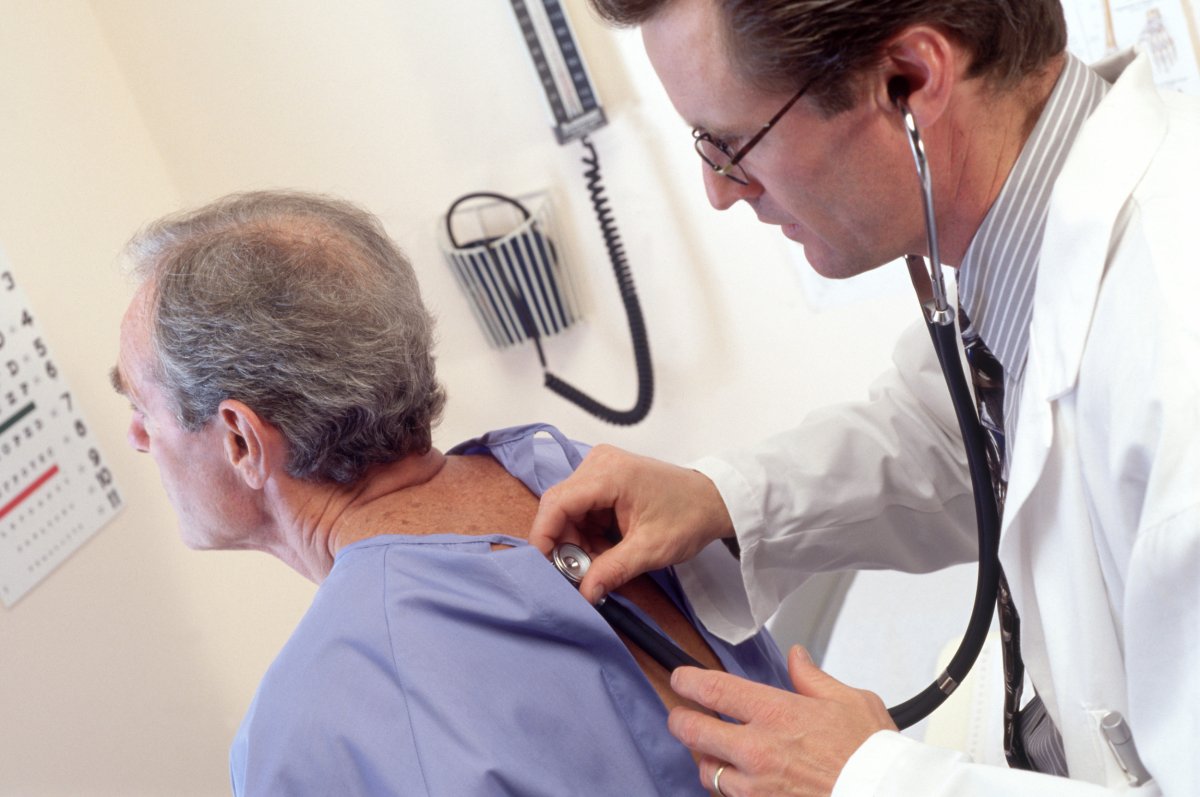
A doctor examines a patient.
A doctor examines a patient.
Stephen Welstead/Getty Images
The urgency for our concern is compounded by looming changes at the Centers for Medicare and Medicaid Services (CMS) as well as the dismantling of the Administration for Community Living—the primary administrator of Older Americans Act programs, which funds critical services like Meals on Wheels and respite for family caregivers. But the area where these cuts will be felt most acutely is with respect to elder abuse, which is already a neglected area of health care and social services.
Sounding the Alarm for Elder Justice
The population of older adults is rapidly growing, and one in 10 experience abuse, neglect, and/or exploitation—a risk that is even higher for those living with dementia. The consequences of this abuse are devastating for families and communities and costly for health and social services systems. Cutting services to older adults will increase these risks and costs.
Moreover, we depend heavily on unpaid caregivers in this country. In fact, 11.5 million family and friend caregivers provide over 80 percent of help needed for people living with dementia in the U.S. Without access to services like Meal on Wheels, adult day care, and respite care, we can expect caregiver burden and strain to increase significantly and with it, rates of elder abuse, emergency department visits, hospitalizations, and nursing home placements.
We know this because of the abuse spike seen clearly during the COVID-19 pandemic, which doubled to over 20 percent of older adults, as services were limited, and older adults were socially isolated. HHS cuts are also likely to result in loss of specialized expertise in identifying and addressing elder mistreatment, so that when elder abuse does occur, we won’t have the services to stop it and make sure it won’t happen again.
It is critical that we maintain dedicated elder care and elder justice expertise at the federal level, including preserving the integrity of Older Americans Act programs that have gone a long way to improving aging in communities for nearly 60 years.
We call on the federal government to ensure quality care for older adults across all departments of government, congressional oversight to monitor how these changes impact vulnerable older adults, and cross-departmental coordination of prevention and response efforts. Without these deliberate protections, we risk allowing elder abuse to fall through the cracks of the changes happening and being contemplated in Washington, D.C. If we don’t keep the spotlight focused on stopping elder abuse the price tag both in terms of dollars and cents, as well to our moral consciences, is going to be far, far higher than we imagined.
Kristin Lees Haggerty, Ph.D., is a project director at Education Development Center (EDC), where she co-leads the National Collaboratory to Address Elder Mistreatment and National Dementia Care Collaborative, initiatives leading aging policy reform.
Scott Bane, JD, MPA, is a senior program officer at The John A. Hartford Foundation, a national philanthropy dedicated to improving care for older adults and a funder of the National Collaboratory to Address Elder Mistreatment.
The views expressed in this article are the writers’ own.