
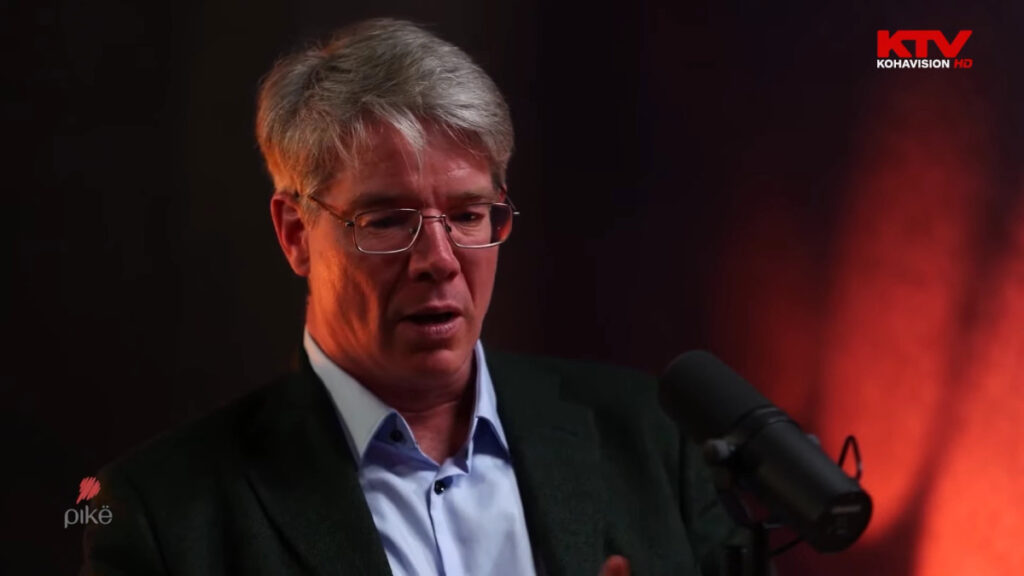
In a discussion with the publicist Veton Surroi In the podcast PIKË, Austrian historian Oliver Schmitt said that the historical division and political developments of the 20th century have significantly influenced the formation of different identities between Albanians in Albania and those in Kosovo.
He emphasized that the existence of two Albanian states in the Balkans is now a reality that influences every day the construction of new social affiliations.
Schmitt stated that this differentiation is not simply a matter of naming as “Albanians” or “Kosovars”, but a result of very different developments that followed the division of Albanian territories after 1918. He singled out the impact of the Enver regime in Albania, which brought complete isolation, extreme nationalization of daily life, and the destruction of social structures, including trust between individuals due to the strong control of the State Security.
“In Enverist Albania, private property disappeared, free movement was prohibited, and religion was erased from public life. In the former Yugoslavia, Albanians moved around, had access to technology, goods, and contacts with the world. These differences have strongly influenced the social consciousness and culture of Albanians on both sides,” he said.
According to him, precisely because of these differences, today there is a fundamental difference in political culture between Albania and Kosovo – an aspect that, according to the historian, constitutes the greatest difference between the two Albanian states.
Surroi raised the question of whether this process will lead to the formation of new Albanian identities in the 21st century, including the diaspora, as more diverse and dispersed “Albanian communities”, not only in the Balkans, but throughout the world.

POINT with Veton Surroin: Guest Oliver Schmitt