Exclusive: Amazon’s Starlink Rival Struggles to Ramp Up Satellite Production
https://www.bloomberg.com/news/articles/2025-04-23/amazon-project-kuiper-space-internet-struggles-to-catch-elon-musk-s-starlink?sref=xuVirdpv

Exclusive: Amazon’s Starlink Rival Struggles to Ramp Up Satellite Production
https://www.bloomberg.com/news/articles/2025-04-23/amazon-project-kuiper-space-internet-struggles-to-catch-elon-musk-s-starlink?sref=xuVirdpv
6 Comments
From Bloomberg News reporter [Matt Day](https://www.bloomberg.com/authors/AT6ZMF7p5Yc/matt-day):
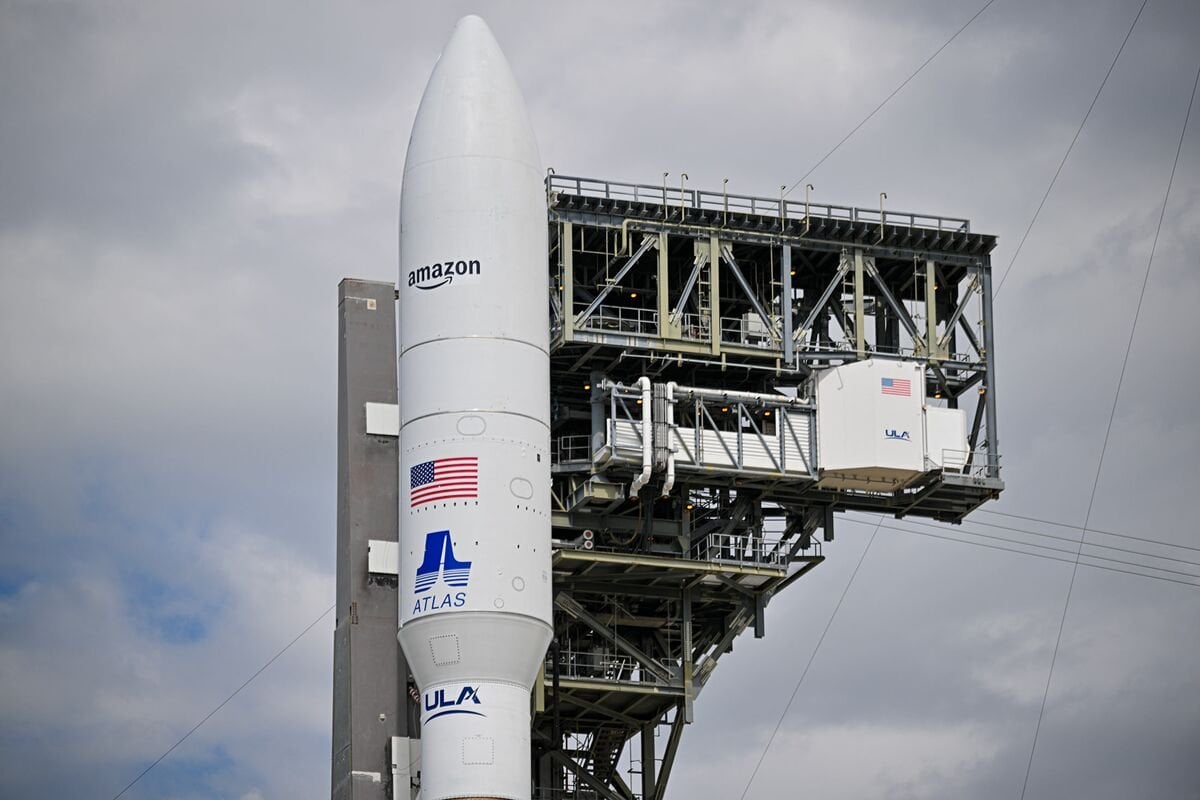
[Amazon](https://www.bloomberg.com/quote/AMZN:US)’s internet-from-space venture is struggling to ramp up production, jeopardizing its ability to meet a government deadline to have more than 1,600 satellites in orbit by next summer.
Project Kuiper has completed just a few dozen satellites so far, more than a year into its manufacturing program, according to three people familiar with the situation. The slow pace, combined with rocket launch delays, means the company will probably have to seek an extension from the Federal Communications Commission, said the people, who requested anonymity to discuss confidential matters.
The agency, which has oversight of transmissions from space, expects the company to have half its planned constellation of 3,236 satellites operating by the end of July 2026. To meet that requirement, Amazon would have to at least quadruple the current rate of production, which has yet to consistently reach one satellite a day, two of the people said.
Industry analysts say getting an FCC extension should be straightforward, but some have begun to wonder whether that assumption will hold given that Elon Musk, who runs the rival Starlink service, is advising the White House on spending and personnel decisions.
maybe if spacex sold their starlink sats on amazon they would be able to copy it easier.
Amazon Basics Space Based Internet Orbiting Satellite 5 Year Warranty (2 Pack)
I’m a little concerned that the number of microsatellites that are going up are going to pose a problem. I’m not expert on this topic at all, but it seems like we’re getting to the point of approaching my satellites forms, that will make it much more challenging to navigate through Earth orbit. And I do believe we are 20-30 years from entering the phase where we actually begin to economically exploit nearby space a little (mostly automated craft I assume).
These satellites won’t last forever and will be replacing, but they’re high orbit means they’ll just stay out there, as far as I understand it.
(Edit appearantly they are in decaying orbits, thanks the info fellow posters!)
Feels stupid that these companies are allowed to send each thousands of micro satellites to deliver the same service…
Why aren’t these shared like the electricity cables? We send a group of satellites to provide a service and then any company can, I don’t know, license them for use and to sell the service?
Just what we need, and whole second Starlink to ruin the view of the night sky.
We don’t need any more of this: [https://www.reddit.com/r/space/comments/1k3j26q/a_stunning_image_of_the_australian_desert/](https://www.reddit.com/r/space/comments/1k3j26q/a_stunning_image_of_the_australian_desert/)
Hey on the positive side, the rockets aren’t delaying the sats anymore.