
Current conditions: Yosemite could get 9 inches of snow between now and Sunday • Temperatures will rise to as high as 104 degrees Fahrenheit in Ashgabat, Turkmenistan, as Central and Southeast Asia continue to bake in a heatwave • Hail, tornadoes, and severe thunderstorms will pummel the U.S. Heartland into early next week.
THE TOP FIVE1. Tariffs, uncertainty were the themes of the week in clean energy Q1 calls
It was a busy week of earnings calls for the clean energy sector, which, as a whole, saw investment dip by nearly $8 billion in the first three months of the year. Tariffs — especially as they impact the battery supply chain — as well as changes to federal policy under the new administration and electricity demand were the major themes of the week, my colleague Matthew Zeitlin wrote.
Like companies across many different sectors, inverter and battery maker Enphase, turbine manufacturer GE Vernova, Tesla, and the utility NextEra all mentioned the tariffs in their earnings reports and calls. Enphase, for one, is bracing for as much as 8% knocked off its gross margin by the third quarter, while Tesla’s highly-anticipated call managed expectations for the rest of the year, with the company citing the difficulty measuring “the impacts of global trade policy on the automotive and energy supply chains, our cost structure, and demand for durable goods and related services.” Meanwhile, on Thursday, Xcel Energy — which recently reached settlements for its role in the ignition of the most destructive wildfire in Colorado history and the largest wildfire in Texas history — reported missing first-quarter estimates and feeling the squeeze of high interest rates at a time of soaring, data-center-driven electricity demand.
2. In accidentally published memo, DOJ warns there’s likely no case against congestion pricing
The Department of Justice’s lawyers warned the Department of Transportation that its case against New York City’s congestion pricing program is likely a loser. We know this because someone mistakenly uploaded the DOJ’s memo into the court record for the Metropolitan Transportation Authority’s lawsuit challenging Transportation Secretary Sean Duffy’s actions. Whoops.
As my colleague Emily Pontecorvo reports, the leaked memo was dated before Duffy announced “he would put a moratorium on any new federal approvals for transit projects in Manhattan until the state shut down the tolling program.” But as Emily goes on to say, the memo “warns that continuing down this route could open up both the department and Duffy personally to further probes.” The New York Times adds that the DOT has since replaced the DOJ lawyers who authored the memo and plans to transfer the case to the civil division of the Justice Department in Washington.
3. The Shanghai Auto Show takes off
More than 100 new cars and vehicles are expected to debut at the 2025 Shanghai Auto Show, which began on Wednesday and runs through next Friday. Of the approximately 1,300 total vehicles on display, 70% are new energy vehicles, according to Gu Chunting, the vice chairman of the Council for the Promotion of International Trade Shanghai, one of the event’s organizers.
The show is already off to an exciting start. Volkswagen is showcasing 50 new models, including three electrified concept vehicles specifically targeted at the Chinese market: the ID. Aura sedan, the ID. Evo SUV, and ID. Era three-row SUV, a hybrid with over 621 miles of range. BYD’s Denza line also premiered its Z, a luxury electric vehicle designed to compete with Tesla and Porsche. “Beauty is in the eye of the beholder, of course, but most people will find the Denza Z to be drop dead gorgeous,” Clean Technica raved.
That’s not all. The Faw Group, a Chinese state-owned car manufacturer, showed off a flying vehicle with a range of 124 miles, while fellow Chinese automaker Changan Automobile announced an autonomous flying car that reportedly already has government approval to transport passengers, per IoT World Today. France’s Le Monde was wowed by China’s innovations all around: “Gone are the days when the vast exhibition space had one hall dedicated to foreign brands and another for Chinese ones. Today, each Chinese group occupies a hall, showcasing domestic brands and leaving only some space for foreigners around the edges.”
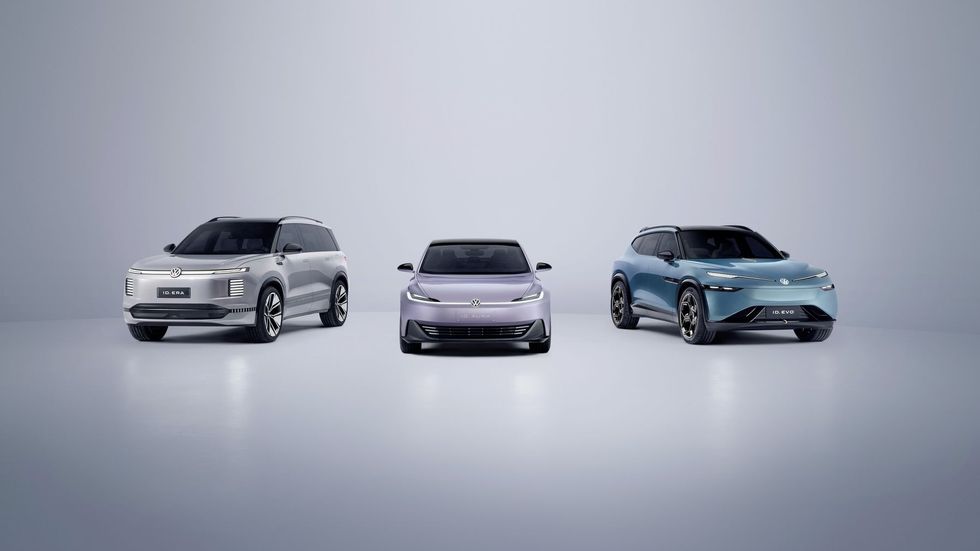 Volkswagen
4. Trump quietly orders U.S. to ‘unleash’ deep-sea mining
In a private ceremony Thursday night, President Trump signed an executive order to “unleash” deep-sea mining. The order — which directs the secretaries of Interior and Commerce to accelerate “the process of renewing and issuing seabed mineral exploration licenses and commercial recovery permits” for the U.S. Outer Continental Shelf and “areas beyond national jurisdiction”— is an attempt to offset China’s dominance of the critical minerals supply chain. Deep-sea mining operations harvest “nodules” that take millions of years to form and contain minerals like nickel, copper, cobalt, and manganese necessary for lithium-ion batteries for electric vehicles, among other applications. “For too long, we’ve been over reliant on foreign sources, and today this historic announcement marks a big step in the right direction to onshore these resources that are critical to national homeland security,” a senior administration official told reporters on Thursday, as reported by CNN.
Deep-sea mining is controversial due to how little we know about the ocean’s abyss, including the potential impact of large-scale mining operations on marine biodiversity and carbon sequestration. The United States has largely abstained from the deliberations of the United Nations’ International Seabed Authority, which determines whether and how to mine the seabed for critical minerals. The industrial mining of international waters, as cued up by Trump’s executive order, is opposed by “nearly all other nations,” The New York Times writes, and is “likely to provoke an outcry from America’s rivals and allies alike.”
5. Winter rain and a dry spring signal a bad fire season ahead
It has already been a tragic year for wildfires, with more than 57,000 acres of Los Angeles and the surrounding hillsides burned in January. Now, AccuWeather is predicting that fires in the U.S. could “rapidly escalate” and burn up to 9 million acres total this year, well above the historic average of 7 million acres and close to the 8.9 million acres that burned in 2024.
Specifically, AccuWeather predicts an extreme fire season in the Northwest, northern Rockies, Southwest, and South Central states, particularly as late summer and fall approach. “There was plenty of rain and snow across Northern California this winter. All of that moisture has supported a lot of lush vegetation growth this spring,” AccuWeather’s lead long-range expert, Paul Pastelok, said. “That grass and brush will dry out and become potential fuel for wildfires this fall,” when any “trigger mechanism … could cause big wildfire problems.”
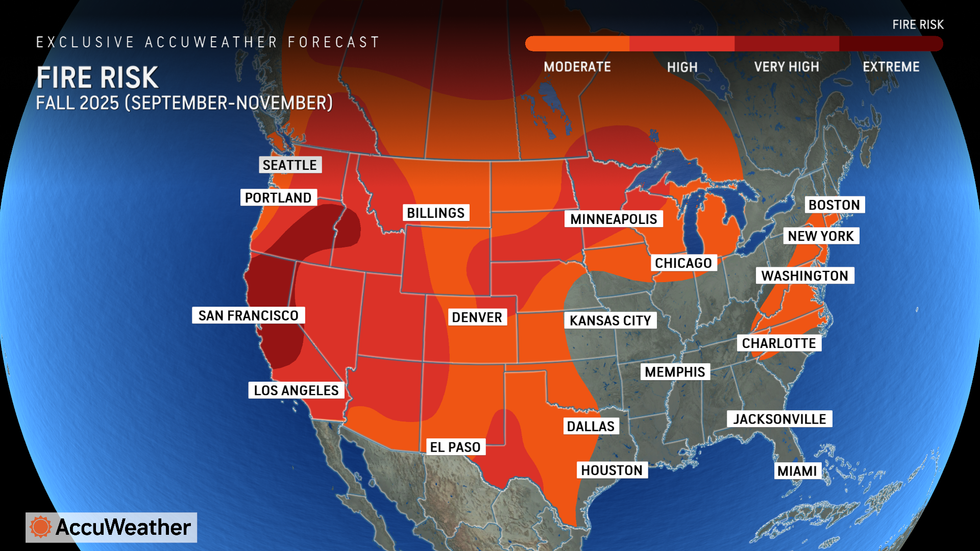 AccuWeather
THE KICKER
Slate Auto, a three-year-old Jeff Bezos-backed startup, has announced an EV truck that will cost less than $20,000 after the federal tax credit and before customization. “It’s the Burger King of trucks,” writes Car and Driver, because “it’s affordable” and “lets customers ‘have it their way’ with a lengthy accessory list, including one that turns this pickup into an SUV.”