
WASHINGTON (TNND) — The Trump administration is using emergency authority to speed of the approval of fossil fuel and mining projects on federal land in its push to ramp up domestic production of fossil fuels and critical minerals.
Environmental reviews that usually take a year to complete will now take 14 days, and more complicated impact states that usually take two years to finish will be done in 28 days, according to an announcement from the Department of the Interior.
The policy is focused mostly on fossil fuels and critical minerals with the permitting shortcut applying to projects increasing production of crude oil, natural gas, critical minerals, uranium, lease condensates, coal, biofuels, refined petroleum products, geothermal energy and kinetic hydropower.
The move another executive order from Trump declaring an energy emergency, unlocking additional powers to increase energy production, which comes after the United States had become the world’s largest producer of oil and natural gas under the Biden administration. America is already the world’s largest exporter of natural gas and is producing more oil than any other country.
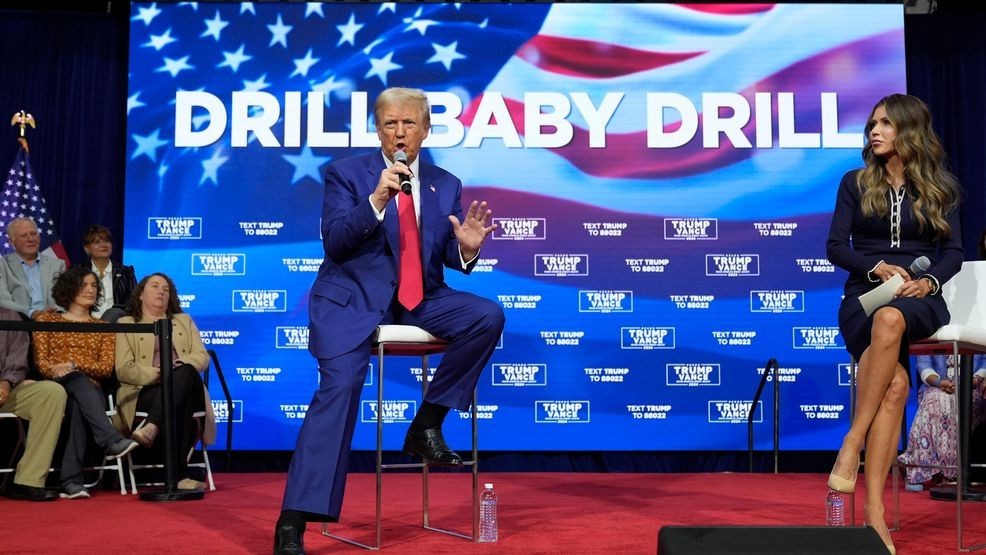
Trump came into office promising to ramp up fossil fuel production and continue expanding the American energy industry with a promise to “drill baby, drill.” He has made several moves to ease the permitting process that companies and developers have said is too long and slows progress on new projects.
“The United States cannot afford to wait,” Interior Secretary Doug Burgum said in a statement. “President Trump has made it clear that our energy security is national security, and these emergency procedures reflect our unwavering commitment to protecting both. We are cutting through unnecessary delays to fast-track the development of American energy and critical minerals—resources that are essential to our economy, our military readiness, and our global competitiveness.”
In addition to easing the permitting process and cutting other regulations, Trump has also moved to expand private companies’ access to public lands to expand production of fossil fuels and critical minerals. The Interior Department manages some 500 million acres of land and 2 billion acres of federal waters.
The White House has also opened military bases to build refining facilities for critical minerals to shift the U.S. away from a reliance on China for precious metals that are used in a variety of consumer goods as well as defense and aeronautical products. Industry groups said the fast-tracked permitting process will help increase competitiveness with China.
“The status quo on U.S. permitting is a nonstarter and our cumbersome processes have been longstanding enablers of China’s global mineral dominance,” National Mining Association president and CEO Rich Nolan said in a statement. “With this streamlined process, we can better compete with China, advance responsible projects, feed our supply chains with responsibly sourced materials, and reliably meet the material and energy demands of modern life.”
The latest order was met with fierce resistance from environmental groups that accused the administration of exploiting emergency powers and promised to challenge it in court.
While Trump is trying to push for more U.S. fuel production, the industry is facing significant headwinds from his expansive tariff rollouts that have spurred recession fears and sent the cost of oil downward, reducing incentive for companies to ramp up production. Prices on oil futures have fallen below $70 a barrel for brent crude and West Texas Intermediate amid the mixed economic news, a potential increase from OPEC+ and forecasts for lower demand due to the tariffs and trade wars.
A survey conducted by the Federal Reserve Bank of Dallas released in March found industry executives were pessimistic about its outlook due to tariffs and sinking costs for oil and gas.
“The administration’s chaos is a disaster for the commodity markets. ‘Drill, baby, drill’ is nothing short of a myth and populist rallying cry. Tariff policy is impossible for us to predict and doesn’t have a clear goal. We want more stability,” an anonymous executive said in the survey.
Low oil and natural gas prices are a boon to consumers through cheaper energy bills and gasoline to fill up their vehicles but put a dent in companies’ willingness to boost production.
“Activity is going to drop like a rock because of two things — one is their revenue has been squeezed, especially from this time last year. And No. 2, the steel tariffs have increased costs,” said Ed Hirs, an energy fellow at the University of Houston. “Everything looking ahead for the rest of ‘25 and ‘26 and especially during the entirety of the Trump term, points to lower oil prices.”
The International Energy Agency said in a report earlier this month that global oil demand will grow at its slowest rate since 2020, and that U.S. production will also taper off.
“The deteriorating outlook for the global economy amid the sudden sharp escalation in trade tensions in early April has prompted a downgrade to our forecast for oil demand growth this year,” the IEA said in its report. “Roughly half of this downgrade occurs in the United States and China, with most of the remainder in trade-oriented Asian economies.”