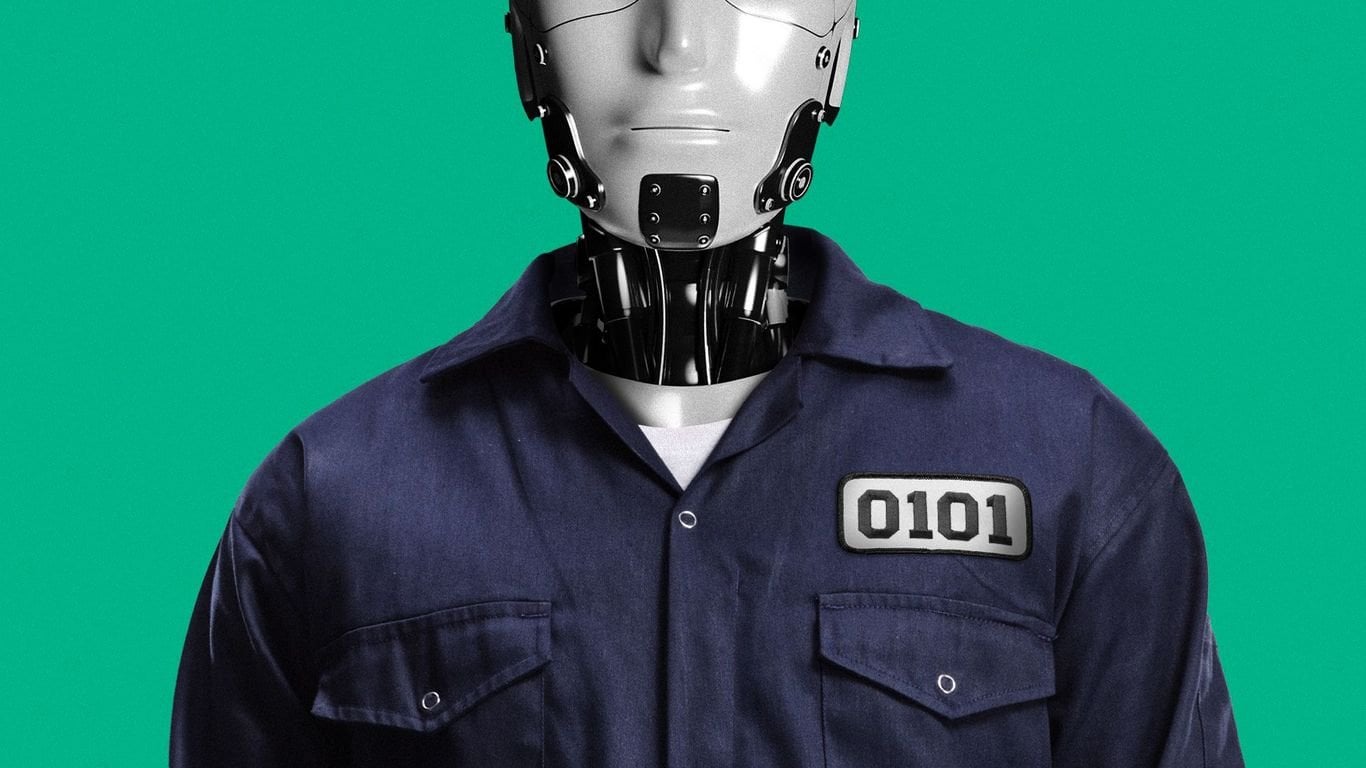
President’s manufacturing renaissance could mean more jobs for robots
https://www.axios.com/2025/04/30/trump-manufacturing-robots-jobs

President’s manufacturing renaissance could mean more jobs for robots
https://www.axios.com/2025/04/30/trump-manufacturing-robots-jobs
9 Comments
From the article
With his sweeping tariff and [trade policies](https://www.axios.com/2025/04/30/trump-china-tariffs-supply-chain), President Trump envisions a U.S. manufacturing renaissance that will bring back good-paying, working-class jobs to America’s auto industry.
* But advances in AI and other technologies paint a different picture of the future: Armies of robots — some in human form — doing difficult or repetitive tasks once done by people, who instead put their brains to work in different ways.
**Driving the news:** Humanoid robots are inspiring much fascination at the moment, with Morgan Stanley projecting 1 billion of them walking around by 2050, starting first in factories and warehouses.
Imagine believing the guy who ran a fake college designed to steal people’s credit card info
The Robot workers are going to come faster then we thought.
Yeah that logically make sense, it’s not likely workers have got cheaper, or that they will not need to start from scratch with the factories, may as well roll the dice that robot factories end up cheaper and build them like that from the start
This is what I predict. Even *if* the tariffs actually being manufacturing back, the jobs will be
almost fully automated. There will be like… 1 human worker there overseeing it for liability reasons.
The issue is that robots don’t run themselves. You need people trained to program and maintain them. It’s less jobs overall, but you need a lot more skilled trades workers.
Edit. Also robots are as good at replacing humans as the claims go.
[14 reasons manufacturing isn’t coming back to the US. ](https://arstechnica.com/tech-policy/2025/04/14-reasons-why-trumps-tariffs-wont-bring-manufacturing-back/)
#10
>robots you see on social media doing backflips are, today, mostly for show and unreliable off camera. They are not useful in industrial environments where, if a humanoid robot can do it, an industrial machine that is specialized in the task can do it even better. For example, instead of having a humanoid robot doing a repetitive task such as carrying a box from one station to another, you can simply set up a cheaper, faster conveyor belt.
>Said another way, the printer in your office is cheaper and more efficient than both a human and a humanoid robot with a pen hand drawing each letter.
>It’s unlikely that American ingenuity will be able to counter the flood of Chinese industrial robots that is coming. The first commercially electrical vehicle was designed and built in the United States, but today China is dominating electric vehicle manufacturing across the world. Industrial robots will likely be the same story.
There will be no “manufacturing renaissance” created by half baked executive orders. So this is silly.
Seriously, how badly is Axios glazing Trump with that language? It’s despicable.
That was literally the point. Elon promised robots for the factories. They were never interested in paying people…
More robots is great.
Now all we need is UBI.
Because without it, the robots won’t actually take away jobs. People will just have to become baristas / YouTube influencers to earn their money instead.
It would be a shame if we invented all the technology necessary to *automate* our economy; but forgot to fix our monetary system along the way.