
ALEKSANDAR VASOVIC, of Reuters, reports on the work of Norwegian People’s Aid Global Training Centre for Mine and Explosive Detection Dogs in Sarajevo…
Sarajevo, Bosnia & Herzegovina
Reuters
Mey, a Belgian shepherd, and her trainer Kenan Muftic learned how to effectively detect mines and unexploded ordnance last week, negotiating various obstacles and scenarios in a grass field in Sarajevo’s suburb of Butmir.
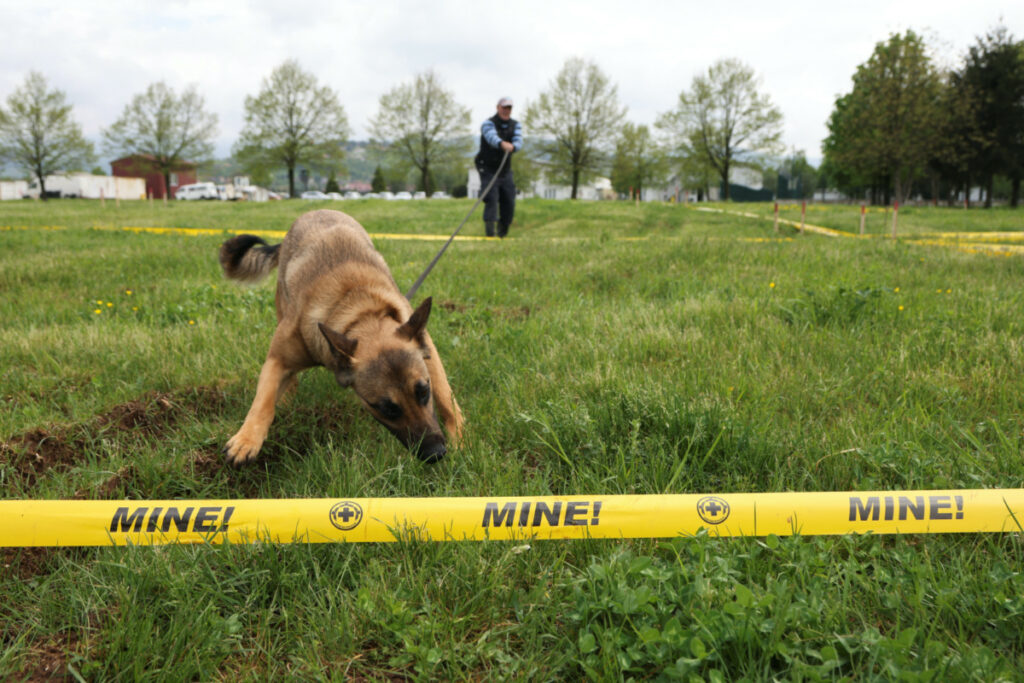
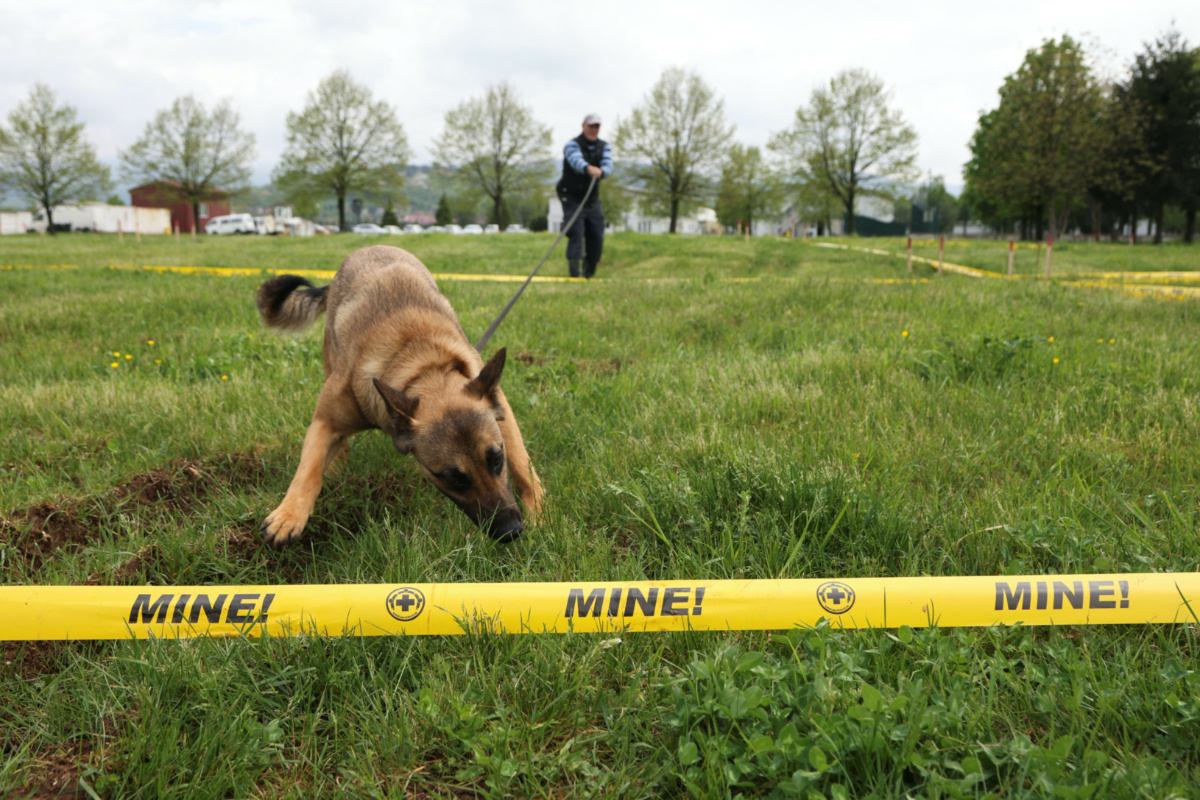
Mine detection dog Revka trains to detect mines and explosive devices at the Norwegian People’s Aid Global Training Centre for Mine and Explosive Detection Dogs, in Sarajevo, Bosnia & Herzegovina, on 24th April, 2025. PICTURE: Reuters/Amel Emric
Since its establishment in 2004, the Norwegian People’s Aid Global Training Centre for Mine and Explosive Detection Dogs in Sarajevo has trained more than 500 dogs. The trained dogs have been deployed to conflict zones across the globe, including Cambodia, Zimbabwe and Iraq.
Since its establishment in 2004, the Norwegian People’s Aid Global Training Centre for Mine and Explosive Detection Dogs in Sarajevo has trained more than 500 dogs.
The centre has also sent 26 dogs to Ukraine, the world’s most densely mined country according to a 2024 estimate by the United Nations and Ukrainian Government.
Soon after the Russian invasion of Ukraine in 2022, Norwegian People’s Aid sent dogs to assist in the effort to clear millions of mines and unexploded ordnance devices, Muftic said.
In Ukraine, dogs from Butmir assist deminers in clearing fields in heavily affected regions such as Kharkiv in the north-east and Mykolaiv in the south.
“In some places, they are close to the front lines,” Muftic said.
Landmines laid since Russia’s 2022 invasion cost Ukraine over $US11 billion in annual GDP, according to a 2024 report by Ukraine’s Economy Ministry and the Tony Blair Institute for Global Change.
Minefields and unexploded ordnance render vast agricultural areas inaccessible, slashing Ukraine’s exports and tax revenue.
Bosnia, still grappling with the legacy of its 1990s war, faces similar challenges.
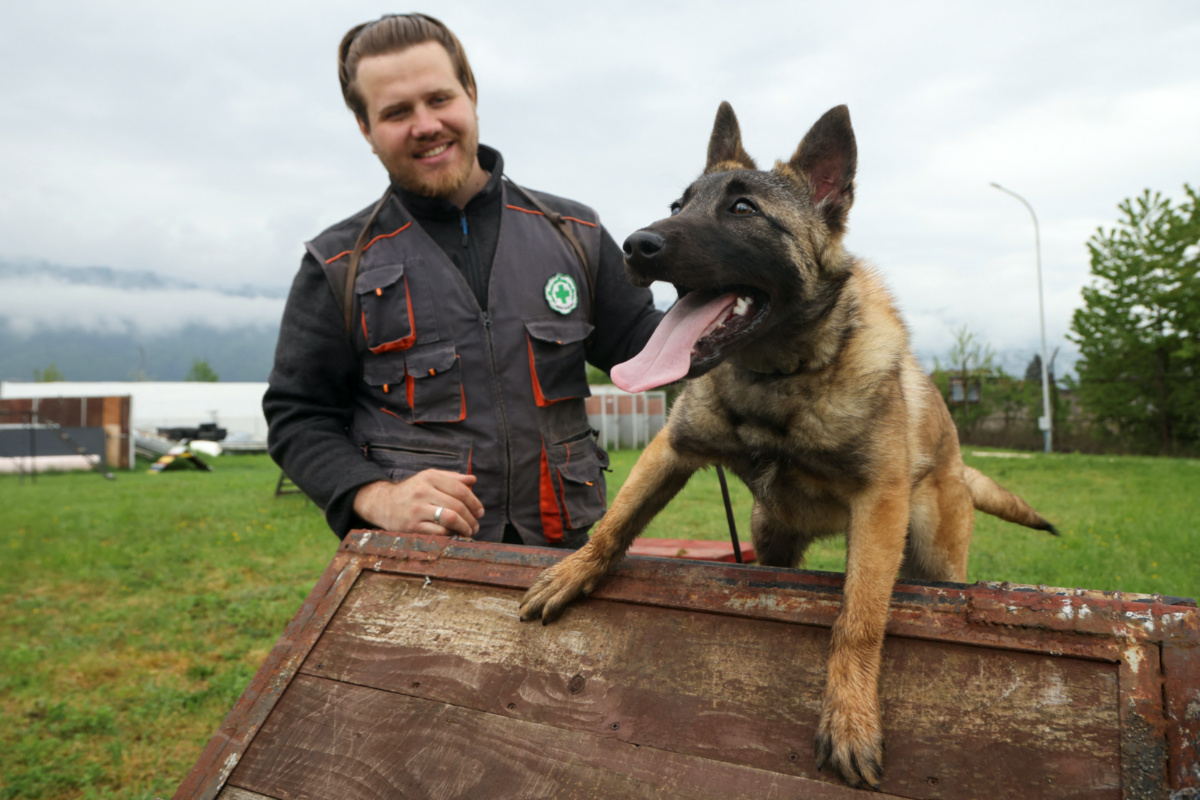
Trainer Abdulah Jukanovic trains a dog named May to detect mines and explosive devices, at the Norwegian People’s Aid Global Training Centre for Mine and Explosive Detection Dogs, in Sarajevo, Bosnia and Herzegovina on 24th April, 2025. PICTURE: Reuters/Amel Emric
Data from Bosnia’s Mine Action Centre in 2023 shows landmines planted across the country by Serb, Bosniac and Croat troops still affect around 15 per cent of the population. Specialised dogs are sometimes indispensable in clearing minefields.
“In demining, we say: one mine found, one family saved,” said Muftic, who over the past 27 years has helped to clear thousands of mines and unexploded ordnance devices.