
On May 5, 2025, Greece, a NATO ally with a robust Patriot arsenal, firmly declared it has no plans to send any of these coveted systems to Ukraine, a decision confirmed by a Greek official to the Athens-based newspaper Kathimerini.
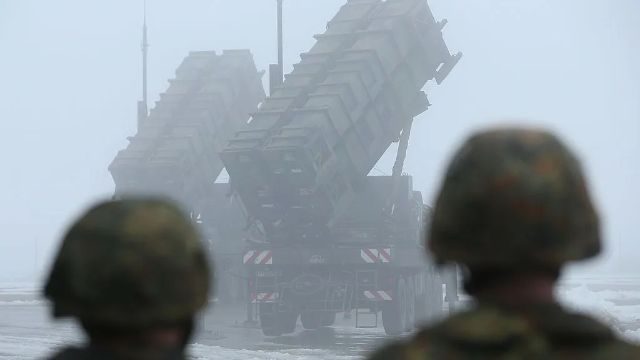 Photo by Sean Gallup
This announcement, coming amid reports that the United States is orchestrating the transfer of a refurbished Patriot system from Israel to Ukraine, dashes hopes that Athens might join the effort to bolster Kyiv’s defenses.
The refusal highlights the delicate balance nations face in supporting Ukraine while safeguarding their own security, particularly for Greece, which relies on its Patriots to protect key cities and military bases.
The Greek official’s statement, reported by Kathimerini and echoed by The Telegraph, was unequivocal: Athens is not considering transferring its advanced air defense systems to Ukraine.
This stance follows weeks of speculation, fueled by reports from The New York Times and Reuters, that Greece and Germany were under consideration as potential donors of Patriot systems to Ukraine, especially after the U.S. secured a deal to refurbish and transfer a Patriot battery previously based in Israel.
The Greek decision stands in contrast to recent moves by other nations, such as Romania, which committed to supplying a Patriot system in June 2024, and Germany, which has already provided three systems since 2023. For Greece, the refusal likely stems from strategic imperatives.
The country’s six Patriot batteries, acquired between 1998 and 2004, are integral to its national defense, particularly in protecting Athens and critical military installations from potential threats, including tensions with neighboring Turkey, a NATO ally with which Greece has a history of disputes.
Greece’s Patriot arsenal, consisting of six batteries equipped with both PAC-2 and PAC-3 configurations, is a cornerstone of its air defense strategy. These systems were procured in the late 1990s and early 2000s as part of a broader modernization effort following heightened tensions with Turkey, particularly after the 1996 Imia crisis, which brought the two nations to the brink of conflict.
The batteries, each comprising a radar set, an engagement control station, power generators, and up to eight launchers with four missiles each, are strategically deployed to safeguard key urban and military sites. From 2020 to 2022, Greece temporarily deployed one of these batteries to Saudi Arabia to counter Houthi missile and drone attacks, a mission that underscored their operational versatility.
According to Kathimerini, the U.S. has previously offered Greece unspecified security and financial guarantees to part with a Patriot system, but Athens has consistently prioritized its own defense needs, a stance reinforced by its ongoing $27 billion rearmament program aimed at bolstering capabilities against regional threats.
The Patriot system, officially designated MIM-104, is a marvel of military engineering, designed to counter a wide array of aerial threats, from aircraft and cruise missiles to ballistic missiles. Developed by Raytheon and Lockheed Martin, it first entered service with the U.S. Army in 1982 and has since evolved through multiple configurations.
The system’s core components include the AN/MPQ-53 or -65 radar, capable of tracking up to 100 targets at a range of 100 kilometers, a command-and-control center, and mobile launchers that deploy interceptor missiles. The earliest version, PAC-1, focused on engaging aircraft and cruise missiles, but its capabilities were limited against ballistic threats.
The PAC-2, introduced in 1990 and battle-tested during the Gulf War, improved its ability to intercept short-range ballistic missiles, though it relied on proximity detonation rather than direct hits. The PAC-3, operational since 2001, represents the pinnacle of the system’s evolution, employing smaller, hit-to-kill interceptors that destroy targets with precision, allowing up to 16 missiles per launcher.
Each PAC-3 missile costs approximately $3-4 million, and a single battery, valued at around $1 billion, requires a crew of about 90 personnel to operate, posing significant logistical demands.
The Patriot’s effectiveness lies in its ability to engage targets at altitudes up to 24 kilometers and its advanced radar, which can simultaneously track and intercept multiple threats. Its performance in Ukraine, where it has downed advanced Russian munitions like the Kinzhal, has cemented its status as the gold standard of ground-based air defense.
Compared to alternatives like the Franco-Italian SAMP/T, which Ukraine also operates, the Patriot offers superior range and versatility, though it is more expensive and complex to maintain. Russia’s S-400, a rival system, boasts a longer range but has not matched the Patriot’s combat-proven record against hypersonic threats.
The system’s high cost and operational complexity, however, mean that even nations with Patriots, like Greece, are reluctant to part with them, as each battery represents a significant investment in national security.
Since Russia’s invasion of Ukraine in February 2022, the Patriot has been a linchpin of Kyiv’s air defense strategy. The first system, pledged by the U.S. in December 2022, arrived in April 2023 after Ukrainian crews completed training in the U.S. and Germany.
Germany and the Netherlands jointly supplied a second system in April 2023, with Germany later committing two additional batteries in 2023 and 2024. Romania’s pledge in June 2024 brought the total to six, and the impending transfer of a refurbished system from Israel, announced by the U.S. in early May 2025, will raise Ukraine’s tally to seven.
According to analysts at Ukrainian Defense Express, as of April 2025, Ukraine had seven operational Patriot systems, though two were undergoing repairs or upgrades, limiting their availability. These systems have proven critical, intercepting over 90% of ballistic missiles in certain Russian attacks, but their radars and launchers remain vulnerable to Russian drones and missiles, requiring constant protection.
The high cost of PAC-3 interceptors has also strained Ukraine’s resources, with President Volodymyr Zelensky noting in April 2025 that missile stocks were critically low, a situation exacerbated by a temporary pause in U.S. aid earlier that year.
The Greek refusal comes at a time when Ukraine is pressing Western allies for more air defense support to counter intensified Russian missile and drone strikes. A deadly attack on Kyiv on April 24, 2025, which killed dozens, underscored the urgency of bolstering Ukraine’s defenses.
The U.S.-led effort to transfer a Patriot system from Israel, reported by The New York Times on May 4, 2025, reflects ongoing efforts to meet this need, but Greece’s decision narrows the pool of potential donors.
Reports from Reuters and The New York Times indicate that Germany, with its 12 Patriot batteries, is also under consideration for additional contributions. Germany’s commitment of three systems to Ukraine since 2023 demonstrates its willingness to support Kyiv, but its deployments in NATO missions, such as in Poland and Slovakia, and its role in the European Sky Shield initiative, which aims to enhance continental air defense, may limit further transfers.
The initiative, launched in 2022, seeks to coordinate air defense procurement and deployment across Europe, highlighting the strategic importance of systems like the Patriot.
The prospect of Germany supplying another Patriot system hinges on several factors. With elections looming in 2025 and Chancellor Olaf Scholz facing a potential successor from the Christian Democratic Union [CDU], led by Friedrich Merz, Germany’s stance on Ukraine could shift.
Merz has expressed strong support for Kyiv, even suggesting the supply of Taurus long-range missiles to target Russian infrastructure, according to a March 2025 statement reported by the Kyiv Independent.
However, domestic concerns about depleting Germany’s air defense capabilities, particularly in light of Russia’s new Oreshnik missile, which Foreign Policy noted in March 2025 can evade most Western interceptors, may temper enthusiasm for additional donations.
Military experts suggest Germany could opt for a compromise, such as supplying more PAC-3 missiles rather than an entire battery, to support Ukraine without compromising its own security. Raytheon, the Patriot’s manufacturer, has faced pressure to ramp up production, but its current output of 500 missiles annually, with plans to reach 650 by 2027, struggles to meet global demand.
Greece’s decision also reflects broader trends in European defense priorities. In early April 2025, Prime Minister Kyriakos Mitsotakis announced a $27 billion defense modernization plan, including the development of the Shield of Achilles, a multi-layered air defense system integrating Patriots with new technologies like France’s Aster-30 missiles and Thales radars, according to Al Jazeera and Euractiv.
This ambitious program, set to run through 2036, underscores Greece’s focus on enhancing its own capabilities amid regional uncertainties. The country’s recent purchase of 16 anti-ship missiles from France, reported by Reuters on April 14, 2025, further illustrates its commitment to a robust defense posture, potentially at the expense of supporting Ukraine’s immediate needs.
The Patriot’s role in Ukraine has been transformative, but its scarcity across Europe highlights a critical challenge. As of May 2025, Ukraine’s seven systems, with only five fully operational, are stretched thin, protecting major cities like Kyiv while leaving other regions vulnerable.
Zelensky’s April 13, 2025, offer to purchase 10 additional Patriots for $15 billion, reported by the Kyiv Independent, reflects Ukraine’s desperation to close this gap, though U.S. President Donald Trump dismissed the request, accusing Zelensky of “always looking to purchase missiles,” according to Yahoo News.
The Patriot’s success in Ukraine, coupled with its high cost and limited availability, has spurred calls for alternative solutions, such as NATO’s January 2025 plan to procure 1,000 Patriot missiles for European allies, as noted by Yahoo News, and investments in emerging technologies like laser-based defenses.
Greece’s refusal to supply Patriots to Ukraine, while disappointing for Kyiv, is a pragmatic decision rooted in its national security calculus. The country’s six batteries, painstakingly acquired over decades, are not merely military assets but symbols of its sovereignty and deterrence.
As Ukraine continues to face Russian aggression, the burden of bolstering its air defenses will likely fall on larger players like the U.S. and Germany, though their own constraints suggest no easy solutions.
The Patriot’s legacy as a game-changer in modern warfare is secure, but its scarcity raises a troubling question: if even NATO allies like Greece hesitate to share this critical system, how will Europe meet the growing demand for advanced air defense in an increasingly volatile world?
***
Follow us everywhere and at any time. BulgarianMilitary.com has responsive design and you can open the page from any computer, mobile devices or web browsers. For more up-to-date news, follow our Google News, YouTube, Reddit, LinkedIn, and Twitter pages. Our standards: Manifesto & ethical principles.