
Early in his college career at Dallas Baptist University, future Houston Astros pitcher Cy Sneed was throwing with just the catcher and pitching coach, Wes Johnson, when Johnson ordered Sneed to throw a fastball as hard as possible without worrying about the location of the pitch.
Sneed reared back and threw a heater — clocking in at 88 mph on the radar gun. Johnson, noticing a slight imperfection in his motion, had Sneed do some drills to help correct his hips.
Once Johnson was satisfied with Sneed’s adjustment, he told him to throw a fastball on the outside corner. Less than five minutes after the first pitch, the radar gun now read 92 mph. Sneed said he saw Johnson work that same magic on several players at Dallas Baptist.
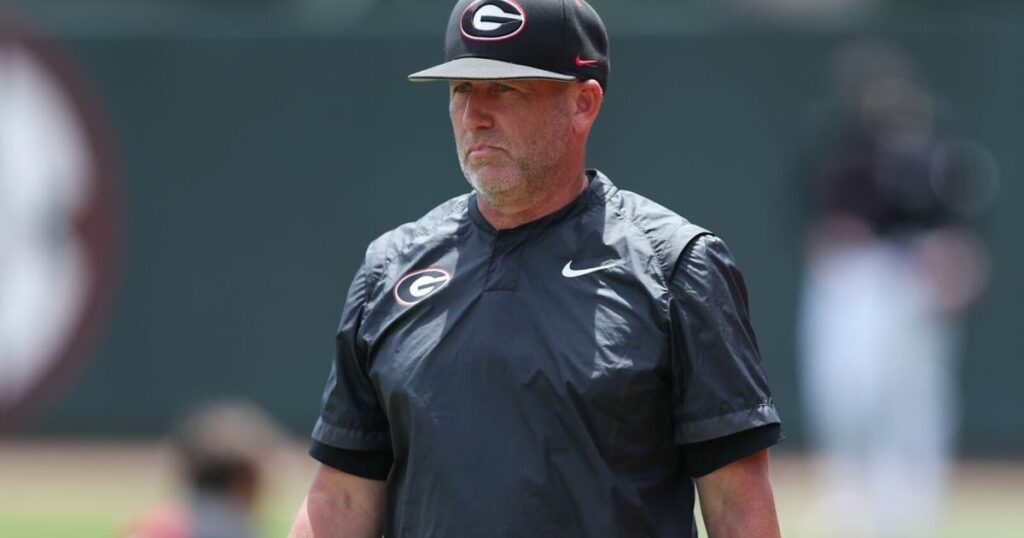
For the better part of the last three decades, Johnson has been transforming raw arms like Sneed’s into major league talent. From his first days as a college baseball coach at Central Arkansas in 2008, to his current role as Georgia’s head coach, more than 60 pitchers that have been under Johnson’s tutelage have been drafted to the MLB.
“Wes Johnson was huge for me,” Sneed said. “He is one of just a few people I can point to and say, ‘I wouldn’t have done the things I was able to do without him.’”
Though Johnson never played baseball professionally, he has the complex realm of pitching down to a science. He is a huge advocate for using state-of-the-art technology, such as TrackMan and Hawk-Eye, to help analyze his pitchers and gauge their progress.
“It’s everything we do,” Johnson said. “I’ve been on record saying I’m 98% objective and 2% subjective when it comes to filling out a lineup. There’s nothing we do that doesn’t involve analytics or data.”
These systems provide advanced metrics like spin rate and horizontal movement, which show Johnson highly specific areas where his pitchers need to improve. During the recent offseason renovation of Foley Field, a pitching lab was installed and equipped with this technology. These tools, combined with a player-specific coaching and communication style, sets Johnson apart.
“Wes Johnson is a master communicator,” Sneed said. “I’ve seen and experienced him say the same thing dozens of different ways until it clicks for a guy. He also knows what a guy needs to hear, some need to be calmed down, and others chewed out, while some might need a joke. I’ve seen him get in a guy’s face and a few innings later go out there and give a different guy a verbal hug. He knows what his guys need and he provides it.”
Johnson brought success to a Georgia baseball program that was treading water in the SEC when he was hired as head coach after the 2023 season. It starts on the recruiting trail, where Johnson’s record with pitcher development has attracted players from around the nation to Athens.
He brought in several highly sought-after recruits, including Brian Curley, who transferred from Virginia Commonwealth University after posting a 2.87 ERA and 8.9 K/9 across 78.1 innings in 2024. Curley was drafted by the Pittsburgh Pirates in the 2024 MLB Draft, but chose to play for Johnson instead because he believed Georgia was the best place for him to elevate his game.
“If you look at [Georgia’s] track record, like from fall to the spring, where our guys are now, I don’t think you’re gonna see better development and better progress of pitchers anywhere in the country,” Curley said.
Georgia’s pitching has improved drastically in just about every statistical category from 2023 to this season, which has translated to on-field achievement, including the team’s first appearance in the Super Regional since 2008 last season, after having lost the last five regionals the Bulldogs played in. Georgia is off to another promising start this year, currently sitting at 36-11 and tied for fifth in the SEC with the conference tournament right around the corner.