
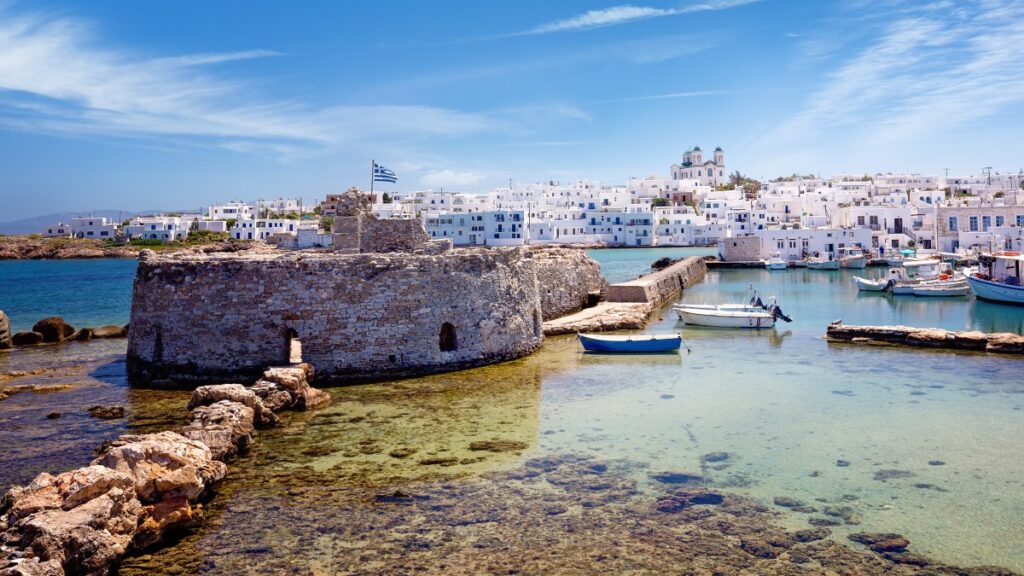
Greece? It’s always been a summer thing for me — across the many eras of my travel life. From the first time I set foot on its sun-baked paths on an end-of-August trip in my twenties to see friends with Bergasol tans who were working in island bars, when sunbathing, snogging and shots were the order of the day; to school holiday stays with my young children, who became gorgeously sunkissed with beach hair and sandy feet.
But in the face of soaring Mediterranean peak-season temperatures, a growing distaste for mass tourism and the need for an actual, calming rest, this year we — myself, my husband and 13-year-old-son, our two friends and their two teenagers — decided to go to Greece when it was still green, in the springtime freshness of April.
We chose the island of Paros, one of the Cyclades, and escaped for Easter, when temperatures ranged between 16C and 23C and days were sparkling bright, the sea properly cold, the villages just quietly living their lives, preparing for the four-day festivities (Easter is a bigger deal than Christmas in Greece), with no tourists around. It was a revelation.
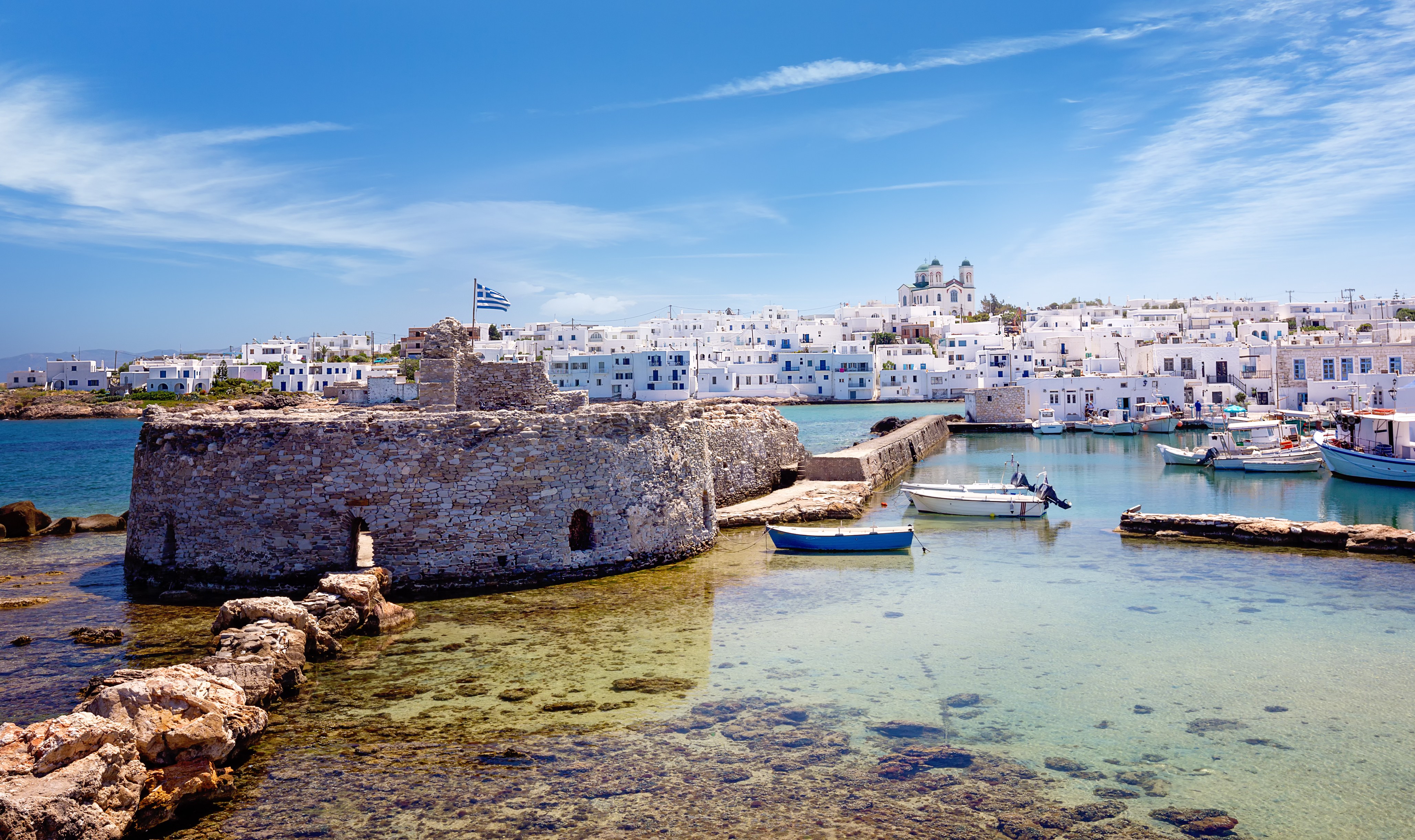
Paros is perfect in the off-season
GETTY IMAGES
Here’s what we learnt:Spring in the Greek islands is gorgeous
Paros at this time of year felt like the Cornish peninsula, but with far fewer people. A fairly wild wind; cheerily resilient wildflowers, their yellow, red and blue faces bending and bobbing with every gust; craggy coastal walking paths alongside cornflower blue seas … it was a setting ripe for exploring in hoodies with shorts and sandals, for taking bracing dips in an ever-changing ocean and was very like the West Country — with one big difference. There were no other tourists. We met no one on our hikes other than local dog walkers, and the only other early morning swimmers were a pair of sun-weathered expats who gave me a jolly thumbs-up every day as they high-kneed into the sea.
Cooler weather is no bad thing
Maybe we were lucky, but the sun shone every day of the mid-April week we were there, with enough warmth to gently bake our skin but not burn it, and bright blue skies above. In August, the weather can be a force to be reckoned with. We have had weeks when it was too hot to go outside after breakfast, where eating alfresco was plagued with wasps, and we spent our days smothering the children in layer after layer of factor 50.
The land can seem like a series of dust craters too, burnt and desolate; but in spring, the landscapes were green with the phrygana that grows across hillsides and along the coastal paths. Yellow and white chrysanthemums pop up wherever they can, and so busy is the insect activity that even a short stroll can feel like a visit to a botanical garden.
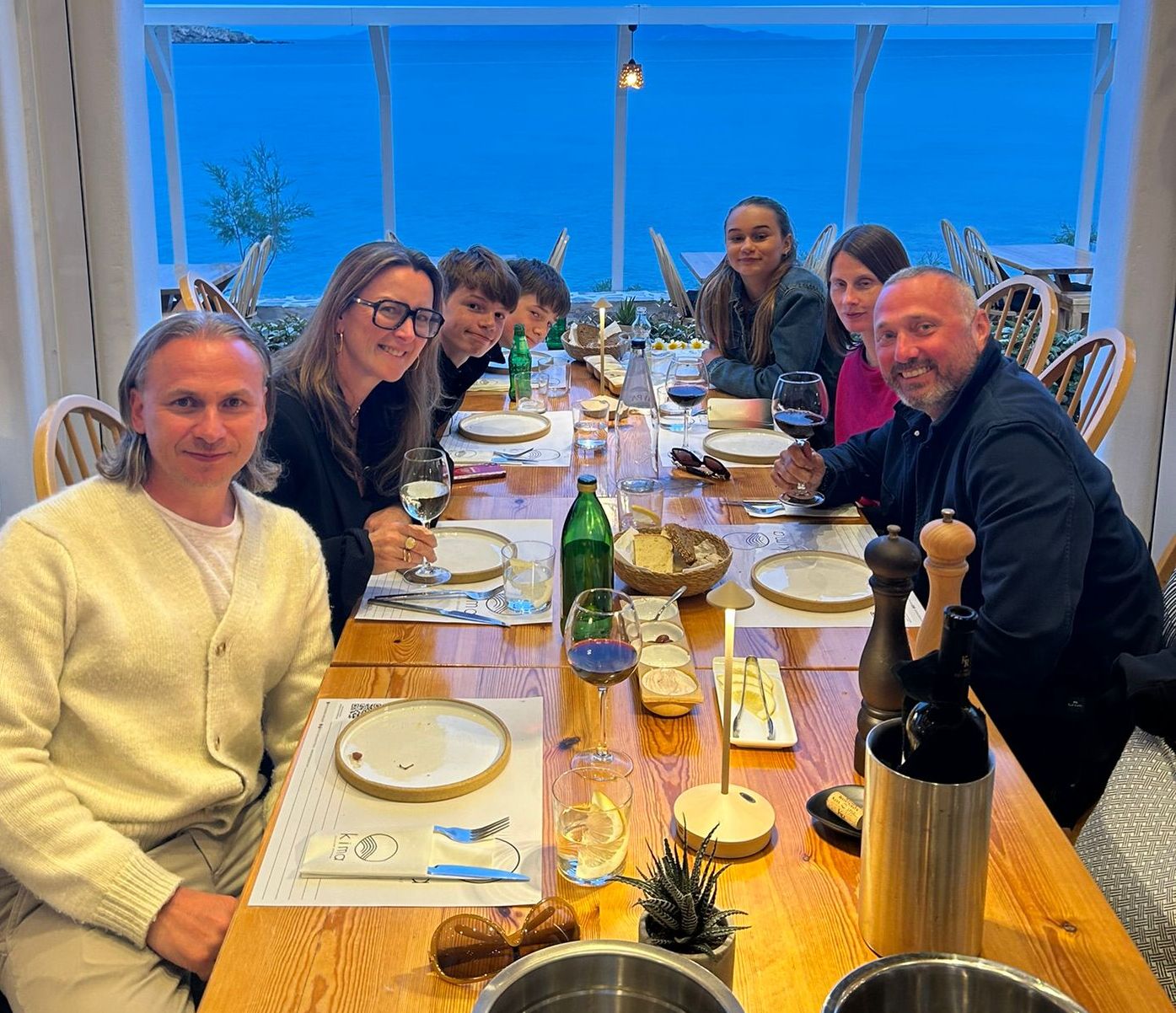
Claire and family at Kima restaurant with her family and friends
You’ll find super-luxe for less
With online searches for “off season Mediterranean” up 25 per cent, many travel companies and destinations are looking to extend their seasons. The travel trade organisation,Abta, for example, says its members have been working to meet the demand by prolonging the seasons for destinations such as Turkey, Greece and Spain and adding capacity in the so-called shoulder seasons of May, June and September. This can mean in some places that the off-season is almost as in demand as peak season. Are you keeping up at the back?
This year, the combination of a late Easter — which fell in the third weekend of April — and my own discovery of The Thinking Traveller, a B Corp luxury accommodation company that is committed to bolstering the communities in the regions it serves, with many properties opening in April, made finding a list of suitable villas much easier than usual. We pored over average temperatures around the Greek islands and villa floor plans and settled on one called Santhia, at the north end of Golden beach, a glorious arch of gently shelving sand on the south side of Paros. In August, the villa — which sleeps 14 — would cost up to £38,000 a week. In April, it is £13,500.

Luxury accommodation, like the villa Santhia, comes with a lower price tag off-season
And what a villa. With a stunning infinity pool, expansive sea-view terraces and beach access through a garden gate and down a meandering path bordered by a fragrant RHS Chelsea-worthy planting scheme, plus a magnificent circular seating area and fire pit, the outdoor areas were those you’d want to make the most of, which was arguably easier to do in a slightly fresh breeze than the burning heat of summer. Though whatever time of year you choose to stay here, you’d have no sense of the crowds of high season from within its perimeter walls. (Not sure when you’d use the fire pit, though, since the annual fire ban had already started before our arrival.)
We love to self-cater on holiday, and could cook freely in the large outdoor kitchen and dining space, without the predictable summer sweats. And the shaded seating areas made cosy evening shelters from the April winds. It wasn’t too hot to use the outdoor gym area, with free weights and space for yoga mats between the olive trees.
The Thinking Traveller is focused on even earlier bookings, such as ours. “Earlier season bookings have become more popular and autumn increases every year,” says the co-founder Rossella Beaugié. “In Greece there are still a lot of islands which are great for biking, hiking and water sports that you can do in the milder months.”
Off-season holidays can be more relaxed
Without an adrenaline-fuelled itinerary or the panicky need to prebook activities as you would in the busy summer period, the holiday took on a slow pace.
Our villa hosts, who were charged with ensuring our stay ran smoothly from booking to departure, filled the WhatsApp chat with ideas — horse riding, hikes, snorkelling, scuba diving, a wine tour and tasting — but we instead leant into making impromptu plans according to weather and whim. We hired a car — an essential on the islands whenever you visit — and found the quiet roads a pleasure to potter around on (car hire is about £11 a day in early May).
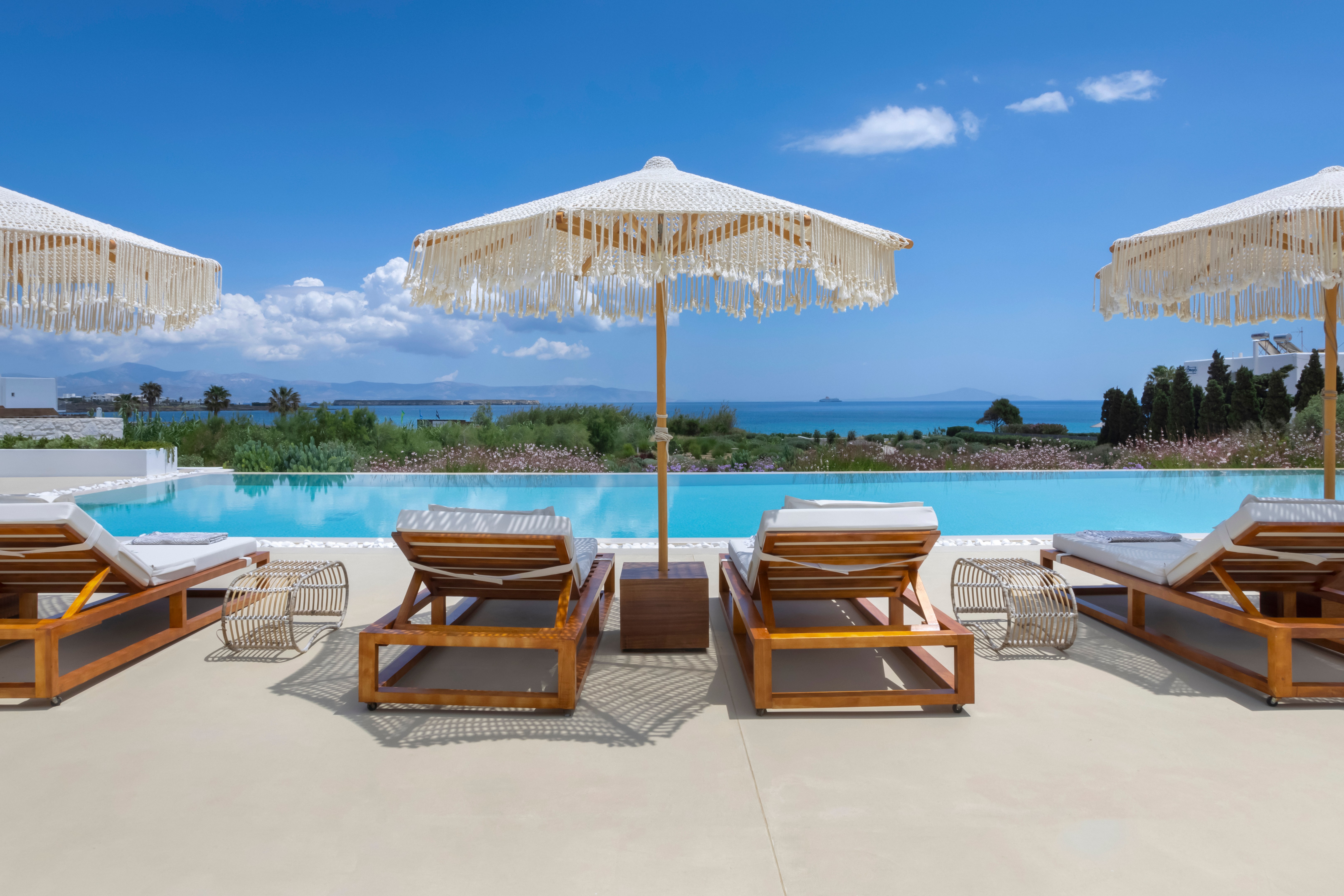
The villa has sea views and a stunning infinity pool
There was a sense of rising anticipation across the island, for the Easter festivities and for the season to come. We dropped in on an Easter bazaar in the empty streets of Prodromos, where we bought hand-decorated candles and drank zingy homemade lemonade surrounded by idly curious cats. We tiptoed over freshly painted pathways in Naoussa as shopkeepers decorated their shopfronts with flowers for Easter weekend, and ate colourful Greek salads outside the one open restaurant on the town square. We indulged in ice cream and browsed souvenir shops on their first day of opening in lovely Lefkes, and lingered in the best sundowner seats in its hilltop bar.
Beaches are deserted
Paros’s beaches are one of the island’s main draws — a combination of soft sand, like ours, and stony coves. Many gradually shelve into the sea which, combined with the prevailing north winds, makes them perfect for surfing and windsurfing. No water sports were open during our stay.
After relaxing and playing football on the deserted beach, we would often wander to the Golden beach shop, a bouji boutique full of designer beachwear and knick-knacks; the owner Angie told us the beach is a very different place in summer. Only the sheltered top end, where from late May Santhia’s guests can enjoy private cabanas (early in the season the tide is too high) is quiet. Usually, she said, “everywhere is covered with people”.
• 28 of the best holiday villas in Greece
This trend for travelling where other people are not, says Beaugié, is also one The Thinking Traveller is focused on. “For our travellers looking for a more cultural trip, Italy tends to have a longer season in general, with many museums, archaeological sites and experiences such as Mount Etna often preferable to visit in the quieter months. We also increasingly see large multigenerational trips from the US for Thanksgiving, and some families that rent our villas at Christmas.”
“We’re seeing a decisive move away from the obvious, both in timing and destination,” says Peter Chipchase, the chief marketing officer at Abercrombie & Kent. “Travellers are choosing to explore the Mediterranean outside the summer peak, when iconic places are quieter and lesser-known corners come into their own. Think Puglia’s hill towns in early spring or the Peloponnese in late autumn, still sun-soaked, rich in culture, and blissfully under the radar.”
Eleni Skarveli from the Greek National Tourism Organisation says that bookings from the UK were up 88.5 per cent in November. “There are more accommodation options due to lower demand, often at better prices. Many travellers are also seeking more relaxed islands such as Karpathos or Kythnos, which remain quiet even in July.
“For the ideal summer escape, we recommend visiting Epirus and the Zagori villages in August — where air conditioning isn’t needed, and nature is truly one of a kind.”

Greece’s beaches can be deserted in the spring time
ALAMY
You’ll feel like an honorary islander
In line with the season’s lazy pace, we would rise late and pootle to the Oasis bakery just five minutes’ drive away rather than order a more formal breakfast service from the villa chef Irini. By day two we were greeted by name, with our daily order of crusty bread waiting for us, along with fresh spanakopita and a surprising need to replenish our stocks of an excellent £10 local red wine.
This warm welcome was reflected across the island, with a sense that its people were all delighted to see us. A week earlier, and many of the restaurants would still have been shut — but many were opening for the first with time to indulge in conversation. There was, however, not a boat trip to be booked anywhere on the island.
• The chic Greek island that’s easy to fall for
At Kima, a stylish waterfront restaurant about a 20-minute walk north along the coast, we happened upon opening night, our fellow diners all locals, the staff excited to be back in business. As the night went on, the cross-table conversations became more jolly and shots were shared. The conviviality spilt onto WhatsApp (where else), a group was created, plans to watch a big football match together later in the week were made, before a moonlit stroll back to Santhia. For our final night — Good Friday — the draw of returning to Kima over a pilgrimage to the nearby town of Marpissa, to watch its famous Epitafios procession (a religious ceremony during which a cloth symbolising the body of Christ is placed on a special ceremonial table, covered with flowers and rosewater, and in some cases paraded through the town or village) was too great. Imagine our joy when a smaller, but equally moving, local procession passed by, covered in beautiful pink roses, directly in front of our restaurant table.
But getting there can be trickier off-season
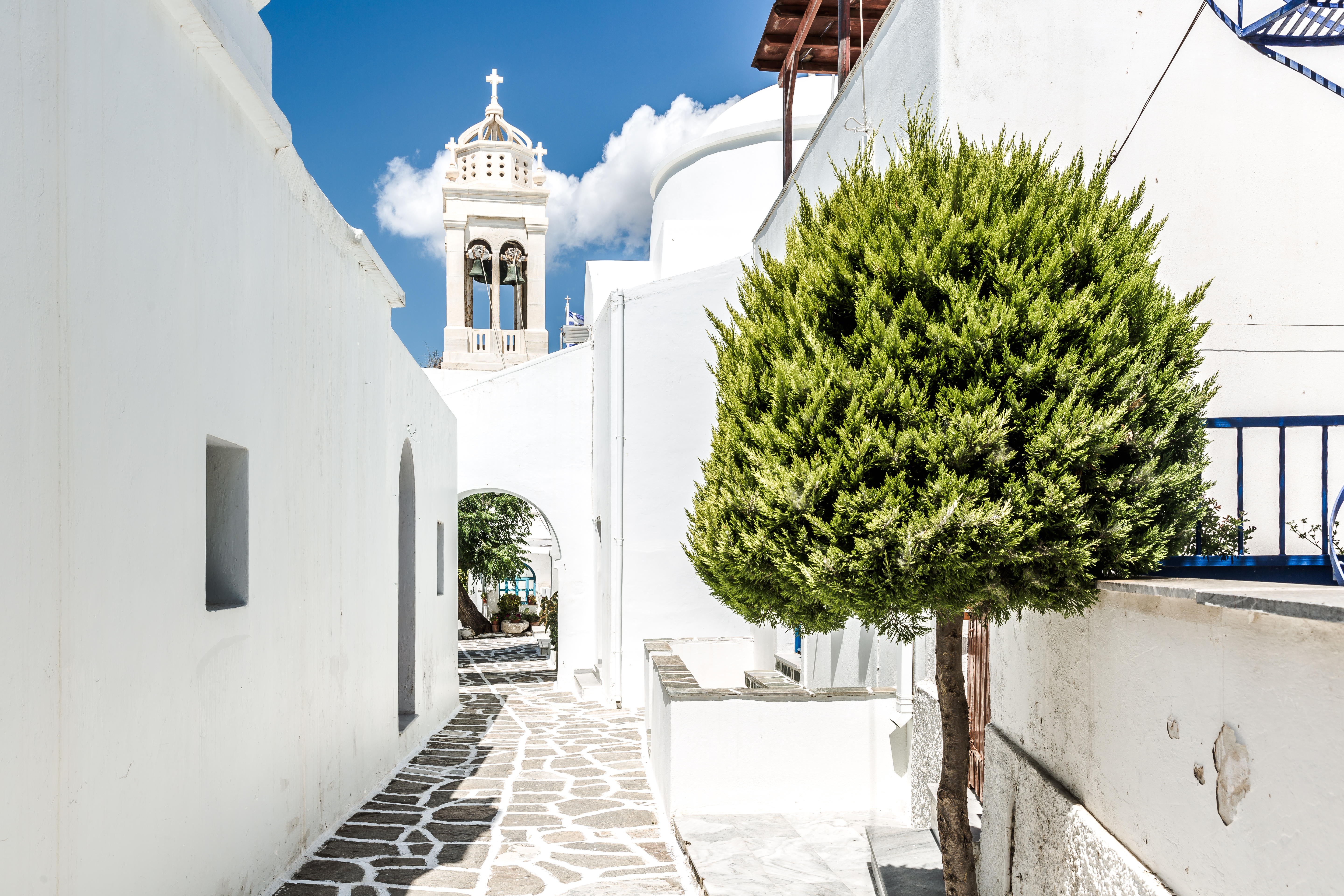
It’s easier to feel like a local when there are fewer tourists around
ALAMY
To most Greek islands, off-season flights aren’t as regular as those between May and September. For us that was no big deal, we went via Athens and spent a night at the newly refurbished Roc Club hotel on the Athens Riviera, a 40-minute drive from the airport and 30-minute drive to the ferry port the following morning. We could have enjoyed some more time exploring the city, but it’s something to bear in mind.
We then took a four-hour ferry from Piraeus, Athens’s main port, to Paros. It was about half the price of the equivalent domestic flights but also felt like more of adventure. However, our hippy-hued memories of easy ferry hopping between islands long ago were quickly replaced by the reality: a grumpily crewed, diesel fume-saturated shlep — a mistake we won’t repeat. Our return flight from the Lilliputian domestic airport in Paros was much more fun.
• 14 of the best hotels in Paros
There are other catches
The only big disappointment was that the pool was so cold. Santhia’s 20m infinity pool, with plunge whirlpool, is a showstopper. But along with all the other pools on Paros and Antiparos, it is also unheated. The three teenagers were not happy about this.
Reader, we tried. Repeatedly, with theatrical entries providing a lot of laughs, as well as early onset hypothermia. I’m partial to a wintry lake swim, but this water was bone-chillingly unbearable. Admittedly, it did warm up (a bit) over the week, and by comparison, the sea felt positively bath-like. But it felt a shame to not use this gorgeous facility to its full potential. Off season, there is simply no point paying extra for somewhere with a pool unless you are happy to (freezing) cold swim. It did look pretty though.
I’m sold on the off-season, where next?
So with a week of true escapism and cultural immersion under our belt, we are all agreed — we’ll never go to Greece high season again : our low season era is well and truly under way. A recent road trip in Sicily in October was similarly crowd-free. I have always loved the Alps more in summer than winter — soft, fragrant air, and empty mountains (give or take the odd cow). And we might try the southern hemisphere in our summer — southeast Asia, maybe or even Australia. It’s their winter, but temperatures can still hit the high 20s. Low season, here we come.
Claire Irvin was a guest of The Thinking Traveller, which has seven nights’ self-catering for 14 from £12,376 (thethinkingtraveller.com), of the Roc Club, which has B&B doubles from £466 (grecotel.com), Holiday Extras, which has nine days’ parking at Heathrow from £167, and lounge entry at Athens International Airport’s Goldair Handling CIP Lounge (Terminal B) from £35pp (holidayextras.com), and Sixt, which has seven days’ car hire from £92 (sixt.co.uk). Fly to Paros via Athens
Where else is at its best in the off-season? Let us know in the comments