China Launches Satellites to Build the World’s First Supercomputer in Orbit
China Launches Satellites to Build the World’s First Supercomputer in Orbit

China Launches Satellites to Build the World’s First Supercomputer in Orbit
China Launches Satellites to Build the World’s First Supercomputer in Orbit
10 Comments
I’m missing something here. Big compute means lots of waste heat. Radiation is very inefficient way of getting rid of it. The radiators would have to be gigantic. How is this supposed to actually work?
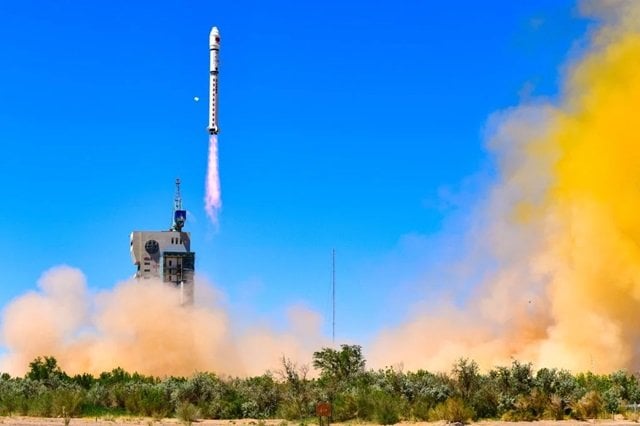
> China has taken a major leap in space technology by launching the first batch of satellites for its ambitious space computing constellation, aiming to create the world’s first supercomputer operating entirely in orbit.
> Once fully operational, the constellation is expected to achieve
an astonishing total computing power of 1,000 peta operations per second (POPS)—equivalent to one quintillion operations per second—making it competitive with the world’s most powerful ground-based supercomputers. For context, the United States’ El Capitan supercomputer currently holds the top spot with 1.72 quintillion operations per second.
> Jonathan McDowell, a Harvard astronomer and space historian, commented on the growing trend of cloud computing in orbit, noting its environmental benefits. “Orbital data centres can use solar power and radiate their heat to space, reducing the energy needs and carbon footprint,” he said. With data centers worldwide consuming over 1,000 terawatt hours of electricity
annually—comparable to Japan’s total electricity use—space-based solutions could alleviate the environmental impact of Earth-bound data centers.
>the World’s First Supercomputer in Orbit
So is this Skynet or what?
Be a shame if that satellite needed some liberty and democracy… if ya know what I mean..
Can’t stand all these “China does X” posts that have been popping up all over the place for years without anyone questioning whether what they post actually makes sense.
Great stuff with that supercomputer in space. Now let’s see you build a super connection so you can actually transfer all the super large amounts of data that you usually feed supercomputers with without any degradation and with a useful amount of lag
Did no one read the article?
The goal is to process data from satellites since the vast majority of data from satellites doesn’t come to Earth based data centers to get processed.
Finally! Took us too long to start building in space already.
Just another sign on the reasons the US is behaving like a falling empire, because it is.
I guess thats one way around US sanctions; have nVidia deliver their chips to space 😉
That’s one way to take care of the heat problem, radiate it into space.