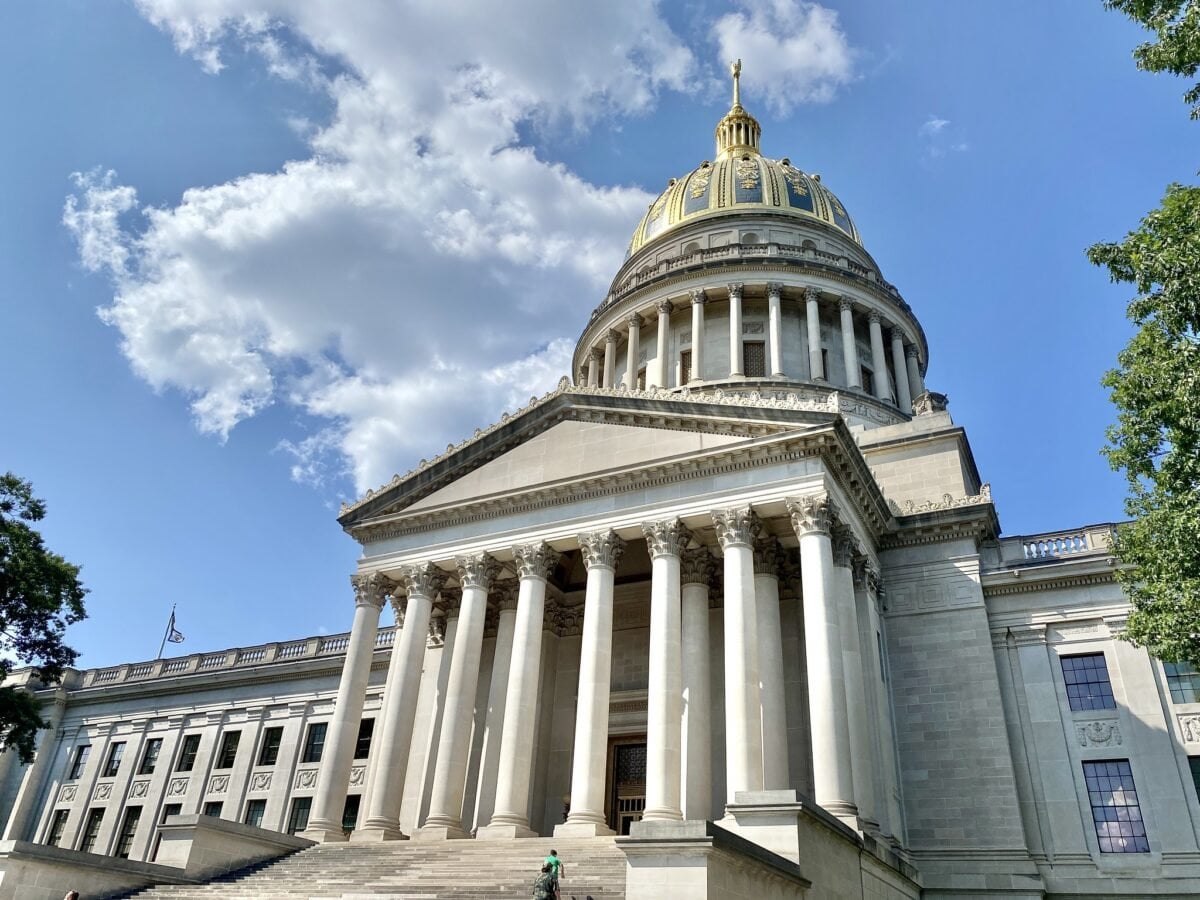
Gov. Patrick Morrisey passed the Power Generation and Consumption Act, which creates a statewide certified microgrid program to lure data centers into the state.

Gov. Patrick Morrisey passed the Power Generation and Consumption Act, which creates a statewide certified microgrid program to lure data centers into the state.
5 Comments
The bill was created at the governor’s request, with hope that the ability for companies to easily create their own independent energy grid will entice data centers to the state.
Microgrids use local energy sources to generate power for individual buildings or for a campus of buildings. Similar to virtual power plants (VPPs), microgrids can connect to the utility grid and relieve pressure through the energy they generate and store. However, microgrids can also operate autonomously from the larger power grid, using “island mode.” Microgrids can be particularly attractive to data centers because they can disconnect from the grid and operate independently during power outages.
Good for WV at least trying to be innovative to attract business and people. Though I wouldn’t bet the farm on just this one plan.
I took a class about the exciting future of smart grids, this is awesome to see them implementing this.
If solar etc, really catches up and rolls out affordable, with enough battery production. I think there is going to be a strange in between, as people can become detached from the grid.
Ideally a surviving energy company will provide such services in their branching out and offer things like maintenance and install.
Before the full necessity of that, I’m interested in what occurs regarding the poor.
According to a quick AI search, as of 2022 2.7% of homes have solar. We know not all of those are whole home or off grid capable.
If the number of whole home/off grid capable grows to 10% this might simply be a wash for energy concerns. If you hit 20+%, the power companies as we know them begin to decline. Somewhere perhaps around 50%? They may begin to struggle to be in a useful zone. But the people who cannot afford solar yet, will need the utilities.
I wonder if this in a way would go like the railroads or subsidy with a massive government involvement to provide power to the remaining and dwindling group. As lines slowly disappear and services are only provided for legacy zones.
New home construction? Better be power independent. Type deal.
The question is regarding how much resources the world can muster in terms of that much solar paneling and battery. Especially if Electric Cars ramping up etc, also tax some of those resources.
We’re still left with then some questions of places where solar is highly ineffective due to sun times etc. So that they may require small power companies to operate.
Now coops and lime HOAs or Town grids may offer a sale basis to those who can produce abundance. Making individuals like some who can “sell back” power a mini-micro power supplier. Imagine you have a house with power capacities 3x what you use, you’re in town and in that town you are hooked to sell power in symbiosis with others. You could end up with power companies that serve only as a management firm of sorts. Maybe a small generation ability that can fill minor gaps. Two way meters everywhere, where the power-money is transfered among individuals almost like archaic farm bartering. And from that exchange is a % for the management company.
“The bill was [heavily opposed](https://wvecouncil.org/urgent-protect-local-control-electricity-ratepayers-take-action-on-hb-2014/) by many West Virginians.
A [petition with more than 2,000 signatures](https://www.change.org/p/protect-local-freedom-urge-governor-morrisey-to-veto-data-center-bill?source_location=psf_petitions) addressed concerns over how the legislation strips them of their say in the development and operation of large-scale industrial projects tied to microgrids and data centers. “In essence, Charleston is allowing the fox to guard the henhouse,” the petition said.
“HB2014 opens the door for large-scale industrial facilities that would have lasting negative impacts on our mountains, rivers, and clean air,” the petition said. “Furthermore, it increases the burden on local infrastructure and emergency services, while driving the lion’s share of revenue away from our communities.”