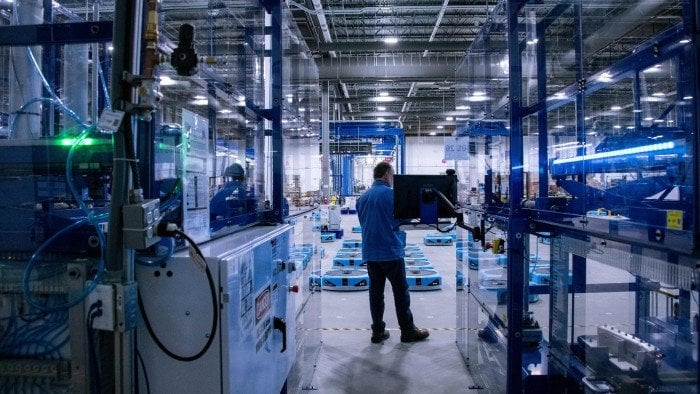
Working with robots often carries mental strain, studies find – People can feel that their work has less meaning and keeping pace with machines is often stressful
https://www.ft.com/content/528e3c25-22c7-4c83-b80a-dd07dae92c5d

Working with robots often carries mental strain, studies find – People can feel that their work has less meaning and keeping pace with machines is often stressful
https://www.ft.com/content/528e3c25-22c7-4c83-b80a-dd07dae92c5d
3 Comments
From the article
“When we look at the tasks people report doing after robotisation, it seems that there’s an increase in monotonous, repetitive, routine tasks,” says Milena Nikolova, lead author of the paper and a professor in the economics of wellbeing.
“Because they standardise and routinise the work process, you as a worker have fewer decisions to make . . . in terms of what tasks you do, the order in which you do them, or often even the speed you do them, because you’re dependent on the work pace of the robot.”
The effect is important not just on an individual level, but also because people who find purpose in their work put in more effort, are less likely to want to quit their jobs and miss fewer days of work, she adds.
Separate analysis by the EU agency Eurofound backed this up, finding that workers who interact with robots reported increases in several undesirable working conditions such as increased surveillance and working alone.
Another study of manufacturing workers in China published in 2024 concluded that robots were associated with better physical health but worse mental stress, in particular because of anxieties about job security.
Robots make work processes more efficient and yes can replace people. When I go to McDonalds’ drive thru and the humans mess up my order more often than not I wonder when McDonalds will replace the humans with robots.
BUT REMEMBER EVERYONE robots are MACHINES that we control. If evil humans make them more it is humans that will allow that to happen.
I worked for 3 years on a team of like 20 software developers. A year after I left the company decided to pay for a vendor solution instead.
I could have just stayed home and got paid for 3 years and the end result would be the same. Kinda feels weird.