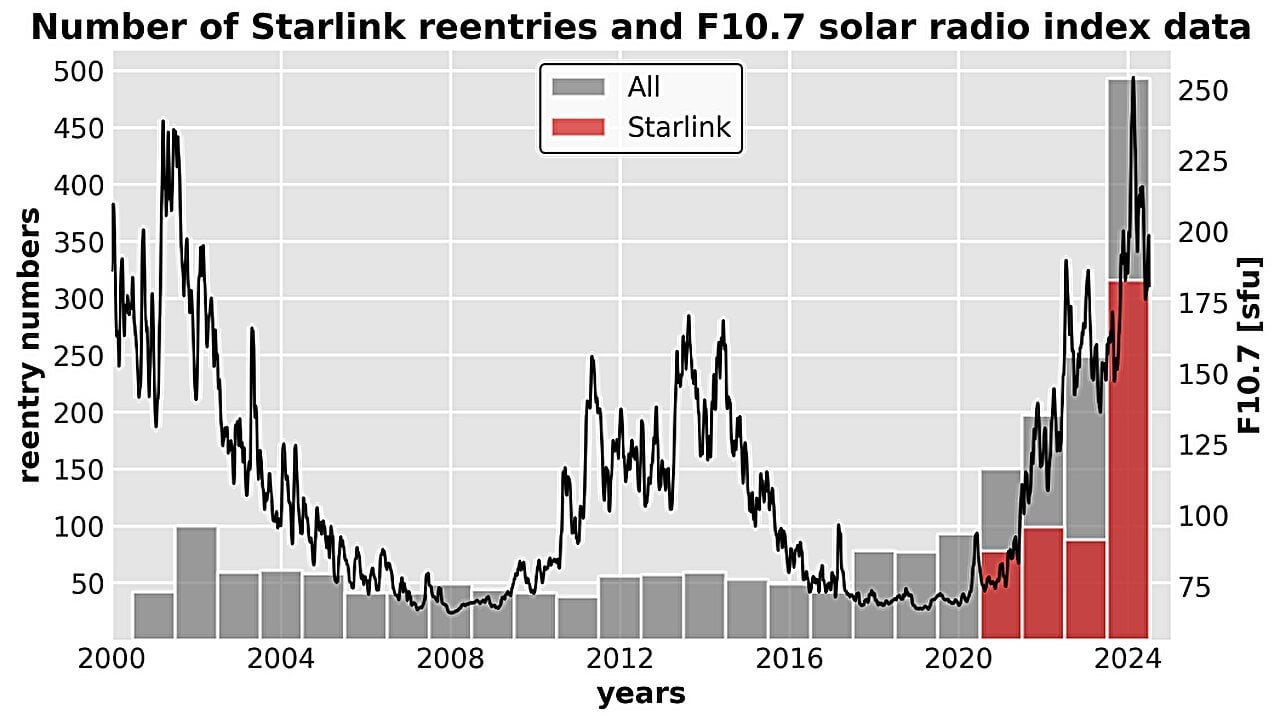
Starlink satellites fall to Earth faster during increased solar activity, study finds
https://phys.org/news/2025-06-starlink-satellites-fall-earth-faster.html

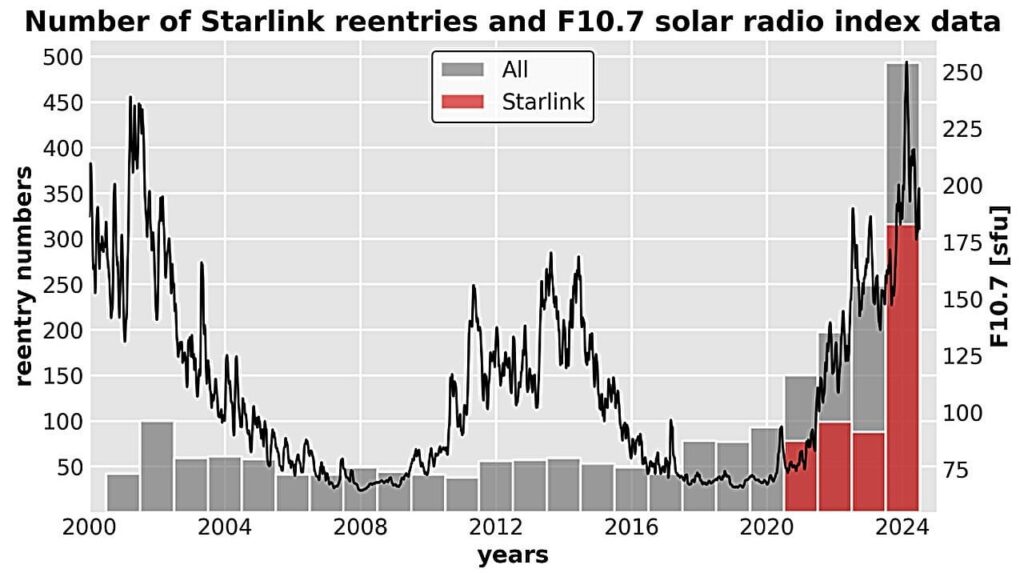
Starlink satellites fall to Earth faster during increased solar activity, study finds
https://phys.org/news/2025-06-starlink-satellites-fall-earth-faster.html
12 Comments
Old news, and was known to happen before the first ones were launched.
More drag = use more propellant = shorter lifespan. Quite simple. That’s why the bigger Starlink says are needed. It significantly increases its storage tanks basically. And now they also shift the orientation during these events to further reduce drag on the sat…
Should be clear that all satellites in LEO experience increase atmospheric drag during solar activity. Starlink happened to have a good data set to analyze thanks to the large number of satellites.
All LEO satellites do… But Starlink drives the clicks am i right?
This was known. Solar activity heats atmosphere -> atmosphere expands -> satellites experience increased drag
Sure they lost a whole launch’s worth because of this.
Starlinks re-enter at about once per day now.. and that rate goes up with the constellation size.
That’s one of the reason maintaining Golden Dome will be so expensive.
The first generation of Starlink’s (and all of them eventually) will reach EOL and re-enter as expected…
So more stuff pushing you down makes you go fall down more. Got it
Skylab deorbited sooner than it was expected to because of increased solar activity which induced it to more drag, it happens a lot and isn’t exclusive to starlink
This was the reason SkyLab fell back to Earth earlier than expected in **1979**.
That it affected Starlink was known since it first happened to years ago.
I get all my news about this from **Jonathan McDowell the Orbital Police**
The headline conclusion on this is a confirmation of a relationship that is pretty well understood, higher activity = more drag, but I think this direction of study is still interesting. Studying large LEO constellations will absolutely be useful for better prediction of satellite lifetimes and LEO drag. The uptick in reentries (and them being unexpected) is probably exacerbated by this unexpectedly strong solar cycle.