
Hello Star Voyagers,
I am not an engineer hence this question. I would imagine that since 1966, there was progress in simulation, onboard computer, guidance system, radar and communication, thrust system, materials etc. and yet …
Granted, the recent failures are from smaller or private entities but still, there is a body of accumulated knowledge and experience I suppose since 1966 and better access to complex and advanced equipment. So I really do not understand… If you could explain why, it would be nice ^_^
https://i.redd.it/chf9n28sx37f1.jpeg
30 Comments
[deleted]
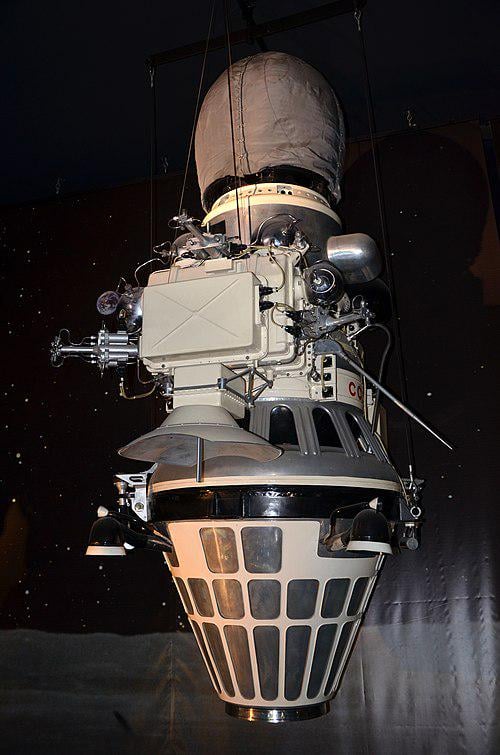
Luna 9 was something like the twelfth attempt by the Soviet Union to land on the Moon – although they kept some of the missions secret by assigning the Kosmos designation to the failed probes.
Luna 5, 6, 7 and 8 all failed to land before Luna 9, so some of it was learning from previous failures.
Compared to modern landers, Luna 9 was also a very simple concept. It was an airbag lander, which meant they had much looser requirements for final touchdown attitude and speed compared to modern landers with legs. It also had very little instrumentation onboard, pretty much just a camera and a radiation detector.
Survivorship bias. Back then also tons of probes failed. In fact, it failed more often than not. You’ve only heard about the successes.
Nowadays, more often than not when they try they succeed.
Additionally, funding. Nowadays, they try to get there as cheaply as possible while trying to be reliable. Then the funding was significantly higher. Even in that case, they crashed more probes than nowadays.
Nowadays even countries with little funding are able to make it to the moon. An example of that is India. But also fully private companies in the USA.
Most of the recent landers are aiming for very difficult terrain, because that’s where new discoveries are likely to be made. Specially, many are aiming for the polar regions of the Moon. The terrain is more rugged, and poorly illuminated because the Sun is always low in the sky.
Real Engineering on YouTube made a [pretty good video](https://youtu.be/IC32zBGdJok?si=Ta5fOEndLNaCUOWm) discussing this very subject.
I’m sure Scott Manly and Curious Droid (and many others) have all done YouTube videos about why some modern moon missions are failing when some earlier moon missions had succeeded. All the explanations are there. There are many contributing factors.
To this day, there’s a 50% chance of successfully propulsively landing on the moon.
First off, government space missions have failed, still do in modern times. What you’re seeing is more corporations trying to do the same things cheaper and faster than national space agencies. Those missions then becomes “market” news because share prices are involved. National space agencies are beholden to their governments and typically want to get it right even if that means delays and cost overruns. Corporations are beholden to markets and finite budgets, not exactly a mission-first environment.
Despite the numerous corporate failures, both India and China had successful lunar landings in the last 2 years.
Because todays mission profiles are much more risky both in selected landing zones and science payload mass than soviet era ones.
Long story short, back then they used bigger rockets which allowed them to land straight down which is pretty easy. These private companies use the absolute minimum energy way to get to the moon. That’s why they land months after launch, and they come in at high “sideways” velocity which they cancel out at the last minute and only do the very last bit just straight down, and that’s often where it goes wrong.
Brain drain. The US put men on the moon with calculators, slide-rules, and duct tape. Now we can’t even reliably put people in low earth orbit and get them back on schedule.
It was a priority of National Pride that drove both sides to excel in the early days of the space race. Being intelligent was a mark of pride and something to strive for. Culturally that is no longer the case. AFAIK, Russia is the only country to ever land a probe on Venus. It didn’t last long because of the atmosphere, but they did it.
Now we just yell at each other on the internet and ask Google/Yandex for whatever dumb shit that supports our current world view so we can continue yelling at each other on the internet as the world burns. Short-sighted small minds accumulating more and more power and money and not paying taxes while shorting the future and education of children. We are on the other side of that slope that progress is stalling out and eventually we’ll all backslide into war and regress technologically to whatever is most able to be supported by the under educated populace.
Dark Ages 2.0. Maybe we’ll come out of it and pull off a Hail Mary to stop the decline but the outlook isn’t looking good with current world politics and the numbers of idiots in political power all over the world.
Larger budgets, less ambitious science equipment. And they failed a lot.
For clarity [this](https://nssdc.gsfc.nasa.gov/image/spacecraft/luna-9.jpg) is a more faithful representation of the final lander. It was basically a sphere with attached nitrogen filled airbags (much like pathfinder on mars), it had a toroidal descent stage that dropped it somewhat above the surface one its radar had brought it to zero velocity at some number of meters above the surface. This was called at the time a “soft” landing but it was still pretty rough.
Once on the surface the airbags were released & no matter which way up it settles (excluding exactly upside down on a perfectly smooth surface) the release of its 4 petals would right it. The petals then functioned a radio reflectors to the four popup antennas giving it pretty good 360 degree coverage around a band at a given inclination of the horizon that the earth should be contained in.
It was above all as simple & foolproof as could be designed given the uncertainty in exactly what it would encounter.
Today we have computers & throttleable rockets & guidance systems with machine vision so we can afford to take more risks to be able to put better instruments in exactly the places we want them. BUT, we still have failures because we fail to account for some factor, or make some mistake on the ground during integration. Also remember that the Luna lander program made 13 attempts at a “soft” landing but had only 2 successes.
Landing on another planet or moon is an extremely complex engineering project. The fact that we succeed sometimes is a bigger deal than it sounds like.
Today’s payloads are much larger and heavier. In those days they often just had a camera to send proof of landing. Now there’s a ton of science equipment on-board. That weighs a lot and then you are faced with the rocket equation. More weight needs more fuel and more powerful engines etc. Also, back then the landing trajectory was kept very simple. Today a lot of landers tip over cause they are attempting to land sideways.
I like to think of it more as different philosophies between the two groups.
Soviets style was more aim for one or two goals and rapidly develop devices till that goal was achieved. Known as rapid prototyping.
American style was to build a device that can achieve a plethora of goals in one shot and try to have it succeed on the first test. Some call this style Big Design Up Front.
I suggest to read this serious, a lot of details and explanations about soviet space programs https://www.nasa.gov/history/history-publications-and-resources/nasa-history-series/rockets-and-people/
This is the difference between military and corporations; the Military can achieve much more at a much higher human cost, while corporations can’t push their employees as much.
Spindly legs just seems so clunky and needlessly difficult. Why not just do it on the cheap and stick the lander inside an airbag. Boing boing boing rollllll bounce rollll, stop, deflate, deploy. No spincter pucker factor anticipation.
it took lots of money and lots of attempts which in the early dayswas not that big a problem
The vast majority of the luna probes are also landing. They just aren’t surviving the landing.
The biggest failure in current space designs in not trying to learn from their own previous victories….this comes from first hand working on some of the “Next Gen” projects.
Scott Manley talked about this, the trajectory the new landers are taking to land is different to the old ones. It requires less fuel and therefore allows more cargo capacity to be landed. The old way they did it takes a lot more fuel but allows for an easier landing.
The old probes and modules landed straight down basicly from orbit (simply put I don’t really understand it) and the ones we land now come down perpendicular to the surface, slow down and then turn towards the surface right at the end of the maneuover. If the lidar and sensors don’t get a good enough grip of the terrain in the short time they have to figure it out between the flip over and landing they aren’t able to judge the speed of descent and terrain and they just crash.
The last one I think went over a crater and the massive difference in the readings made it assume the sensor was faulty and stop using it for telemetry, essentially making it half blind coming in for landing.
Space is harder than it is in the shows and films. Luna 9 was incredibly simple (airbag landing) despite being built on the shoulders of it’s failed brethren, and many things can go wrong when doing a landing on another world, usually a small failure or the Speed of Light preventing instant communication. There weren’t many lunar probes after Apollo 17, and they were only revived in the 90’s thanks to JAXA
My opinion: The new lander style is relying on AI methods that are truly untested in real world scenarios so they have to learn from their mistakes similar to the rocket programs of the 50s and 60s.
The AI doesn’t understand the craters are on the moon with drastic shifts in altitude readings while passing over them, hence the failure of one of the recent landers.
Also the lateral movement the final few seconds has been an issue as the lander typically tries to stop forward motion then rotate towards ground, but doesn’t detect or doesn’t account for lateral motion on the downward trajectory and the probes “skip” along the surface when they make contact. The landers need to have more thrusters capability on the sides to counter lateral movement if the lander has not completely stopped forward motion before shifting to an upright position for the landing.
The landers look top heavy but I saw Manley’s video explaining that. But even then it has mass higher up that could play into the landers skidding across the surface and toppling over.
because 59 years later they were not using slide rules.
Designers have to build their version of a lunar lander that can launch on a booster they can afford. Working in confined design space leads to top-heavy designs because geometry.
Not a great compromise with a million craters in the landing zone. Did you see how wide apart the feet were on the Surveyor lander where Apollo 12 eased on down?
In the 1960s, electronics was made with germanium instead of silicon. So maybe it was much more resistant to radiation and low temperatures.
Basically, the old lunar probes were expensive, inefficient, and weighed a ton, and flew a very basic route with limited points of failure to maximize success. their primary goal was to succeed, not make money. Probes today are built to be light, efficient, and cheap, and fly much more sophisticated flight profiles in order to maximize their efficiency and eventually profit. those profiles are also more difficult and have more points of failure.