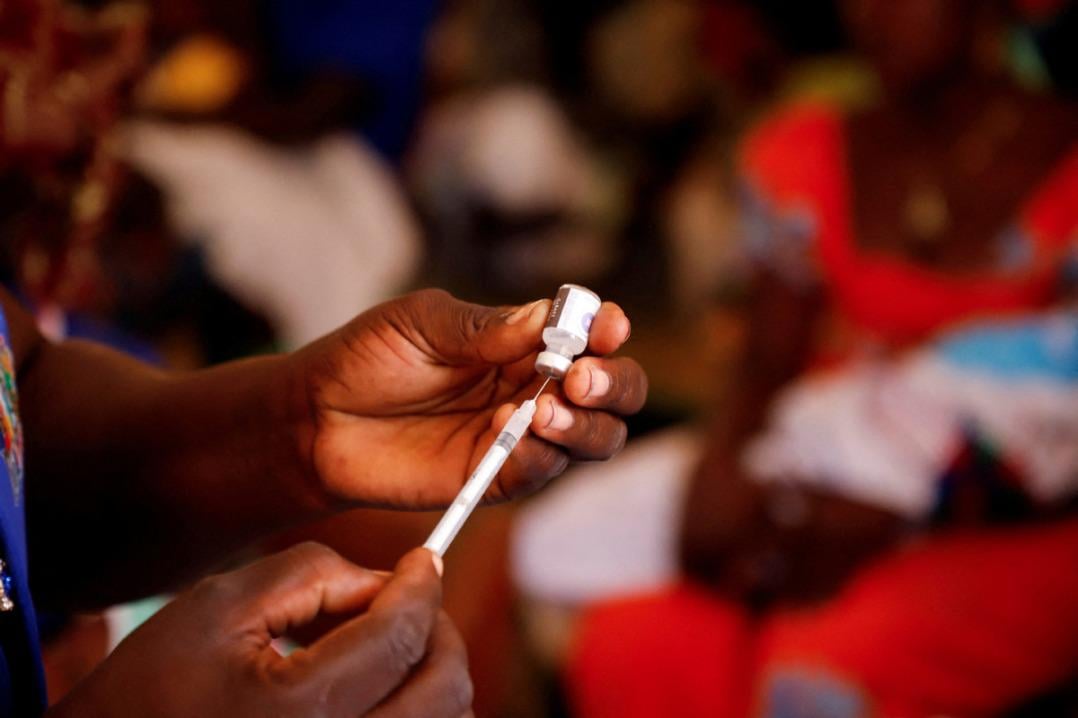
Africa faces over 500,000 malaria deaths amid worsening climate crisis
https://www.chinadaily.com.cn/a/202506/16/WS68502187a310a04af22c6961.html

Africa faces over 500,000 malaria deaths amid worsening climate crisis
https://www.chinadaily.com.cn/a/202506/16/WS68502187a310a04af22c6961.html
2 Comments
> Climate change is fueling the malaria surge in Africa, threatening over half a million lives unless urgent action is taken. A climate impact model developed by Boston Consulting Group and the Malaria Atlas Project predicts that between 2030 and 2049, climate change is expected to cause 554,000 **more** malaria deaths than if today’s climate remained unchanged. Extreme weather events are expected to **drive 92 percent of these additional deaths.**
> It further predicted that by 2050, climate change will make malaria eradication harder for 75 percent of sub-Saharan Africa’s population, equating to **1.3 billion people.**
> “Shifting temperature and rainfall patterns are expanding and altering malaria risk zones, which will continue to disproportionately affect vulnerable populations, especially children under five,” Patric Epopa, a researcher at the Health Sciences Research Institute.
> Epopa said **extreme weather is one of the biggest drivers of malaria spikes**, noting that displaced communities are often left unprotected without mosquito nets, indoor spraying, or access to early diagnosis and treatment. “Without urgent, coordinated action, we risk undoing decades of progress and failing **an entire generation** of African children,” he warned.
Wait till you hear about Texas 2026. Just saying this is futurology.