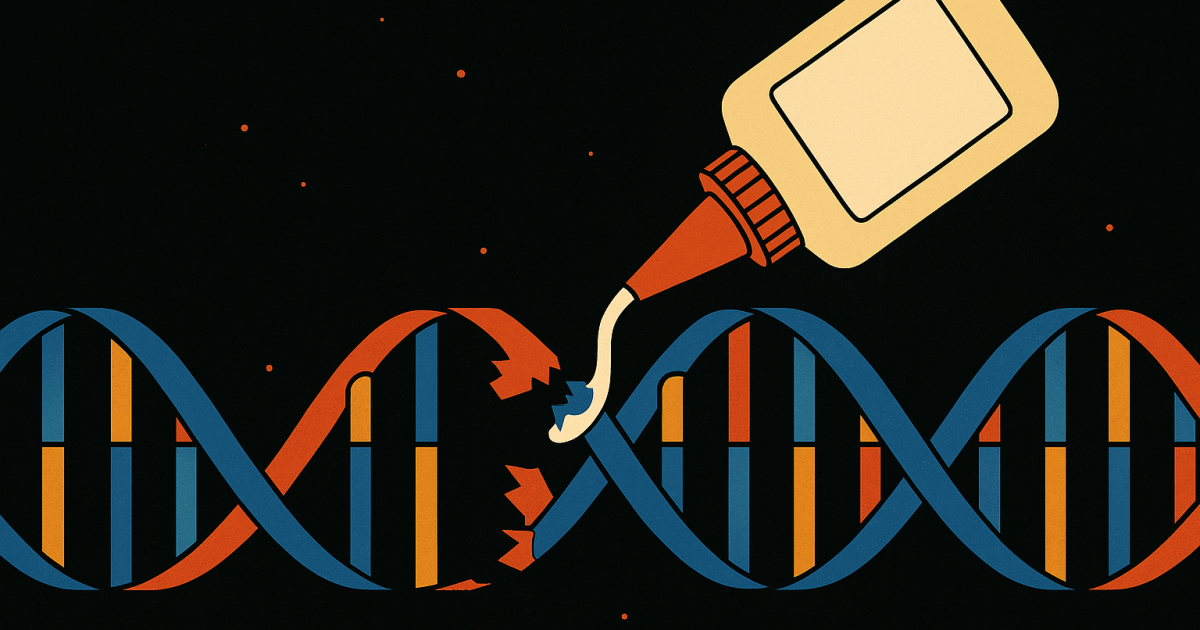
Anti-aging “glue” naturally repairs damaged DNA to protect brain cells
https://newatlas.com/aging/anti-aging-cells/

Anti-aging “glue” naturally repairs damaged DNA to protect brain cells
https://newatlas.com/aging/anti-aging-cells/
5 Comments
Submission Statement:
A protein found in our cells has emerged as a secret weapon against biological aging, acting like a glue to repair damaged DNA and ward off neurological degeneration including that seen in motor neuron, Alzheimer’s and Parkinson’s diseases.
Macquarie University researchers targeted a protein known as disulphide isomerase (PDI), most commonly found in the gelatinous liquid (cytoplasm) of cells, where it helps guide other proteins into correct formation. However, the team discovered that PDI can move through the cytoplasm and into the cell’s control center – the nucleus – to repair breaks in deoxyribonucleic acid (DNA) strands.
With age, our body’s ability to repair and maintain DNA strands can lead to premature aging and neurodegeneration, as well as increase the risk of developing serious diseases.
“Just like a cut on your skin needs to heal, the DNA in our cells needs constant repair,” said neurobiologist Dr Sina Shadfar, from the university’s Motor Neuron Disease Research Centre. “Every day, individual cells suffer thousands of tiny hits to their DNA – from both within our own bodies and from environmental stressors like pollution or UV light. Normally, the body responds quickly. But as we age, these repair mechanisms weaken, allowing damage to build up.”
One of the biggest red flags of DNA damage is found in the brain. Mature neurons – nerve cells – are highly specialized and, unlike other cells, don’t possess centrioles, the mechanism essential for cell division and replication. Because of this, our bodies can’t simply repair DNA damage or get new undamaged neurons to replace them. It’s one reason why scientists are particularly interested in neural stem cell therapies for brain injury and cognitive function.
The scientists found that PDI, on the other hand, has the power to cross into the nucleus of a cell and repair damage, which would essentially extend the life and function of these very important microscopic systems.
“Brain cells are especially vulnerable,” said Shadfar. “Unlike skin or blood cells, they don’t divide or renew – so any damage that builds up in them stays. And if the damage isn’t repaired, it can eventually lead to the death of these critical cells.
“Until now, we didn’t know why PDI sometimes appeared in the nucleus,” he added. “For the first time, we’ve shown it acts like a glue or catalyst, helping to repair broken DNA in both dividing and non-dividing cells.”
This is big news, no? Please tell me why this isn’t big news.
How would one go about developing more of this disulphide isomerase?
Promising research but we’re still decades away from practical applications. The mouse studies always look great until human trials.
Good news everyone!! We don’t need to worry about the estate tax anymore!!