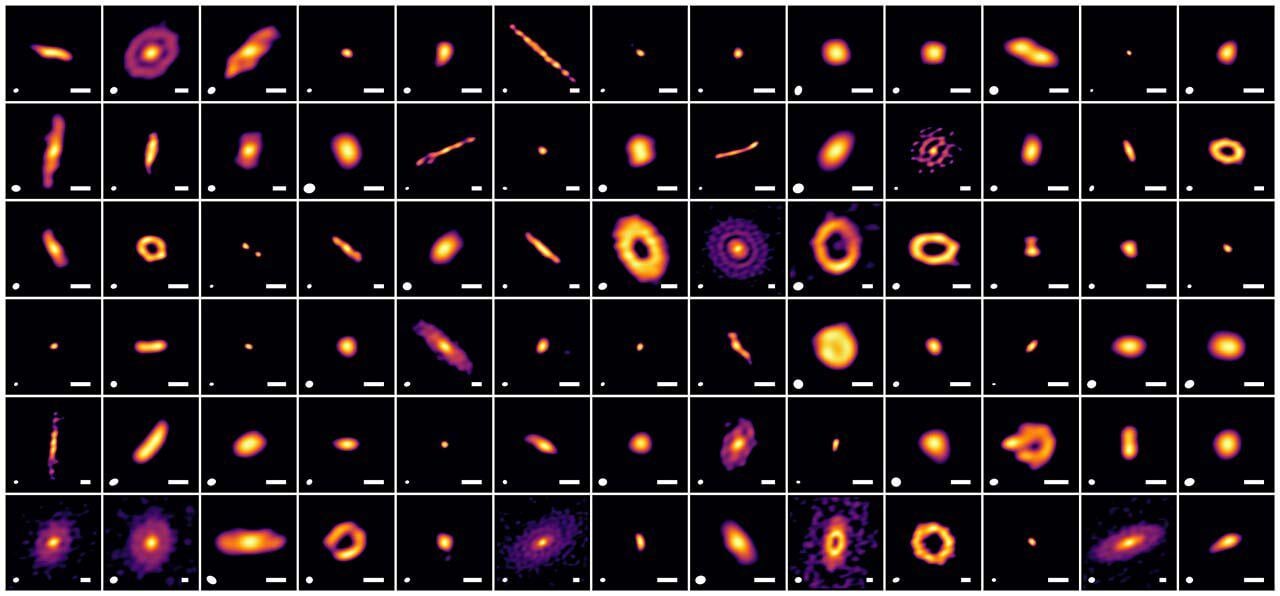
Super-resolution imaging reveals the first step of planet formation after star birth
https://phys.org/news/2025-06-super-resolution-imaging-reveals-planet.html

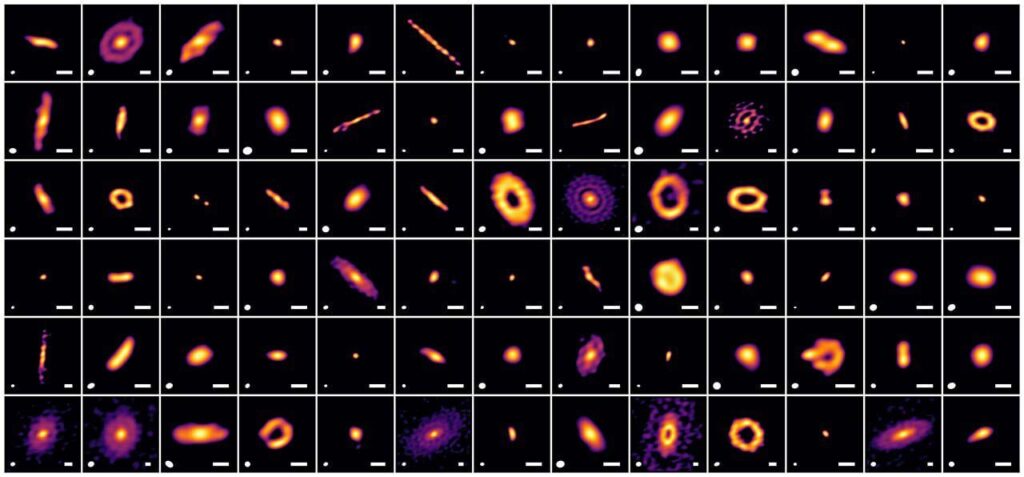
Super-resolution imaging reveals the first step of planet formation after star birth
https://phys.org/news/2025-06-super-resolution-imaging-reveals-planet.html
1 Comment
# Your RISE Rundown:
* Researchers at the National Astronomical Observatory of Japan used a new super-resolution imaging technique with ALMA (Atacama Large Millimeter Array) archival data to study 78 protoplanetary disks in the Ophiuchus region, achieving significantly higher resolution and a larger sample size than previous studies.
* This advanced imaging revealed ring or spiral structures in 27 disks, with 15 identified for the first time, providing critical insights into the early stages of planet formation.
* The study found that planet-forming substructures appear very early, within a few hundred thousand years of a star’s birth, suggesting planets begin to form concurrently with their young host stars.