
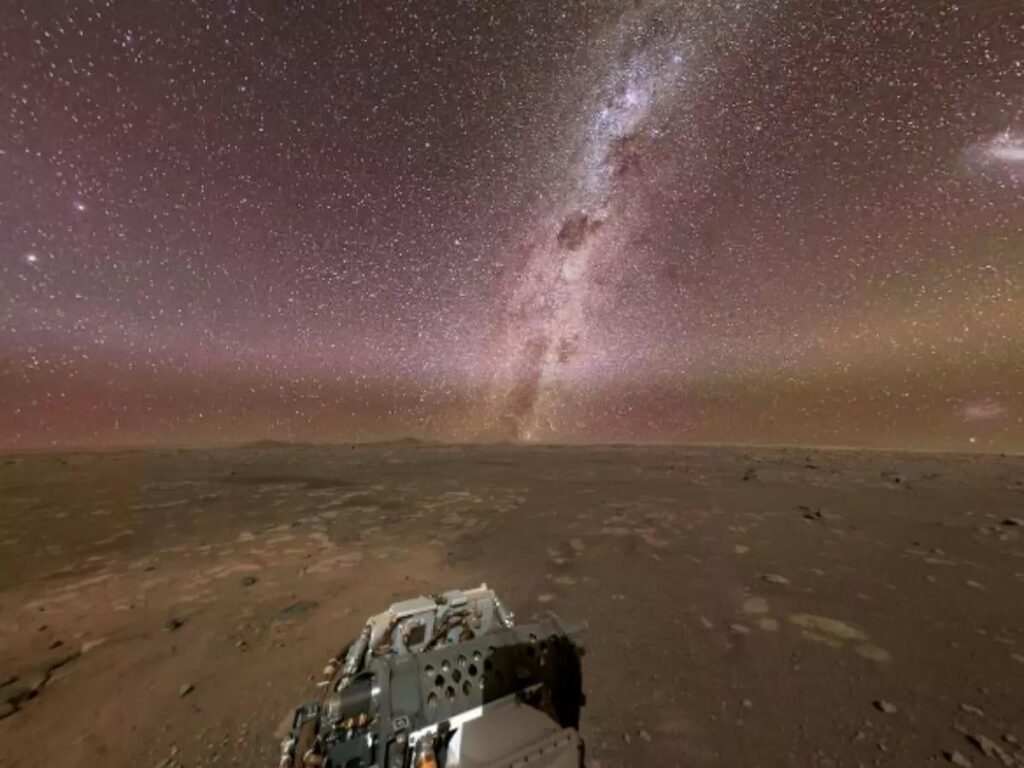
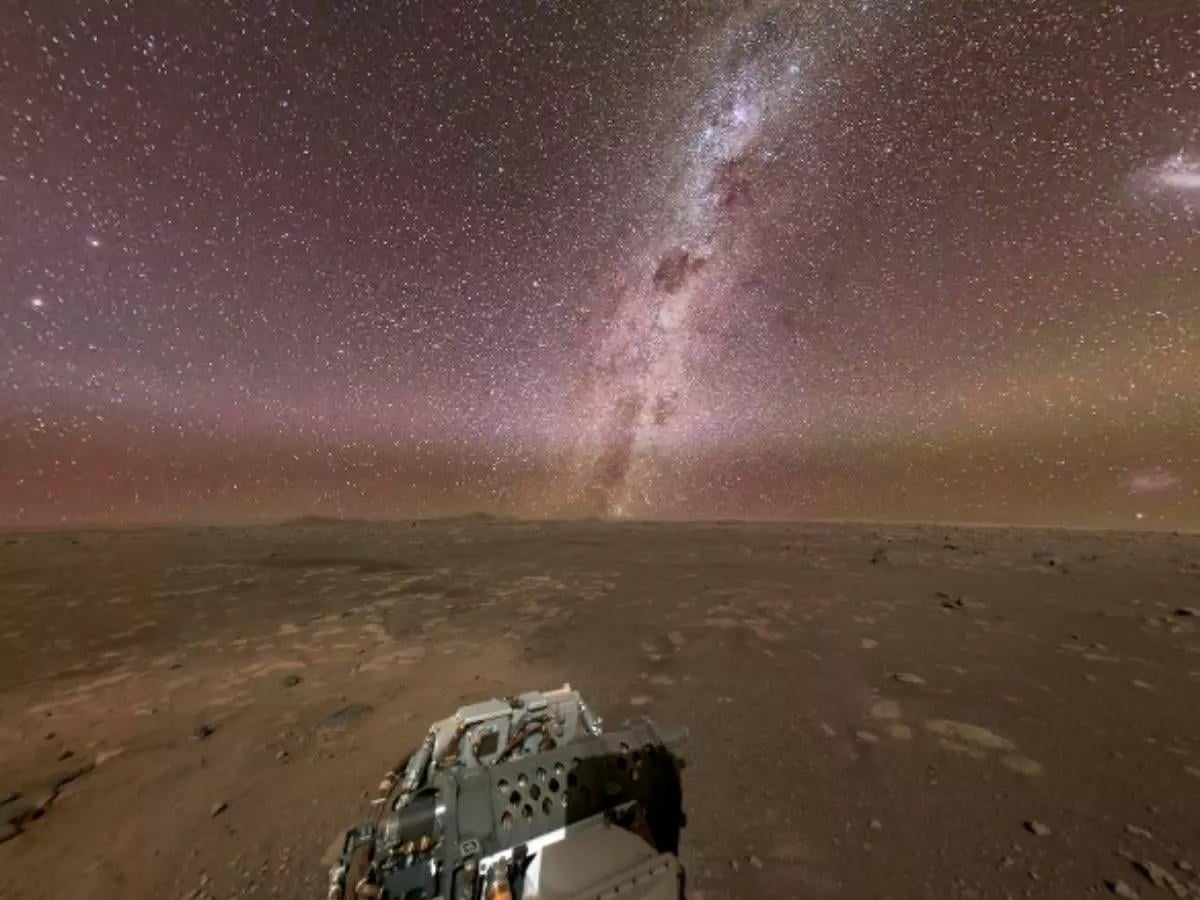
I have seen many touched up photos from NASA and i am aware that they are long exposure and wouldnt look like that to our naked eye, but have also seen videos and pictures (like the one above) from Mars Rover on what the night sky on Mars looks like.
So my main question is, if you were floating in space alone outside of our solar system, would space look like the picture above? Or would it be incredibly dark to where I would not be able to see my hand in front of my face
https://i.redd.it/dviqyq12nu9f1.jpeg
11 Comments
Haven’t been there but there are literally billions of light sources and if you see them, the light must hit you.
I’m pretty curious too, actually. Tf is Voyager doing, anyway? Lol
[deleted]
I’m gonna say the answer is both. You could likely see the milky way in all its glory but there would not be enough reflected light for you to see the back of your hand.
Have you ever been in a properly dark location (as in 0 light pollution) on a clear, moonless night, the sort of night where you can see space like in the picture you posted?
That’s pretty much how visible things would be in space.
It would not look like this, but it would absolutely not be dark, not unless you had some kind of visor or filter over your eyes bc you were working in sunlight, in which case it would appear dark. Your hand might be dark if there is no immediate light directly shining on you, but the stars would appear brighter than ever.
Without shades, it would look wildly populated with stars, and you might be able to make out the very faint dull smudge at the center of Andromeda. It would just look like a whole bunch of stars, more than you can see from the surface of earth, but not to this degree. You’re getting a ton of stars in long exposures that you can’t see with your naked eye.
Like I said, though, you’d definitely see more stars than on any night on earth. If you’ve ever been to the middle of the desert at an extremely dark site with no lights and fully adjusted eyes, that’s probably in the same ballpark.
Interestingly enough, on a dark moonless night at a dark site, the Milky Way is bright enough to cast a shadow, so it’s hard to say for sure whether you’d be able to say, see your hand if you were in interstellar space or in a shadow that blocks all sunlight or reflection. So, maybe not pitch black, but close to it.
That image is a photoshop.
But from a dark sky site you can easily see the Milky Way. It’s unfortunate that more people haven’t seen it. If you were outside the solar system it would be even clearer. As to “would not be able to see my hand in front of my face”, you wouldn’t be able to see detail on your hand, but you would easily see its silhouette if you had it in front of you.
We are already floating around deep in space. Just look up. Thats what it would look like.
For a start this photo is a composite and not what the night sky on Mars looks like. You can even see the original panorama here: [https://www.youtube.com/watch?v=wE-aQO9XD1g](https://www.youtube.com/watch?v=wE-aQO9XD1g)
In this light the real sky is actually a slightly different shade of brown.
Space in Babylon 5 looks like this. They used a bunch of Hubble images to make the background of star systems look more impressive. I’m not sure if that’s really what you’d see though.
“but have also seen videos and pictures (like the one above) from Mars Rover on what the night sky on Mars looks like.” – Those pics or videos are a composite of daytime Mars photos and long-exposure photos of the Milky Way taken from Earth, they don’t necessarily represent what the night sky would look from Mars. We don’t have any photos like that from Mars. While there’s no light pollution on Mars, all the dust in the atmosphere would probably obscure quite a bit of light. The dust might also catch sunlight even when the Sun is below the horizon.
Having said that, floating in deep space, and with your eyes adapted to darkness, you would see innumerable stars gainst the blackness of space, like diamond dust spread over black velvet. There would be so many stars, it would be hard to recognise specific constellations. Stars won’t twinkle like they do as seen from Earth; they will be sharp, steady points of light.
You would see the Milky Way as a big hazy band of light, with some dust lanes along the galactic plane. You’d clearly see the Andromeda galaxy (or atleast its galactic core), the Large and Small Magellanic clouds, nebulae like the Orion nebula and the Carina nebula. You won’t see any colour (apart from different colours of some stars), though. In faint light, the cone cells in your retina are not sensitive enough.
Above the atmosphere, the stars would be somewhat brighter, but not hugely so, and they wouldn’t twinkle.
From there, moving outside the solar system would barely make any difference detectable by the naked eye. You would avoid [gegenschein](https://en.wikipedia.org/wiki/Gegenschein), and the sun itself would be little more than a bright star.
If you moved out into nearby intergalactic space, the sky wouldn’t be full of individually visible stars, and the Milky Way would appear similar to how Andromeda appears on Earth, a faintly glowing cloud