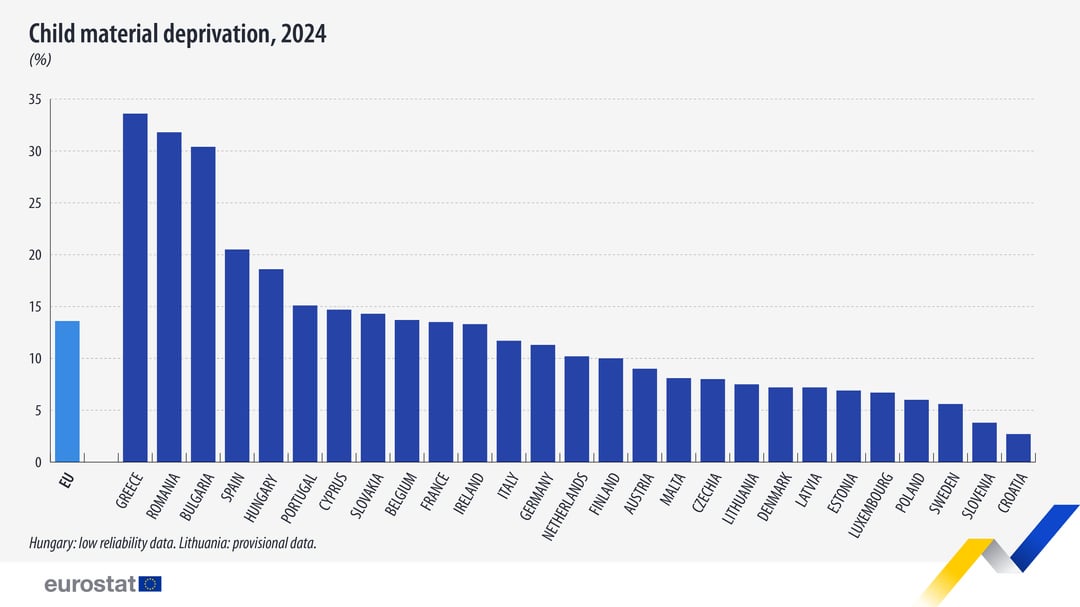
>In 2024, 13.6% of children under the age of 16 in the EU were materially deprived. Child specific material deprivation is based on the inability to afford at least 3 out of 17 items (goods or services) considered necessary or desirable for people to have an ‘acceptable’ standard of living.
>
>The highest rates of children who faced material deprivation were registered in Greece (33.6%), Romania (31.8%) and Bulgaria (30.4%). In contrast, the lowest rates were recorded in Croatia (2.7%), Slovenia (3.8%) and Sweden (5.6%).
I’m not a fan of PiS by any means, and I never had my own children, but 500+ has been one of the best decisions made by a European government in the last two decades.
ripp1337 on
Too bad, that we have so few children being born. At least they are not deprived.
Sabrine_without_r on
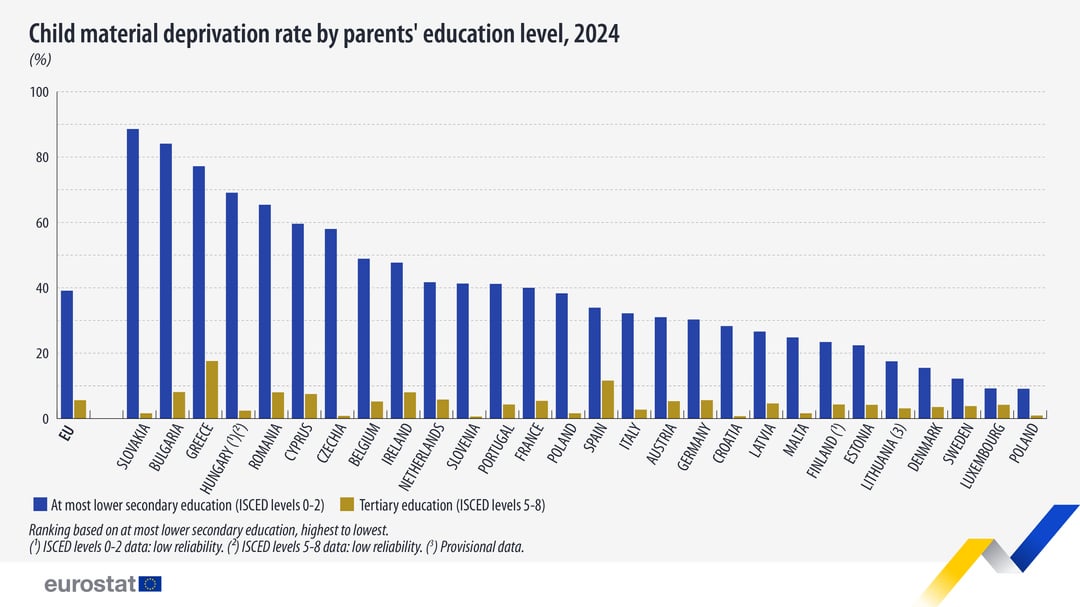
Is it Poland that has a rate of 40 or 10 percent?
bannedByTencent on
Why is Poland mentioned twice in the second slide?

6 Comments
>In 2024, 13.6% of children under the age of 16 in the EU were materially deprived. Child specific material deprivation is based on the inability to afford at least 3 out of 17 items (goods or services) considered necessary or desirable for people to have an ‘acceptable’ standard of living.
>
>The highest rates of children who faced material deprivation were registered in Greece (33.6%), Romania (31.8%) and Bulgaria (30.4%). In contrast, the lowest rates were recorded in Croatia (2.7%), Slovenia (3.8%) and Sweden (5.6%).
https://ec.europa.eu/eurostat/en/web/products-eurostat-news/w/ddn-20250613-2
POLSKA GUROM
I’m not a fan of PiS by any means, and I never had my own children, but 500+ has been one of the best decisions made by a European government in the last two decades.
Too bad, that we have so few children being born. At least they are not deprived.
Is it Poland that has a rate of 40 or 10 percent?
Why is Poland mentioned twice in the second slide?