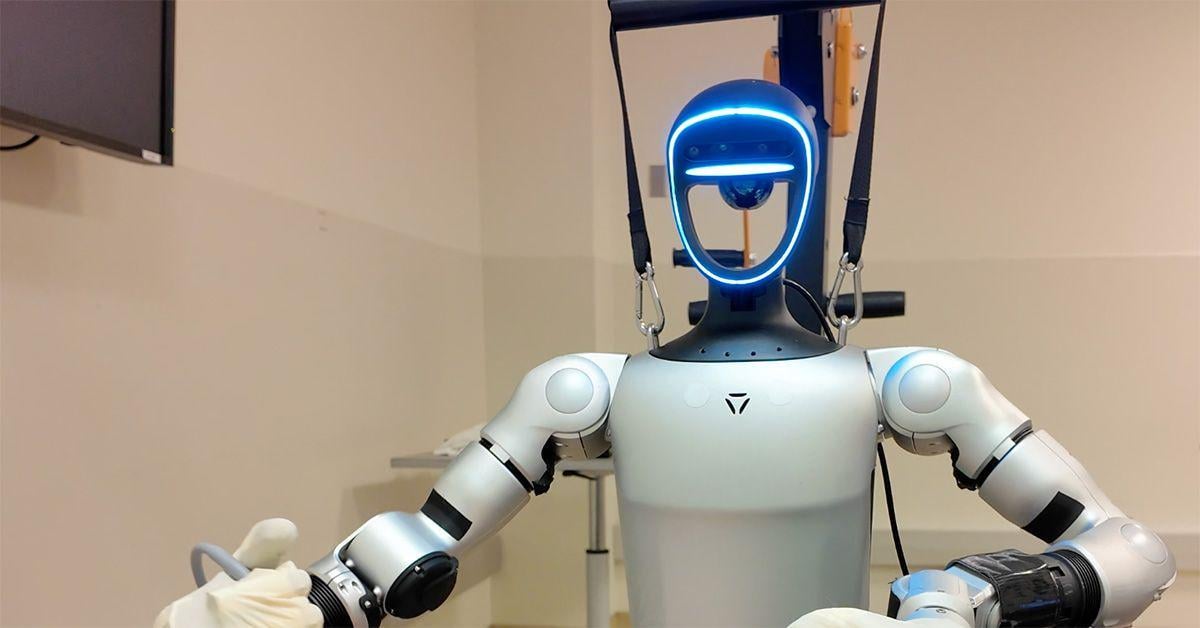
The Robot Will See You Now – Humanoid robots could be a game changer in the operating room
https://today.ucsd.edu/story/the-robot-will-see-you-now

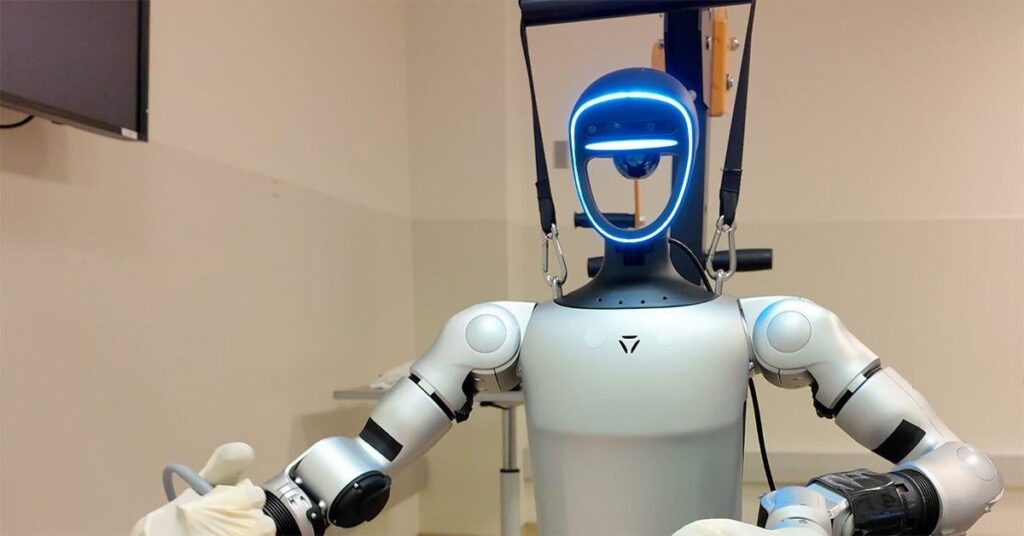
The Robot Will See You Now – Humanoid robots could be a game changer in the operating room
https://today.ucsd.edu/story/the-robot-will-see-you-now
4 Comments
From the article
As waiting rooms fill up, doctors get increasingly burnt out, and surgeries take longer to schedule and more get cancelled, humanoid surgical robots offer a solution. That’s the argument that UC San Diego robotics expert Michael Yip makes in a perspective piece out July 9 in [*Science Robotics*](https://www.science.org/doi/10.1126/scirobotics.adt0684).
Why? Today’s surgical robots are costly pieces of equipment designed for specialized tasks and can only be operated by highly trained physicians. However, this model doesn’t scale. Despite the drastic improvements in artificial intelligence and autonomy for industrial and humanoid robots in the past year, these improvements haven’t translated to surgical robots. The scale of data required to train a truly capable artificial intelligence to perform surgery with today’s robots would be too labor-intensive and cost-prohibitive, especially on existing platforms and with current practitioners. Building datasets based on medical procedures also raises privacy issues.
But what if all the training data used by industrial humanoid robots could be made useful for training robots to perform medical procedures? This would be a game-changer, writes Yip, a professor in the UC San Diego Department of Electrical and Computer Engineering. The simplest way is to give arms and multi-fingered hands to our surgical robots, similar to the trend seen in industrial robots. Not only would this produce a new class of robots in the operating room—it would allow those robots to take full advantage of the AI foundation models that have been accelerating the capability of industrial robots learning new skills and assisting in a large variety of tasks.
In time, and especially if socialized medicine never appears in the US, economics will force more robots into the medical establishment, for sure.
Don’t know where I saw it but was sometime last year…a company…probably several really, all developing an ai Dr/GP, you have on your as an app.
I’ve seen my GP several times over several different things…I always forget something to mention or too embarrassed or don’t think the extra info will help but putting stuff into chatgpt, it really narrows stuff down and it has actually helped me clear some health issues up…I’m not doing anything dangerous, this is just basic sorta stuff it gives advice on and I choose the ones that don’t require meds to see if things improve. But this is just Chatgpt, there are ones being developed that is pure health and I think one company is looking to get a health ai app out this decade
Let’s also not forget:
1) the current system is not safe– medical error *kills* over 400,000 Americans **every year** and maims countless others
2) the current system is outrageously expensive– healthcare is our largest government outlay (more than national defense) **and** it’s the number one reason for personal bankruptcy **and** health insurance is so expensive for employers that it has a real impact on their ability to hire more employees and give raises to existing employees– healthcare providers have their hands in *all* our economic cookie jars and they claim it’s still not enough…
3) doctors and nurses in this country make **several times** more than the median household income in U.S. *and* several times more than their counterparts in other countries like France, Germany, Japan, South Korea, South Africa, etc