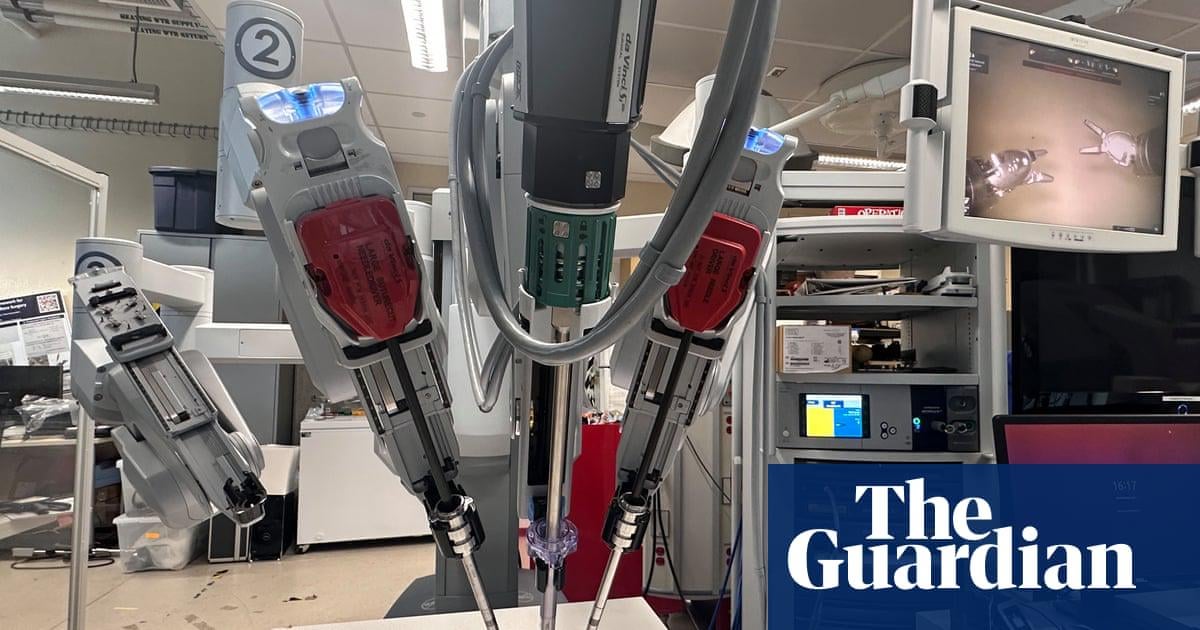
Robot surgery on humans could be trialed within decade after success on pig organs
https://www.theguardian.com/science/2025/jul/09/robot-surgery-on-humans-could-be-trialled-within-decade-after-success-on-pig-organs

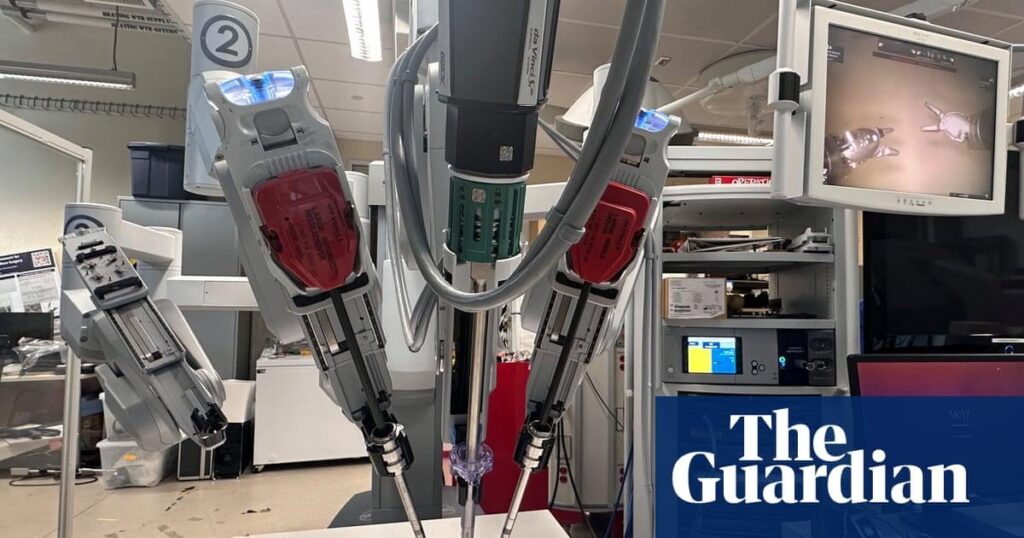
Robot surgery on humans could be trialed within decade after success on pig organs
https://www.theguardian.com/science/2025/jul/09/robot-surgery-on-humans-could-be-trialled-within-decade-after-success-on-pig-organs
3 Comments
From the article
The surgical robots were slightly slower than human doctors but they were less jerky and plotted shorter trajectories between tasks. The robots were also able to repeatedly correct mistakes as they went along, asked for different tools and adapted to anatomical variation, according to a [peer-reviewed paper](https://www.science.org/doi/10.1126/scirobotics.adt5254) published in the journal Science Robotics.
Also from the article
Almost all the 70,000 robotic procedures carried out annually in the NHS in England were fully controlled under human instruction, with only bone-cutting for hip and knee operations semi-autonomous, McGrath said. Last month the health secretary, Wes Streeting, said increasing robotic surgery was at the heart of a 10-year plan to reform the NHS and cut waiting lists. Within a decade, the NHS has said, nine in 10 of all keyhole surgeries will be carried out with robot assistance, up from one in five today.
Within 10yrs is as good as saying- a higher chance than zero at this stage. In 10yrs it’s another 5yrs and so on. As is every technology that says coming in 5yrs+ I’ve ever heard over the last 40yrs.
Curious about the ethics of running a trial. When we know we already have surgeons that can do this, how do they justify putting someone in a test group?
It’s not like with cancer, where the trial participants are not responding to the current drugs available…