
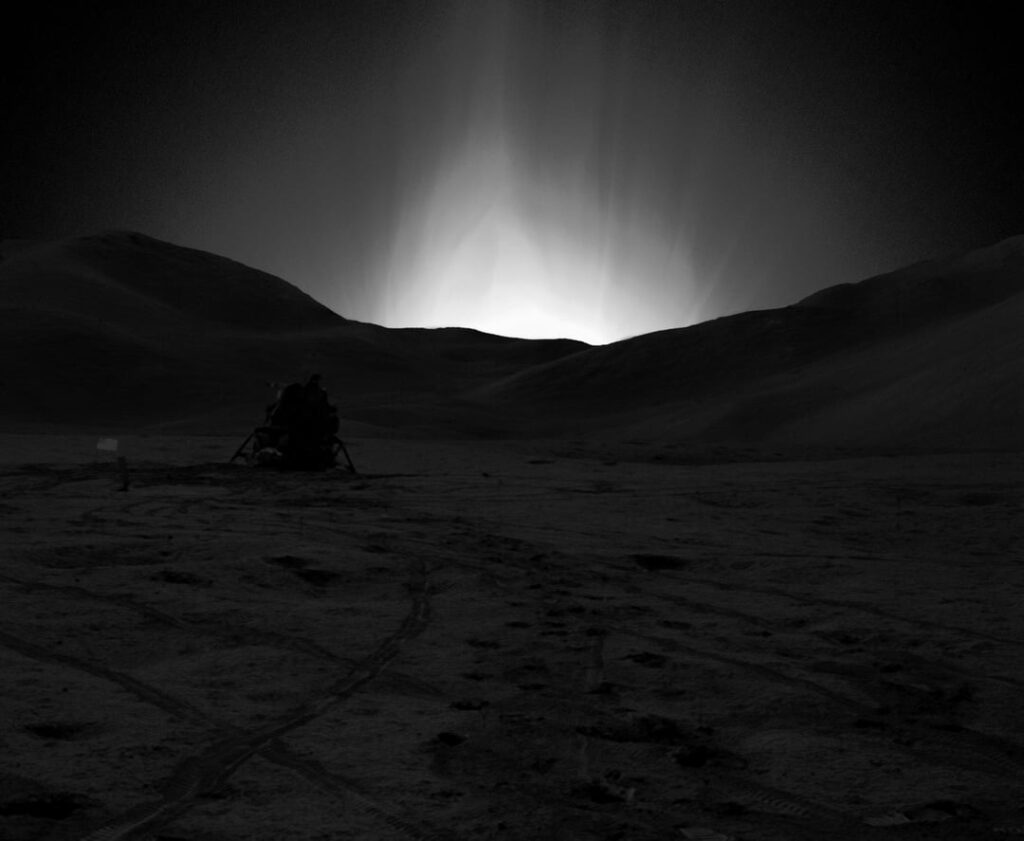
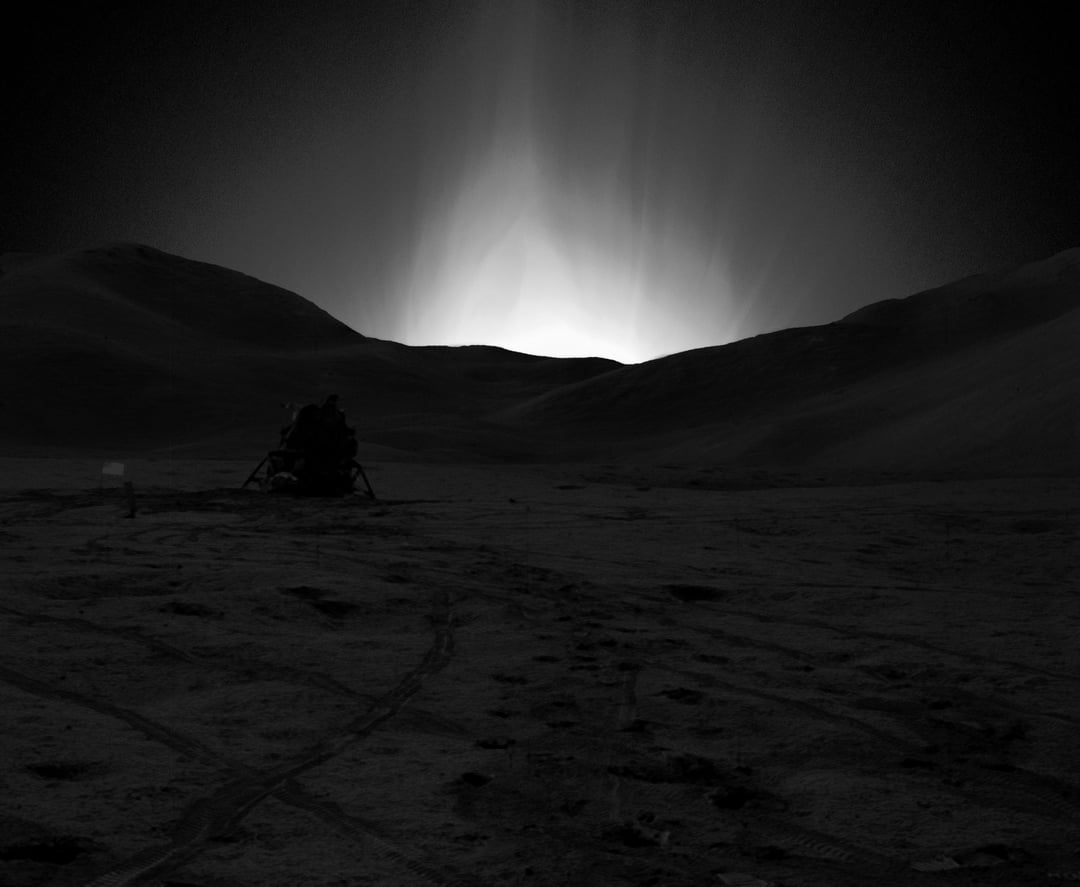
Six years ago, I made an image to simulate what it would look like on the Moon before sunrise or after sunset. With no atmosphere to create the familiar twilight, we would see the Sun's corona shining over the horizon against the blackness of space. The inner corona is fairly bright, as bright as the full moon as seen from Earth. This sight would last for quite a while as well, since the Sun moves very slowly in the lunar sky, with daytime lasting two weeks.
Corona image credit: Tao Chen – http://www.csc.eps.harvard.edu/TaoChen170821.jpg
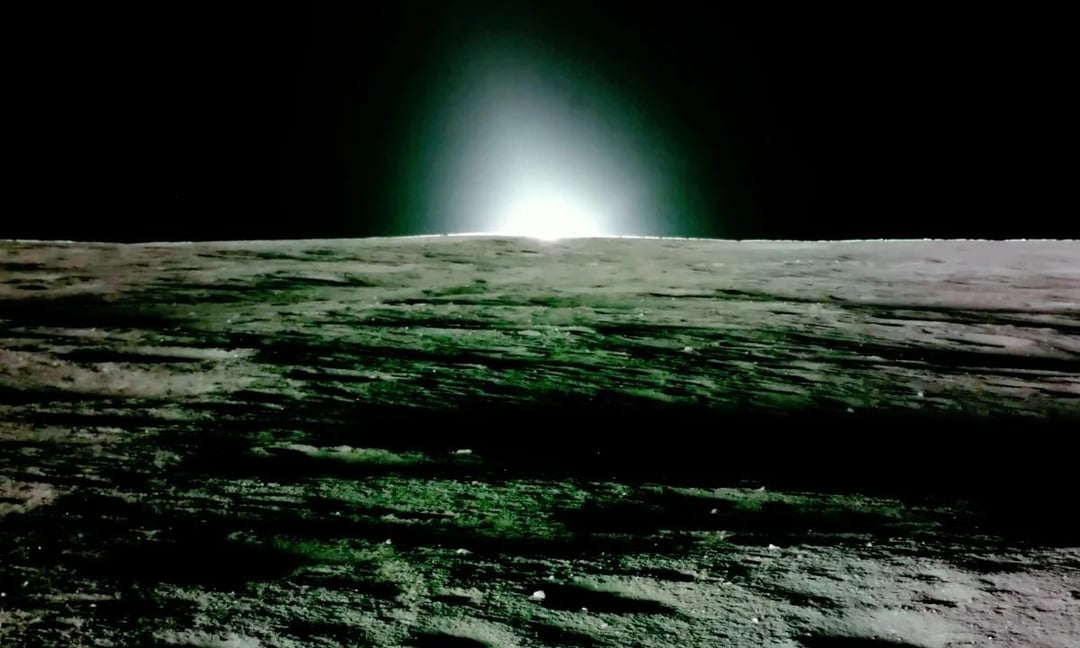
Second image is the actual photo taken recently by the Blue Ghost lander (launched by Firefly Aerospace) just after the sunset. The faint light on the surface is sunlight reflected off a hill behind the camera.
Second image credit: Firefly Aerospace
https://www.reddit.com/gallery/1lyo68z
2 Comments
Interesting how the lunar twilight is much more concentrated, since the Moon doesn’t have an atmosphere to spread the light more evenly in the surrounding area.
The sun’s corona extends into what we call the zodiacal light – a faint glow of diffuse sunlight scattered by interplanetary dust: [https://cdn.britannica.com/66/141166-050-2FB86E40/Zodiacal-light-Cerro-Paranal-Observatory-Chile-Atacama.jpg](https://cdn.britannica.com/66/141166-050-2FB86E40/Zodiacal-light-Cerro-Paranal-Observatory-Chile-Atacama.jpg)
If we are positioned on the far side of the Moon (so that our dark-adapted vision isn’t spoiled by the bright Earth), we would see this faint band of light stretch all across the lunar sky, following the ecliptic.