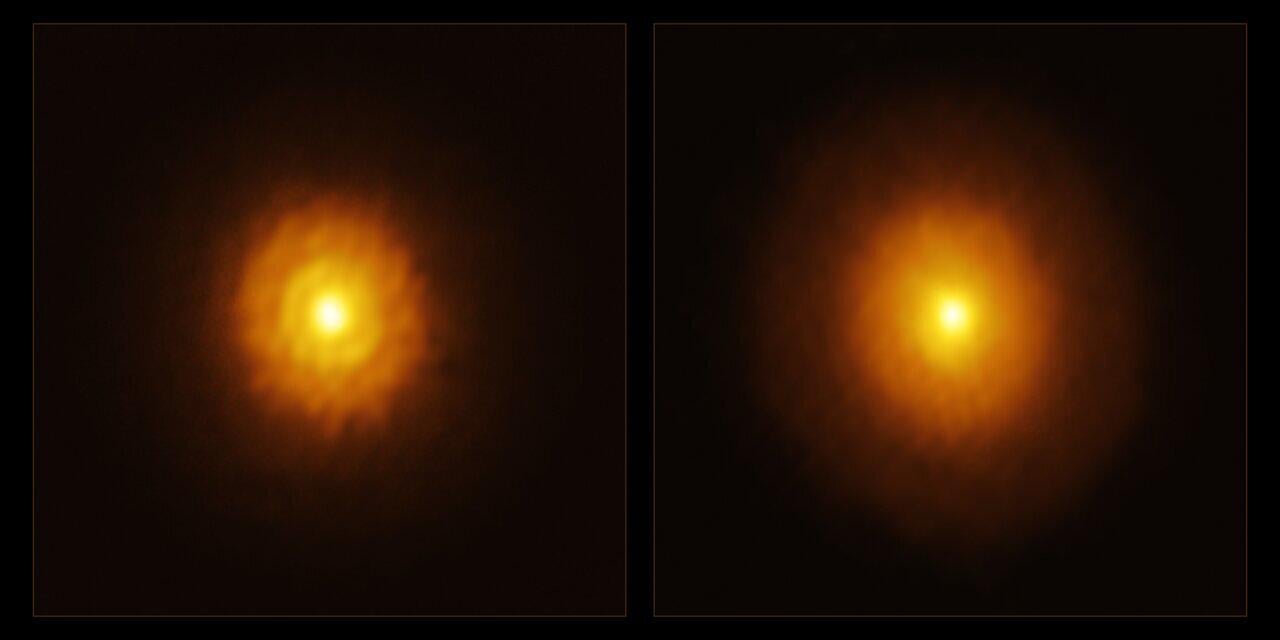
Astronomers have detected a giant exoplanet, between three and ten times the size of Jupiter hiding in the swirling disk of gas and dust surrounding a young star
https://phys.org/news/2025-07-astronomers-giant-fog-young-star.html

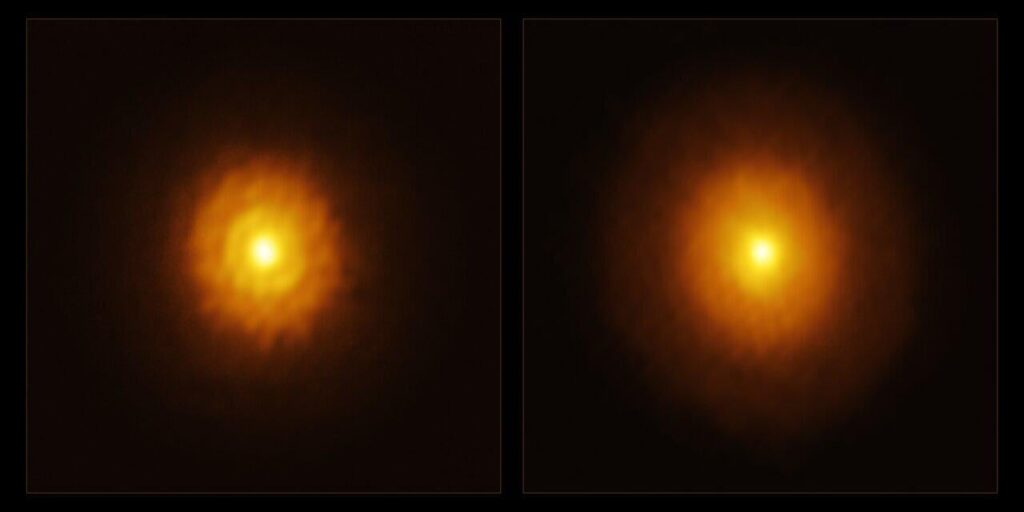
Astronomers have detected a giant exoplanet, between three and ten times the size of Jupiter hiding in the swirling disk of gas and dust surrounding a young star
https://phys.org/news/2025-07-astronomers-giant-fog-young-star.html
1 Comment
That’s a really neat discovery. For context, it’s been known for a while that it’s possible for embedded planets to cause gaps in protoplanetary disks. The problem is that there are some alternative explanations possible, and very few such embedded planets have been imaged directly or identified in other indirect tracers – they tend to be too far out, and the material in the disk also hides them. To now see that the proper motions of MP Mus and the location and depth of this gap are consistent with a planet suggests that this really should be our go-to hypothesis. As the paper also states, it’s incredibly promising that we can now use Gaia to find very young planets. Young stars are very active and that makes it somewhere between impossible and really painful to use radial velocities to find planets, and transiting planets would be expected to be in the plane of the disk (and, therefore, hard to observe). It’s a big step into connecting ‘mature’ planetary systems (which we’ve found many of) to their earliest past.
The paper is [here](https://www.nature.com/articles/s41550-025-02576-w) if you want to read it, it’s really well-written too.