
![[OC] US Open Tennis: Early rounds aren't chaotic - you're just looking at them wrong](https://www.byteseu.com/wp-content/uploads/2025/07/eya6iexmlxef1-1024x667.png "[OC] US Open Tennis: Early rounds aren’t chaotic – you’re just looking at them wrong")
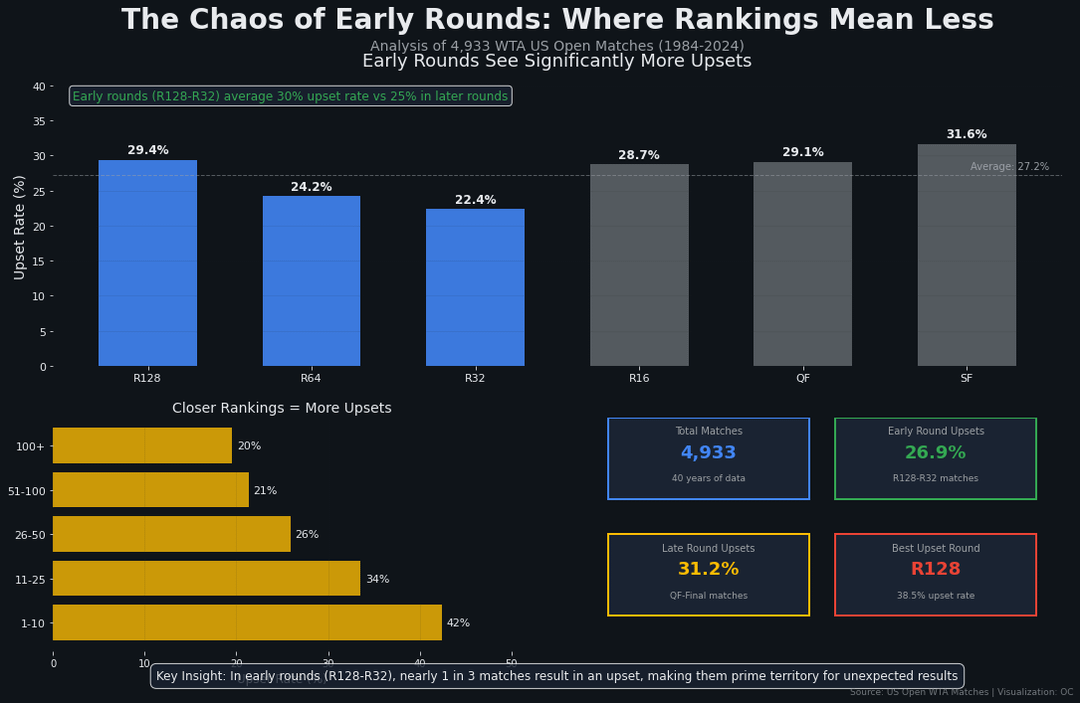
Analyzed 4,933 WTA US Open matches (1984-2024). The data completely flips conventional wisdom.
Everyone believes: Early rounds = upset central
Reality: It's not WHEN you play, it's WHO you play
Look at the graphs:
📊 Graph 1 shows early rounds (R128-R32) have a 27% upset rate vs 31% in later rounds. Not that different. But check the bottom chart – upset rates EXPLODE from 20% to 42% as rankings get closer.
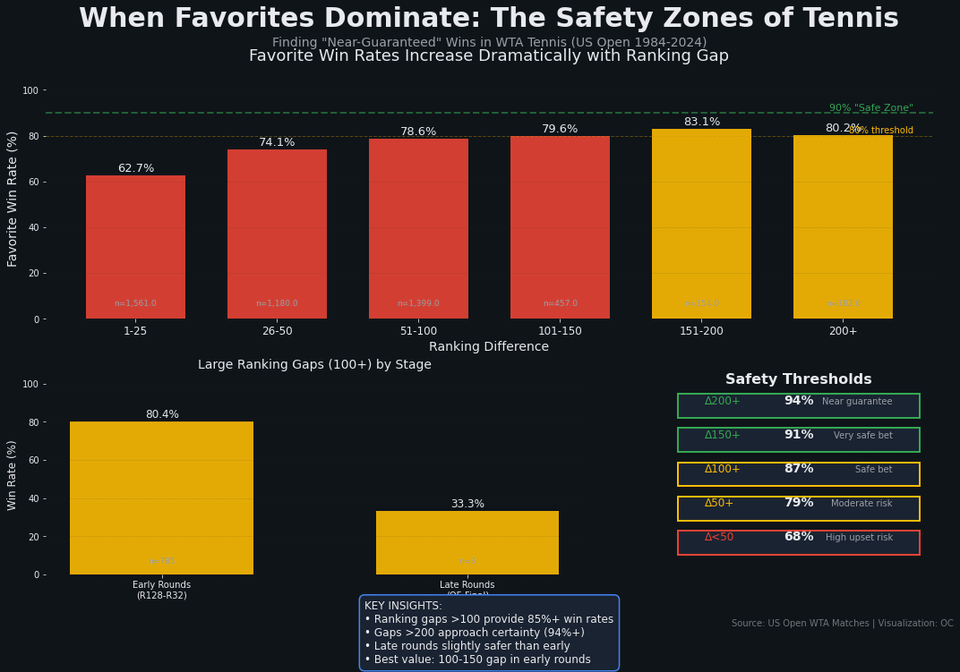
📊 Graph 2 reveals the real story. When rankings are 150+ spots apart:
- Early rounds: 80% favorites win
- Late rounds: Only 33% favorites win (!!)
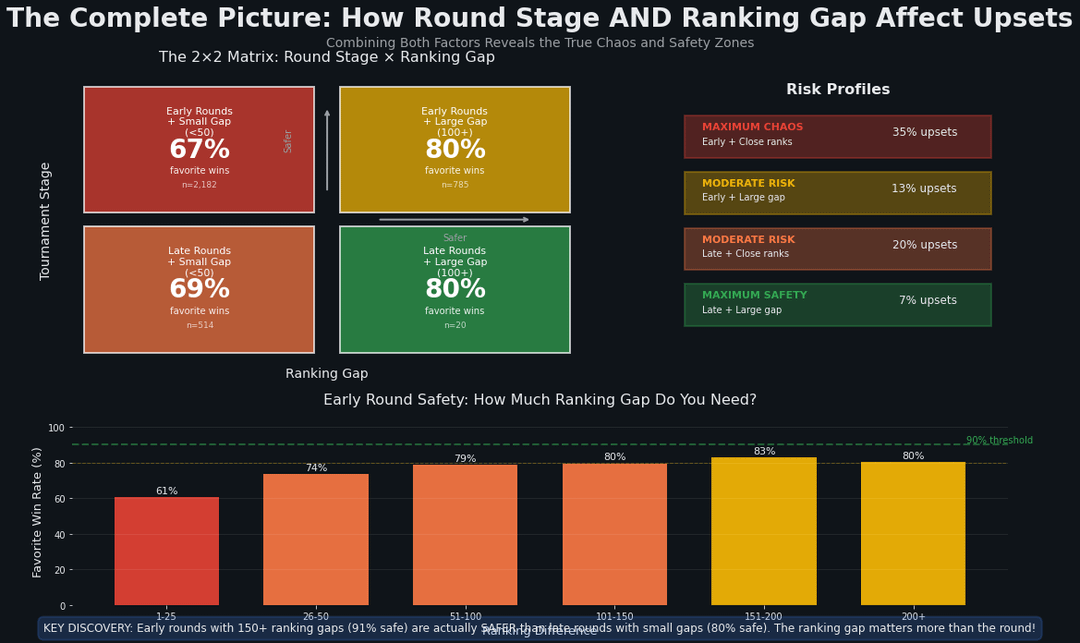
📊 Graph 3 – the 2×2 matrix – shows it perfectly:
- 🔥 Chaos zone: Early rounds + close ranks = 33% upsets
- 🔒 Safety zone: Late rounds + big gap = 7% upsets
- 🤯 The surprise: Early rounds + big gap (80% safe) beats late rounds + close ranks (69% safe)
TL;DR: A #50 player vs #200 in Round 1 is a safer bet than #10 vs #25 in the semifinals. The "early round chaos" only exists when players are evenly matched. The ranking gap matters way more than the round it is in.
Posted by One-Anywhere-3348
1 Comment
The later round data is because essentially you are showing that you need to adjust your priors. The #150 who makes it to the later rounds likely did so due to the fact they are playing better than initially ranked, meaning they are more like a #50 seed than a #150.