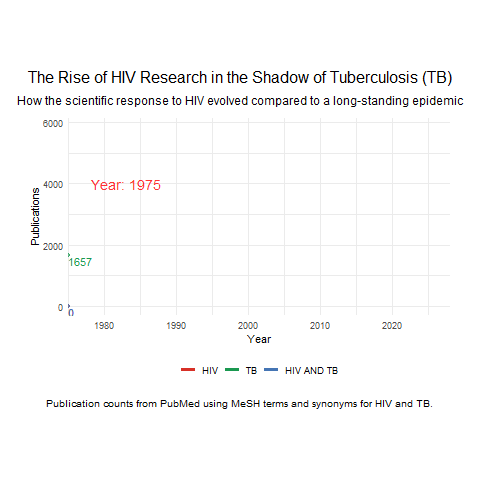
[OC] The rise of HIV research compared to tuberculosis over time (PubMed data, 1980–2023)
Posted by madkeepz

[OC] The rise of HIV research compared to tuberculosis over time (PubMed data, 1980–2023)
Posted by madkeepz
4 Comments
A visual representation of the rapid rise in scientific publications on HIV, compared to one of the most iconic infectious diseases in human history: tuberculosis.
To date, the total number of PubMed-indexed articles remains higher for tuberculosis.
However, it’s uncertain whether that trend will hold in the future. The graph displays the annual count of publications in PubMed, using MeSH terms and widely accepted synonyms for each disease, restricted to studies in humans. The HIV timeline begins with its formal identification as a clinical entity.
The drop in publications after 2020 is probably multifactorial, and may be highly impacted by publication bias and the pandemic (and a combined effect of both)
the graph was made in R using gganimate and data from the rentrez package. The alpha of each line varies with the absolute magnitude of change from one timepoint to the next
The sudden drop for HIV might be related to the Undetectable = Untransmittable (U=U) Consensus
I think it’s pretty natural that a completely new disease that seems to be a certain death sentence – and that we know absolutely nothing about – should generate a lot of research for the first 30 years.
Is this the states, global, or something else?