‘Bone-ified muscles’ could be robots’ next flex : For Journalists – Bioinspired artificial muscles enable robotic limbs to push, lift and kick
https://news.northwestern.edu/stories/2025/07/bone-ified-muscles-could-be-robots-next-flex/?fj=1

‘Bone-ified muscles’ could be robots’ next flex : For Journalists – Bioinspired artificial muscles enable robotic limbs to push, lift and kick
https://news.northwestern.edu/stories/2025/07/bone-ified-muscles-could-be-robots-next-flex/?fj=1
1 Comment
From the article
Northwestern University engineers have developed a soft artificial muscle, paving the way for untethered animal- and human-scale robots. The new muscles, or actuators, provide the performance and mechanical properties required for building robotic musculoskeletal systems.
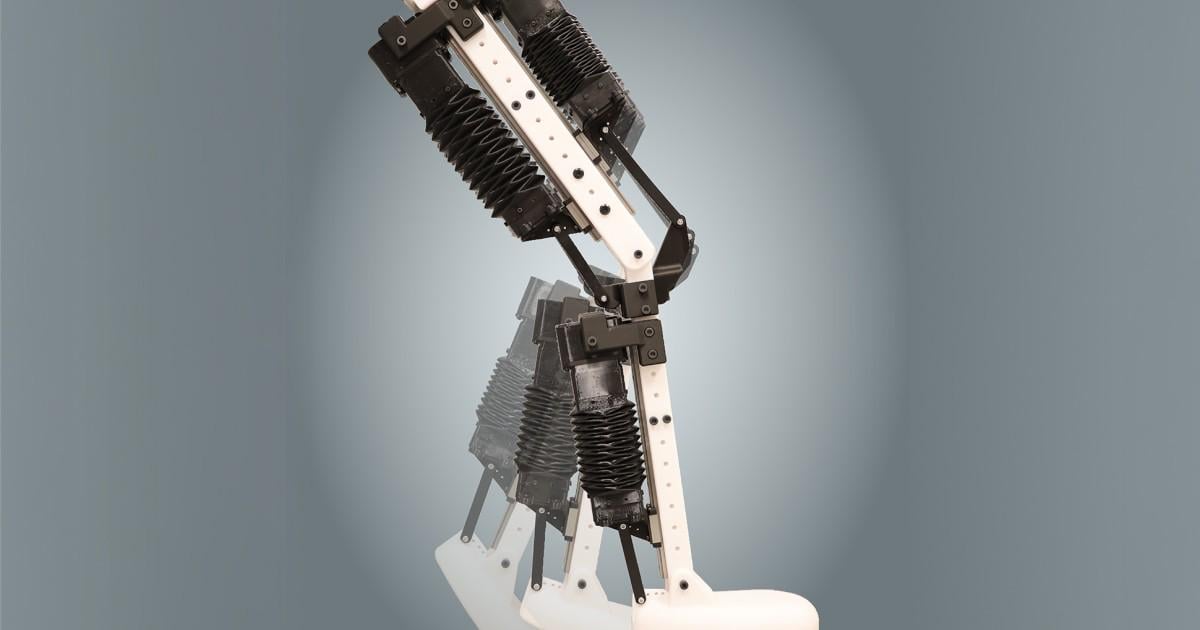
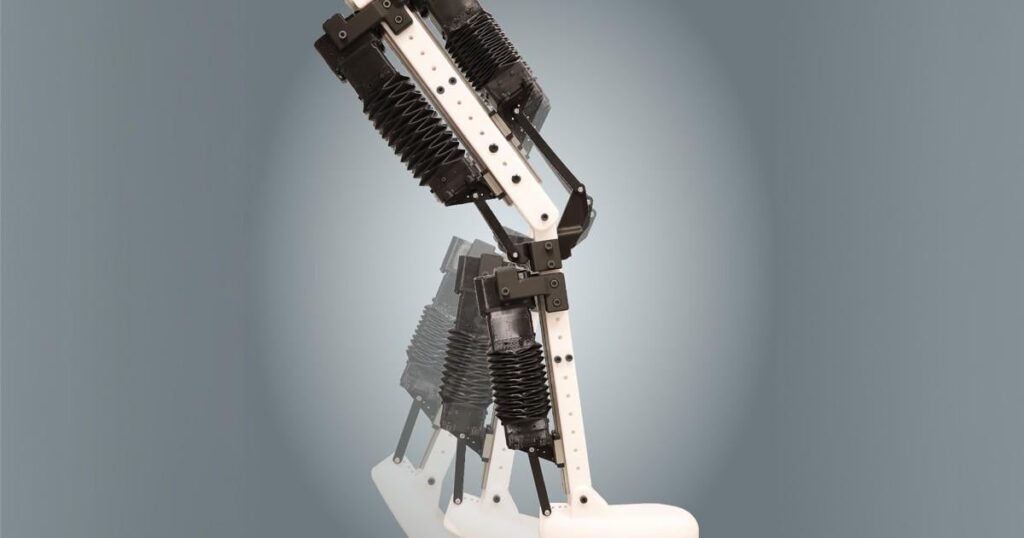
To demonstrate the artificial muscle’s capabilities, the engineers implemented them into a life-size humanoid leg, complete with rigid plastic “bones,” elastic “tendons” and even a sensor that enables the robot to “feel” its movements. The leg used three artificial muscles — a quadricep, hamstring and calf — to bend its knee and ankle joints. The muscles are compliant enough to absorb impacts but still can apply enough strength and motion to kick a volleyball off a pedestal.
The new bioinspired materials innovation could change how robots walk, run, interact with humans and navigate the world around them.