Full copyright: Petr Horálek/Institute of Physics in Opava; Josef Kujal/Astronomical Society of Hradec Králové; Tomáš Slovinský; Acknowledgement: Mahdi Zamani
https://i.redd.it/p87rih6ajsgf1.png

Full copyright: Petr Horálek/Institute of Physics in Opava; Josef Kujal/Astronomical Society of Hradec Králové; Tomáš Slovinský; Acknowledgement: Mahdi Zamani
https://i.redd.it/p87rih6ajsgf1.png
1 Comment
Image from here
[https://www.petrhoralek.com/?p=25643](https://www.petrhoralek.com/?p=25643)
Excerpt from page
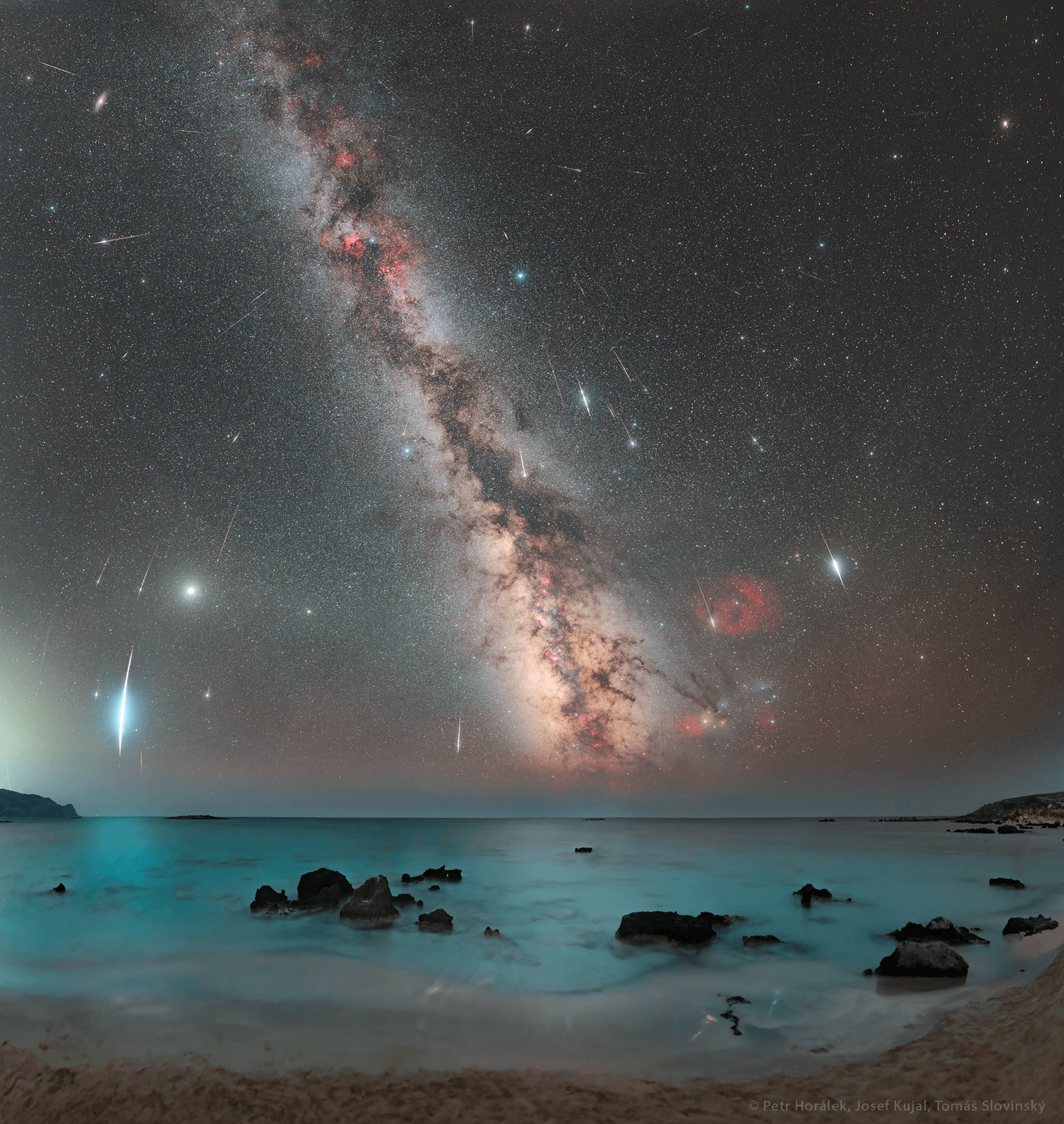
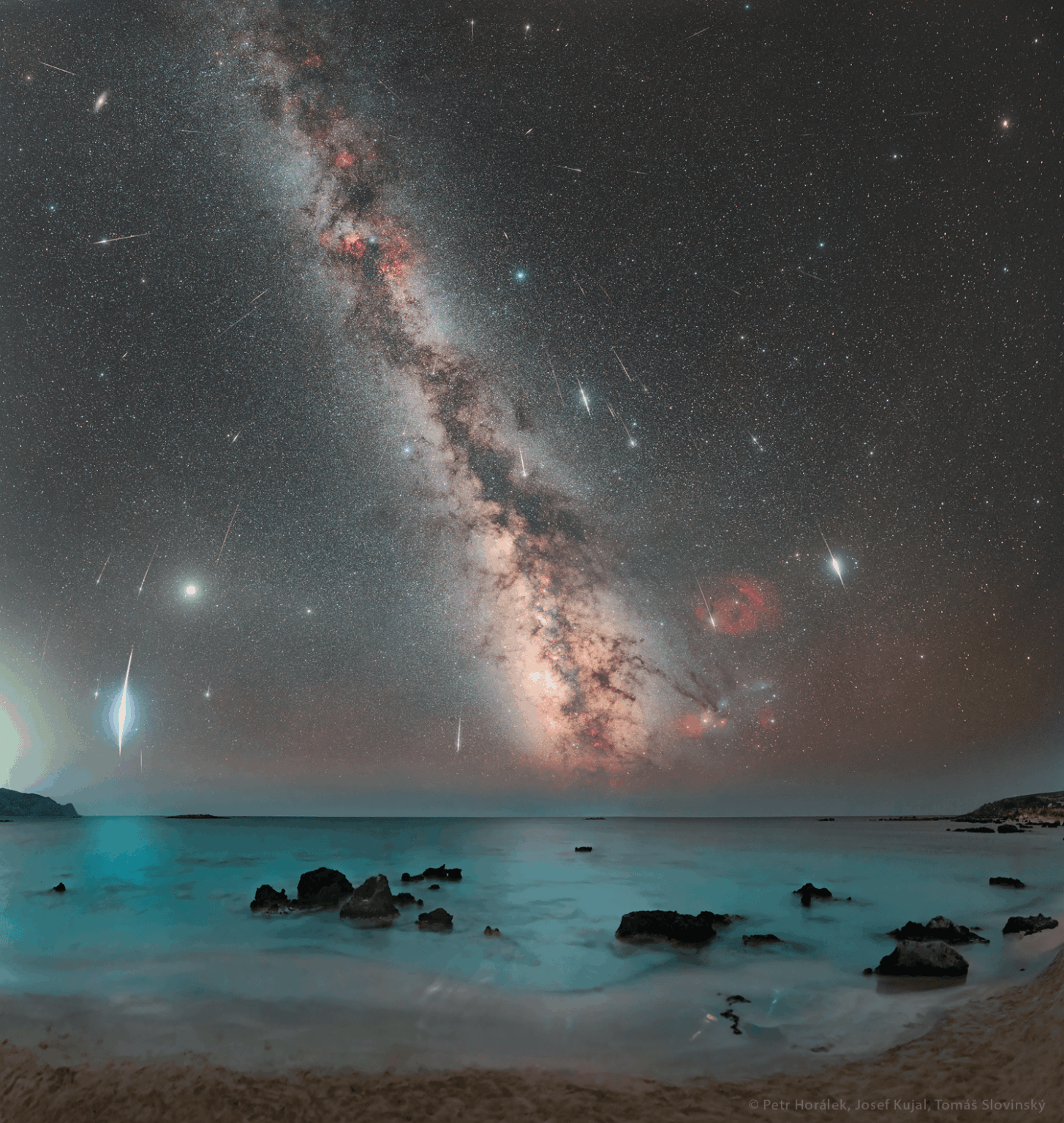
Every year in mid-August, almost at the same time like the Perseids, another meteor shower peaks: the κ-Cygnid. Named after the star Kappa (κ) in the Swan constellation, from where the slow meteors seemingly appear, they are almost not known as–unlike the Perseids–they have a very low rate of meteors, only about 3 per hour when the shower peaks. Since I have chased κ-Cygnids from 2012, for more than 386 hours of 51 nights, to be exact, I was successful in capturing dozens of them. It allowed me to reveal it as a meteor shower against the 11 August 2021 nightscape scenery of Elafonisi Beach, Crete, Greece. I think nobody captured κ-Cygnids this way before (correct me if I am wrong), cause it required very long-term shooting. Filtered from other meteors, planes, and satellites, this blended timelapse image shows that the 12 years of capturing is long enough to let the κ-Cygnid pop out from the “shadow of fame” of much more active Perseids. The κ-Cygnids have an unknown source, but most likely they are caused by debris of minor planet 2008 ED69. They also have a 7-year cycle of higher activity caused by the influence of gravity from the giant planet Jupiter. Last time such higher activity occured in 2021, when also most of the meteors in the image were captured. Co authors are Josef Kujal and Tomáš Slovinský.
For foreground used Canon Ra, Sigma 35mm, f1.6, ISO 10000, panorama of 52 single 15s exposures from tripod. H-alpha and OIII captured separately and added as individual channels.