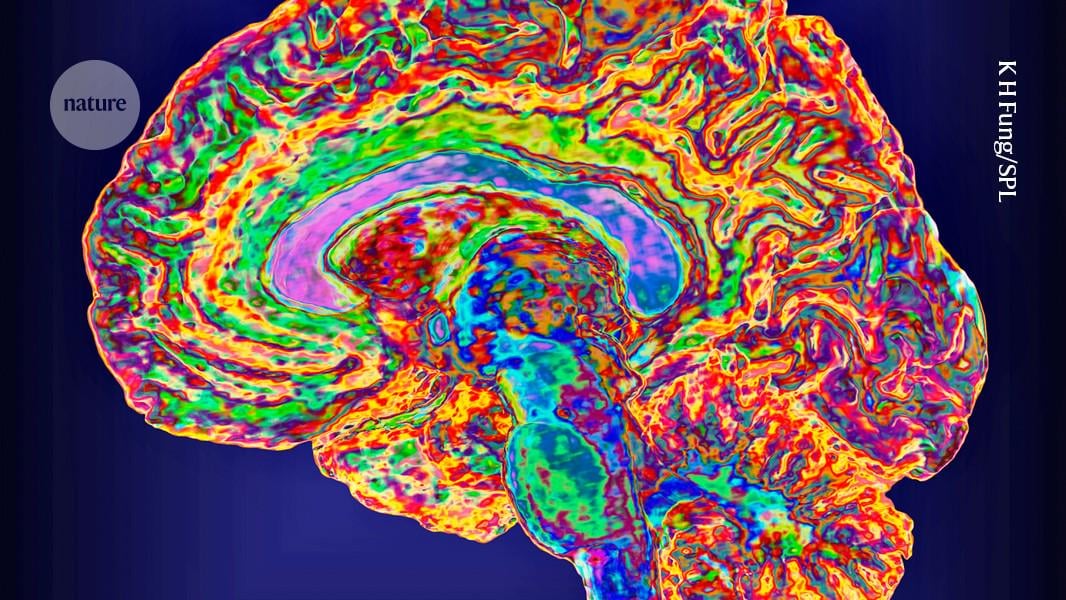
A mind–reading brain implant that comes with password protection
https://www.nature.com/articles/d41586-025-02589-5

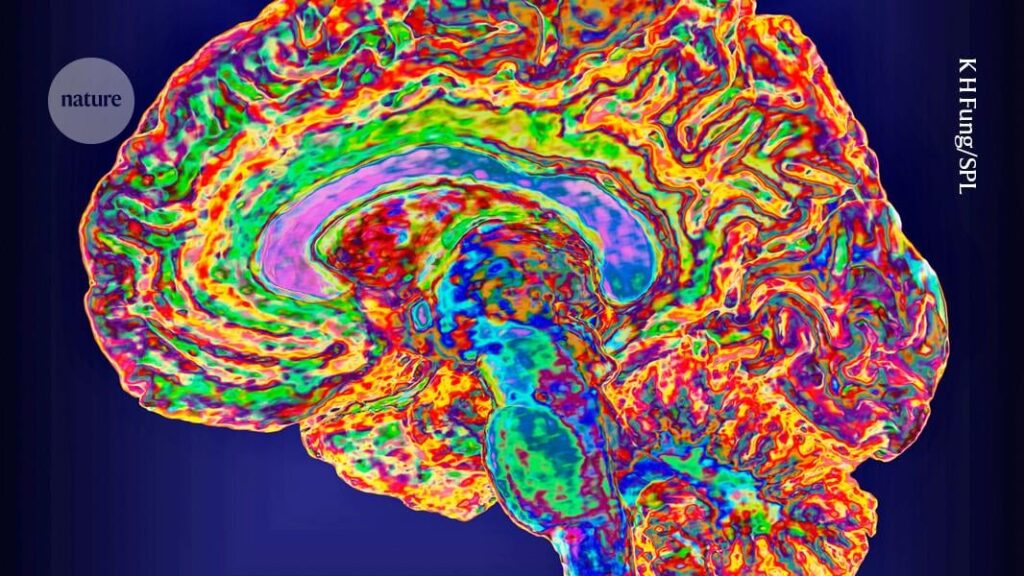
A mind–reading brain implant that comes with password protection
https://www.nature.com/articles/d41586-025-02589-5
6 Comments
**A brain–computer interface decodes in near-real time the imagined speech of people who have difficulty enunciating words**
A brain implant can decode a person’s internal chatter – but the device works only if the user thinks of a preset password.
The mind-reading device, or brain–computer interface (BCI), accurately deciphered up to 74% of imagined sentences. The system began decoding users’ internal speech – the silent dialogue in people’s minds — only when they thought of a specific keyword.
This ensured that the system did not accidentally translate sentences that users would rather keep to themselves.
Surely this won’t be used in a nefarious way, right? Nothing can go wrong with this technology. /s
This is going to be the way you’re going to be able to access your AI.
**TL;DR:** The new BCI shows a real *“thought-password”* gate for inner-speech decoding. That’s a legit path toward post-password security — especially when face/voice/fingerprints are easy to spoof — but it’s **medical-grade and early** (implants, tiny N). Biometrics won’t vanish tomorrow; this is a longer-term direction. [oai_citation:0‡Nature](https://www.nature.com/articles/d41586-025-02589-5?utm_source=chatgpt.com)
—
# Brain-passwords > face/voice? Here’s what just happened
– **BCI with a mental “unlock word.”** A Stanford-led team decoded imagined sentences *only after* the user silently thought a preset keyword, blocking accidental eavesdropping. In tests, the password gate worked ≈98% of the time; inner speech decoding hit up to **74%** sentence accuracy. [oai_citation:1‡Nature](https://www.nature.com/articles/d41586-025-02589-5?utm_source=chatgpt.com) [oai_citation:2‡Financial Times](https://www.ft.com/content/6bf4ef14-932b-4b2b-8d64-fac10fbfd43c?utm_source=chatgpt.com) [oai_citation:3‡EurekAlert!](https://www.eurekalert.org/news-releases/1093888?utm_source=chatgpt.com)
– **Why this matters for security:** FaceID/voice/fingerprints are copyable; a **neural challenge-response** is not visible or recordable in the wild. No static secret to steal; the “key” is a transient neural pattern verified in real time. *(Security inference from the study’s gating concept.)* [oai_citation:4‡Nature](https://www.nature.com/articles/d41586-025-02589-5?utm_source=chatgpt.com)
# What this could enable (down the line)
– **AI-protects-AI controls:** Admin actions require your thought-password + matching neural signature. Even if an attacker hijacks the UI, critical ops stay locked. *(Forward-looking inference.)*
– **Revocable biometrics:** If a mental phrase is compromised, you swap it — something classic biometrics can’t do.
– **Privacy by default:** Decoder stays “off” unless the unlock pattern appears, reducing risk of decoding thoughts you didn’t intend to share. [oai_citation:5‡Nature](https://www.nature.com/articles/d41586-025-02589-5?utm_source=chatgpt.com)
# What it **doesn’t** mean (yet)
– **Not consumer tech.** Current results come from **implanted microelectrode arrays** in a handful of participants with paralysis; signals are weak, hardware is invasive, and vocab/accuracy are constrained. This is assistive-tech research, not iPhone-ready auth. [oai_citation:6‡Financial Times](https://www.ft.com/content/6bf4ef14-932b-4b2b-8d64-fac10fbfd43c?utm_source=chatgpt.com) [oai_citation:7‡Cosmos](https://cosmosmagazine.com/health/body-and-mind/brain-inner-speech-computer/?utm_source=chatgpt.com)
– **No free-form mind reading.** Decoding arbitrary inner monologue remains error-prone; the password gate is the reliable part today. [oai_citation:8‡Cosmos](https://cosmosmagazine.com/health/body-and-mind/brain-inner-speech-computer/?utm_source=chatgpt.com)
# Bottom line
Passwords won’t evaporate overnight, but this is a credible path to **post-password security** where your **mind is the key** — and it only turns the lock when *you* choose. Watch for: non-invasive readouts, larger trials, and standards for on-device neural processing. [oai_citation:9‡Nature](https://www.nature.com/articles/d41586-025-02589-5?utm_source=chatgpt.com)
**Sources:** Nature News (Aug 14, 2025) + press/coverage summarizing the Cell paper; details on accuracy and password gating. [oai_citation:10‡Nature](https://www.nature.com/articles/d41586-025-02589-5?utm_source=chatgpt.com) [oai_citation:11‡Financial Times](https://www.ft.com/content/6bf4ef14-932b-4b2b-8d64-fac10fbfd43c?utm_source=chatgpt.com) [oai_citation:12‡EurekAlert!](https://www.eurekalert.org/news-releases/1093888?utm_source=chatgpt.com) [oai_citation:13‡Cosmos](https://cosmosmagazine.com/health/body-and-mind/brain-inner-speech-computer/?utm_source=chatgpt.com)
Wonder how long until read privileges become write.
What about people who don’t subvocalize when they think? It’s just returns nothing?
I imagine this will function just about as well as AI agents do once they’re put into the real world (ie barely at all). I nominate Sam Altman as a Guinea pig