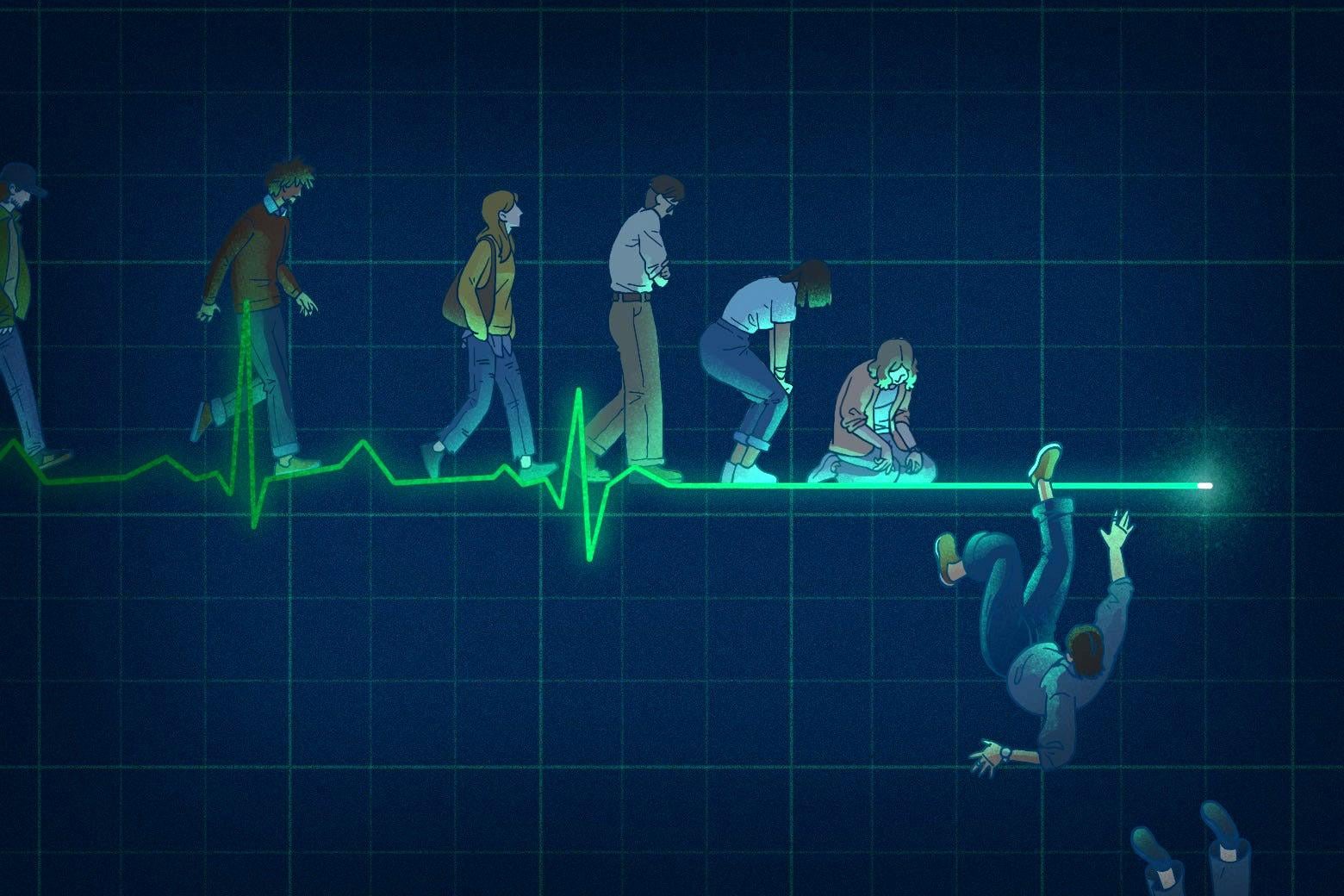
American Millennials Are Dying at an Alarming Rate | We’re mortality experts. There are a few things that could be happening here.
https://slate.com/technology/2025/08/millennials-gen-z-death-rates-america-high.html

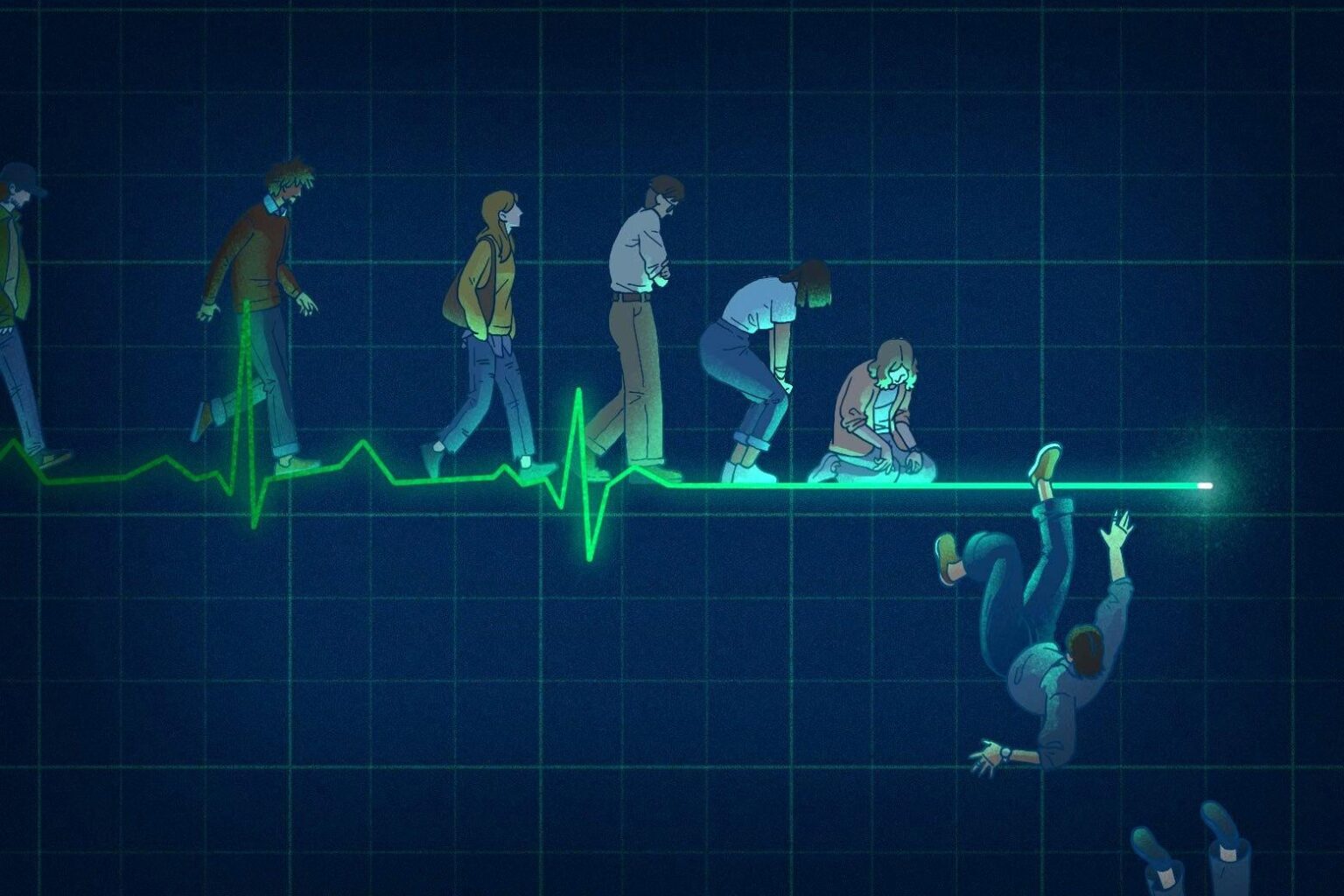
American Millennials Are Dying at an Alarming Rate | We’re mortality experts. There are a few things that could be happening here.
https://slate.com/technology/2025/08/millennials-gen-z-death-rates-america-high.html
26 Comments
From the article: About 3 million Americans die every year. Compared with other rich countries, we die at an alarmingly higher rate: One-quarter of those deaths wouldn’t have occurred if America were only as deadly as its peers.
Zoom in, and things get even more concerning: Among Americans younger than 65, almost half of deaths wouldn’t happen if we had a death rate that matched our peers. Among those aged 25 to 44, a group we call “early adults,” it’s 62 percent—nearly two out of three deaths at those early ages.
We’re mortality experts, and these facts stem from an analysis we did of death rates in 22 countries from 1980 through 2023 (the last year with reliable data). When we set out to do this research, we expected to find a story about the COVID-19 pandemic. America’s pandemic experience was much worse than that of our peers, with three U.S. deaths for every two in peer countries. Nonelderly Americans in particular were hit harder than nonelderly populations in other rich countries. This disadvantage only grew as vaccinations became available but were adopted by Americans at lower rates.
But what surprised us was that, from today’s postpandemic vantage point, the American health disadvantage doesn’t look like a pandemic story at all. The U.S. mortality disadvantage has been growing at about the same rate for years, and while it spiked during COVID-19, it still continues to rise.
Here’s another way to put this: In 2023 there were about 700,000 “missing Americans”—those who died in 2023 but would be alive if they had lived somewhere else. And that 700,000 is almost exactly the number that we could’ve predicted back in 2019, based solely on prepandemic trends. COVID and relatively low vaccine adoption are a problem for Americans. But our country seems to be, at a deeper level, a deadly place to live. What’s more, all of the studies we have (with some limited exceptions, like a study specific to California) stop before Donald Trump began his second term with enormous cuts to medical and health research and, now, to Medicaid.
There is a heated—and productive—debate about exactly why the U.S. is so much worse than our peers at keeping its populace alive. One influential theory focuses on deindustrialization and the way that Americans without a college degree in particular have been left behind. Another focuses on the way that social safety nets in this country, such as for unemployment, sickness, and pensions, remain small and insufficient compared with other wealthy countries. Others point to problems in the U.S. health care system, such as uninsurance, underinsurance, and high co-payments and deductibles, and to underlying trends in chronic diseases that might be caused by nutritional policy failures. Still others highlight America’s permissive gun laws and the large amount of time we spend in our cars.
These theories, which aren’t mutually exclusive, all predate COVID-19 and offer plausible explanations for the growing U.S. mortality disadvantage.
But our research also uncovered one population for whom the pandemic does look like a longer-term turning point for the worse. And that population is a worrisome one: Americans early in their adulthood, those aged 25 to 44—that is, millennials, as well as some older members of Gen Z .
Before 2010, the estimated lifespan for American early adults increased every year. Deaths from HIV and cancer were plummeting. Homicides had fallen dramatically, and fatalities from circulatory disease, a major cause of death at every adult age, were also falling in this age group. But sometime after 2010, for almost every cause of death, this changed. Early adults proved especially susceptible to drug overdose deaths as synthetic fentanyl swept the country, but also became increasingly likely to die in car collisions and from digestive diseases and diabetes, and stopped making much progress in death rates from circulatory disease.
From what I’ve learned in my socioeconomic courses, Millenials have had it harder than any other generation when factoring in multiple aspects.
They are probably dying due to stress related health issues.
TLDR we drive more than a lot of other countries and are fat. I actually didn’t read this but that’s usually the reason.
This is no coincidence. Slaughtering millennials has always been this country’s goal. Healthcare workers experience a sense of euphoria watching their millennial patients suffer and die.
TLDR: The cycle of benign neglect and deliberate financial parasitism causes deaths from systemic inequality.
It didn’t start until 2021….. Philippines increased their deaths by 43% in 2021….. Wonder why the news won’t cover 2021 deaths….
Easiest way to see the scam compare 2019 vs 2020 vs 2021 ( total deaths ) pick any country all the same but Philippines had the worst reaction
Never forget the people who got COVID information from the news are telling the people who got COVID information from virology labs to believe in science.
Shanghai virology lab is the number 1 expert and published first cure in 2003 ( Forsythia ) you can still find this cure in the national library of medicine under TCM
https://www.sciencedirect.com/science/article/pii/S2590093522000261
Second cure just google ” 2005 Covid cure ” that’s it
https://pmc.ncbi.nlm.nih.gov/articles/PMC1232869/
Hope this helps the people who got COVID information from the news
I know at last 10 people in the last five years that died from fentanyl overdose and there weren’t junkies just casual recreational pill poppers .. so fentanyl is definitely a factor I always said I know more people that died from fentanyl than covid
If you are a millennial, the answer here is clear. No need for a vast array of studies, save that money and use it to save a millennial.
I wonder if this also lines up equally to the states and areas where life expectancy is lowest. Primarily in the southern states.
Feels like I’m having a stroke trying to read the article. Perhaps I’ll soon contribute to millennial mortality.
But otherwise I’d say like most of our health disparities, a large chunk probably comes down to us being fatter and more sedentary.
I didn’t read the article but I’ve heard that us Millennials are getting colon cancer at higher rates bc we’ve had a processed food diet for our entire lives. Don’t forget your fiber and vegetables people!!!!!
Hate to bring this up but every crisis and stress that Millennials have gone through GenX has also gone through. There is something more going on here.
Given how stressed out the financial and world situation is, I don’t bode well for a long life… and on the other hand, I don’t even know if there’s anything to regret looking at today’s world
I bet overdoses and Covid help those number tremendously.
So, having actually read the article, the reason the authors imply appears to be a constellation of factors that includes reduced and continually declining socio-economic opportunities, experiential trauma, lack of affordable healthcare throughout their lives (resulting in acute and chronic under-care), and deaths of despair (suicide, alcoholism, and drug overdoses). Those are the unique elements that separate millennials from other American cohorts that also experience additional deaths due to car accidents, gun deaths, and so on.
The result is that not only due American milennials have higher mortality than most other demographic peer groups, but it is likely to worsen over time because these issues are unlikely to be addressed.
The focus should probably be on the increase in sedentary habits. Traditional communties and downtowns are gone. Everyone wants tribe on their own terms, even though that is not the purpose of tribe, and so tribe is long gone. Friendship networks have shrunk even more.
Cities have become wastelands. Everything is a destination now, and one only reachable by an automobile, assuming one would have the interest or means when alternatives are readily available.
Our bodies evolved with the expectation of regular movement and periodic strenuous activity. Endurance is one of our defining traits as humans.
It’s the food.
But also, this generation was the last to be promised a “future” by going to college.
Instead we left school, hundreds of thousands of dollars in debt, only to find the housing market collapsed, and all of our jobs being offshored in the process.
… but for real GMO roundup ready crops
Don’t let the genetically modifed boogeyman scare you, ask why exactly its genetecially modified.
Answer: So we can spray it with chemical weed killer, so it doesn’t mold. Then we’ll put it in literally everything.
Oh God, this is going to be picked up by MAGA and be blamed on vaccines.
The article completely ignores C19 vaccine status. Just how “Safe and Effective” were they?
I think a lot of young American idolize people like Juice WRLD and Kodak Black and end up oding because iv heard almost every opiate is fent, its a shame because England gets proper heroin which is 100x safer and hardly any fake pills
Certainly couldn’t have been the experimental gene therapy that was forced onto the population.
I’m 41 and have had cancer, recurring kidney stones, and high blood pressure. I’m currently looking for employment despite having a master’s degree which i completed while working for full time. I have 3 kids and a wife to take care of. I’m drowning
Hasn’t obesity and blood sugar gone through the roof since 1981.
American healthcare system is a nightmare meant to chrun out a peasant class and rob Americans.
It’s a system where if you’re seriously sick or injured, you try to sleep it off first because it’s too expensive to just get it sorted right away. Where if you get hurt a little too far from the single place that will take your insurance, again, you try to sleep it off first, when it could be getting worse.
I lost my oldest brother to AIDS, he was scared so much about his school debt and the social stigma, he didn’t go in early enough for treatment. It was very aggressive. He was 27 when he died.
Lost my brother in law to liver cirrhosis.
My best friend’s dad had to sell their bar in NY because he got cancer. All that hard work destroyed.
My mom had to keep working even though she had level 4 breast cancer and horrible chemo brain with short term memory loss. I moved in to keep her safer when she’d forget I was even there. He boss cried at all she had to go through, that she couldn’t get a break.
I have 11 scars in my eyes from being a young kid, trying to “sleep off” lens scarring from contacts which were also expensive, scars in my lungs from long term bronchitis that I tried to treat with cough medicine that affects my lungs to this day.
Before Obamacare I was a young worker with no healthcare. Publix only gave me enough working hours to make sure I couldn’t get healthcare either. I was working 9 hour shifts where they wouldn’t let me sit down for 4.5 hours stright. I still have musculoskeletal issues that pop up from that, and I was taking painkillers every day to get through it. I was 19 freaking years old and I cried every time I laid down, I couldn’t even rest or sleep I was in so much pain. Where I live now, they let cashiers sit down at the tills.
My NHS doctors here basically sat me down after seeing the long term damage I’d done to myself and told me, if you’re feeling sick, PLEASE just come in. You’re covered. I take more time and resources from the NHS being really sick vs being a little sick.
Because in the US, actually getting proper treatment is a trade of worsts, being sick a bit longer for free, or losing food for a week, a month, or worse to get some bad news and some treatment.
Millennial checking in here, I haven’t been to a doctor in 8 years.
“We’re experts” doesn’t say why they’re qualified
“We don’t know” maybe they aren’t experts…
Great article.