
Astronomers discover brightest ever fast radio burst: ‘This marks the beginning of a new era’
https://www.space.com/astronomy/brightest-ever-fast-radio-burst-challenges-assumptions-about-mysterious-blasts-of-energy-this-marks-the-beginning-of-a-new-era
3 Comments
“This result marks a turning point: instead of just detecting these mysterious flashes, we can now see exactly where they’re coming from. It opens the door to discovering whether they’re caused by dying stars, exotic magnetic objects, or something we haven’t thought of yet” ALIENS CONFIRMED
Astronomer here! I was a member of this group until last year, and it’s nice to see this result out!
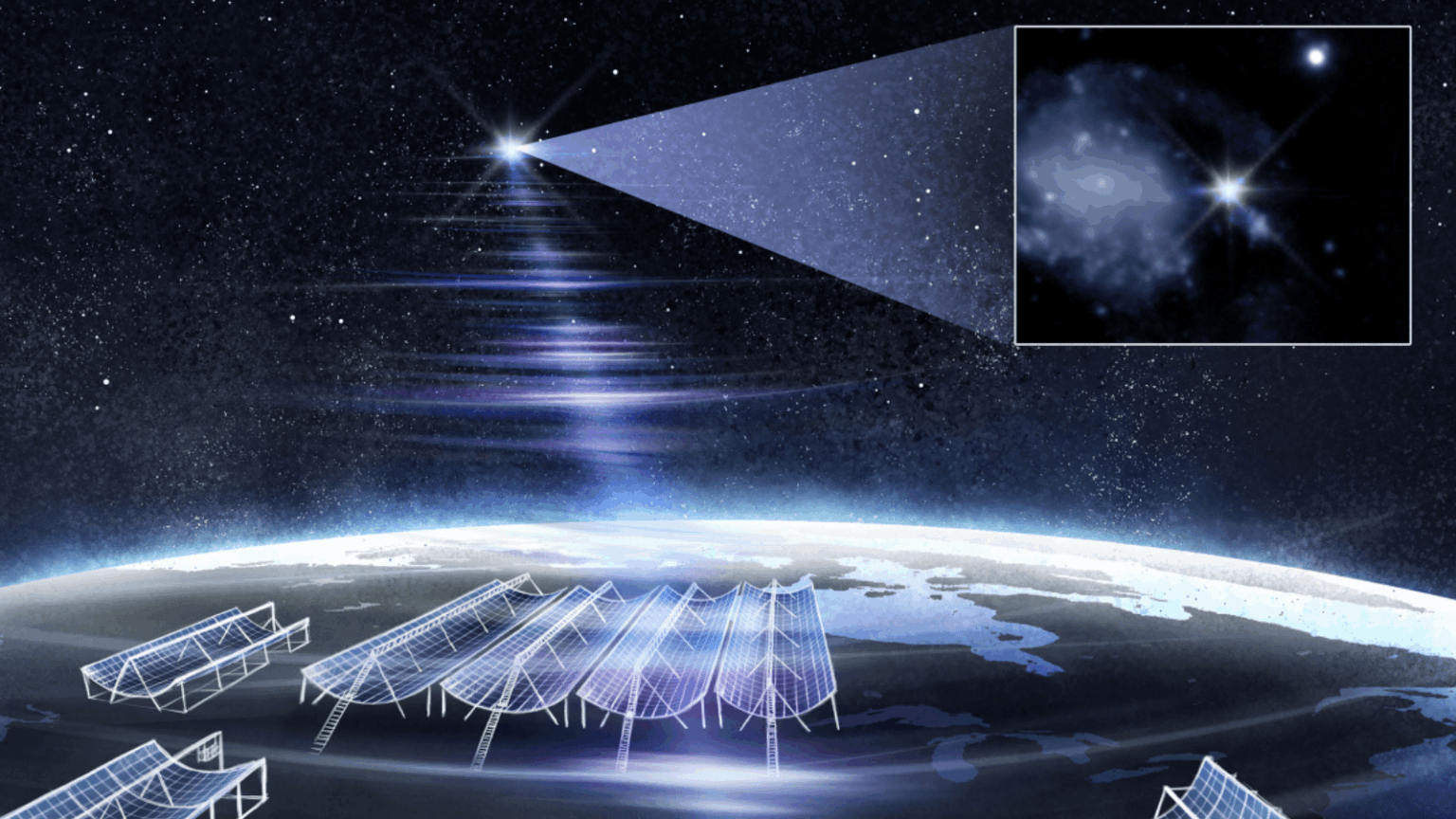
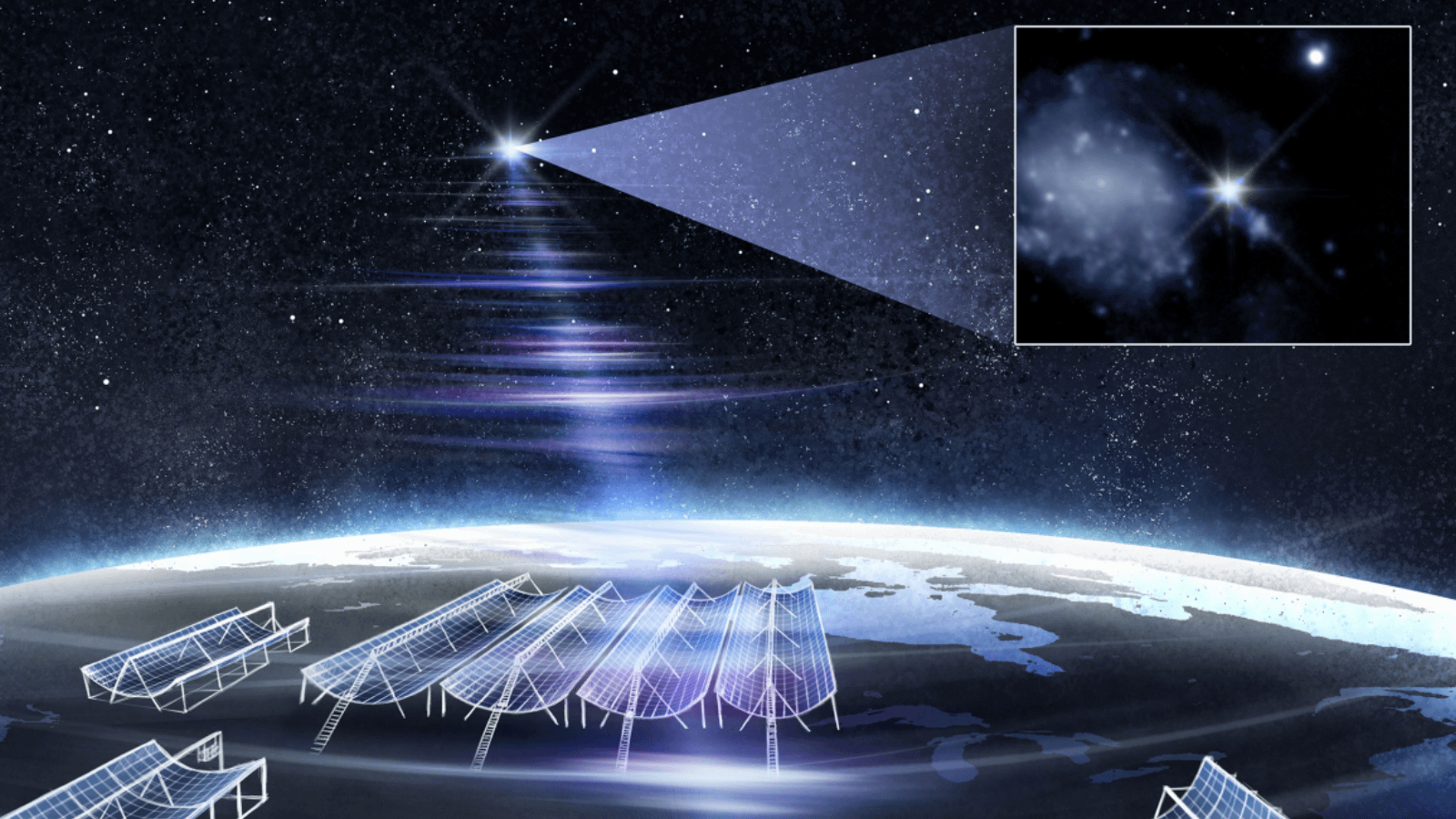
To begin, a [Fast Radio Burst](https://en.wikipedia.org/wiki/Fast_radio_burst) (FRB) is, as the name implies, a burst of radio emission that lasts on the order of a few milliseconds, and originate from beyond our galaxy. We don’t know what causes them yet, though in some cases we think a highly magnetized neutron star, called a [magnetar](https://en.wikipedia.org/wiki/Magnetar), could be responsible. But there’s a LOT we don’t know about FRBs- one big reason is they’re relatively young in our knowledge (first one found in 2007), and another is radio telescopes finding FRBs have traditionally not had a precise enough field of view to see exactly where the FRB came from. (If you have a telescope with a field of view half a square degree, say, there can be a LOT of galaxies in it hundreds of light years away where a FRB came from.)
Luckily, new tech has changed this! The biggest telescope to find FRBs by far has been [CHIME](https://en.wikipedia.org/wiki/Canadian_Hydrogen_Intensity_Mapping_Experiment) in Canada- before CHIME we had maybe a couple dozen FRBs, but now we have *thousands*! Most don’t have great localization, but thankfully CHIME has just had two “outrigger” antennas built for it in the USA (West Virginia and Cali), which allow us to effectively make an instrument the size of the outriggers and pinpoint where the FRBs are coming from!
So enter this discovery, FRB 20250316A (nicknamed RBFLOAT), which was detected in March and was the brightest FRB ever. This allowed localization to the outskirts of a galaxy ~120 million light years away- to a region just 40 light years large or so in this galaxy, which is incredible! What happens when you know something to that level of precision is you can then look at it with other telescopes like JWST, which my colleagues did, and they found a faint infrared source in that area. It’s too faint to be a lot of things (a cluster of stars, a supergiant star) and too faint to be other things (supernova remnant, magnetar). So what could it be? Perhaps a red giant star with a magnetar companion, or a [light echo](https://en.wikipedia.org/wiki/Light_echo), where something energetic gives off energy that interacts with dust in the area, lighting it up.
Still, just because we don’t know exactly what it is, it’s *extremely* exciting that we can now pinpoint the origin of FRBs enough for things like JWST follow up so we can see individual objects associated with them in other friggin’ galaxies! Gonna be a really cool couple of years for FRBs!
Very cool! Proud to see some well done Canadian science!