Webb investigates complex heart of a cosmic butterfly
https://www.esa.int/Science_Exploration/Space_Science/Webb/Webb_investigates_complex_heart_of_a_cosmic_butterfly

Webb investigates complex heart of a cosmic butterfly
https://www.esa.int/Science_Exploration/Space_Science/Webb/Webb_investigates_complex_heart_of_a_cosmic_butterfly
1 Comment
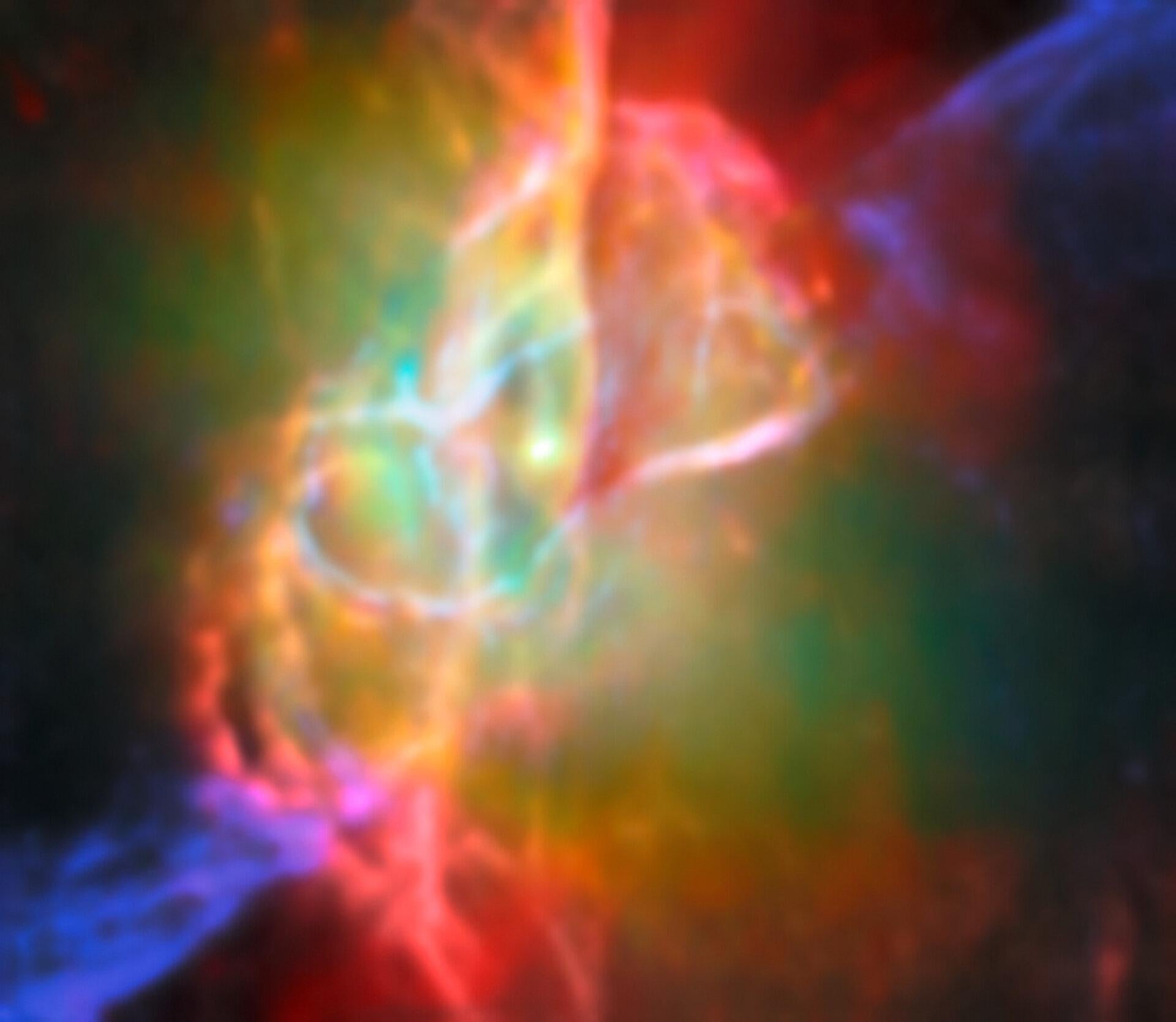
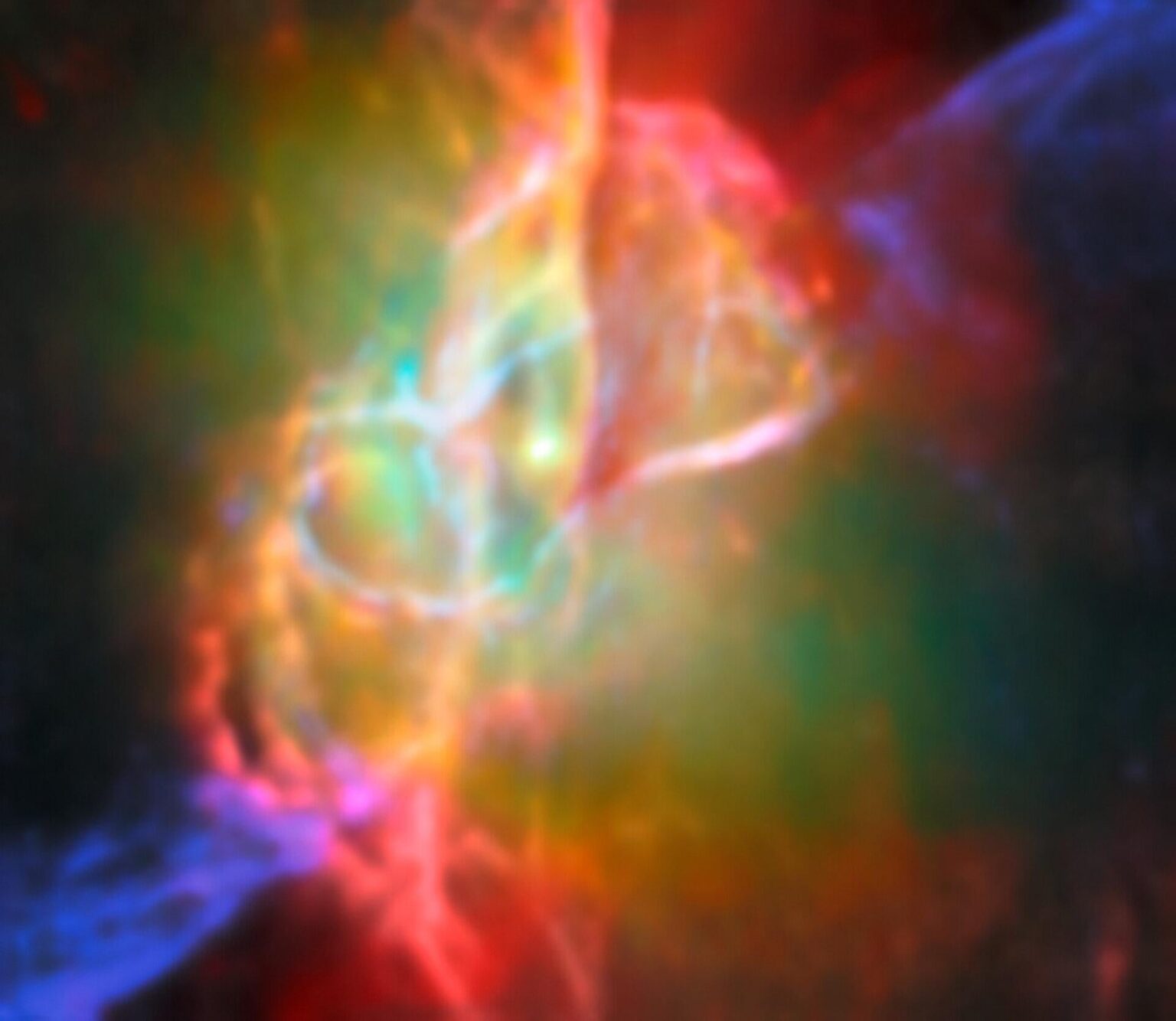
“The research team has pinpointed the location of the Butterfly Nebula’s central star, which heats a previously undetected dust cloud around it, making the latter shine brightly at the mid-infrared wavelengths that MIRI is sensitive to. The location of the nebula’s central star has remained elusive until now, because this enshrouding dust renders it invisible at optical wavelengths. Previous searches for the star lacked the combination of infrared sensitivity and resolution necessary to spot its obscuring warm dust cloud. With a temperature of 220 000 Kelvin, this is one of the hottest known central stars in a planetary nebula in our galaxy.”