Physical climate change risks threaten Europe’s renewable energy push
https://www.insurancebusinessmag.com/uk/news/breaking-news/physical-climate-risks-threaten-europes-renewable-energy-push-zurich-547683.aspx

Physical climate change risks threaten Europe’s renewable energy push
https://www.insurancebusinessmag.com/uk/news/breaking-news/physical-climate-risks-threaten-europes-renewable-energy-push-zurich-547683.aspx
3 Comments
> The energy transition in Europe is progressing as a strategic necessity, with implications for economic stability, national security and long-term prosperity. The declining costs of renewables mean these assets are expected to play a dominant role in future electricity generation.
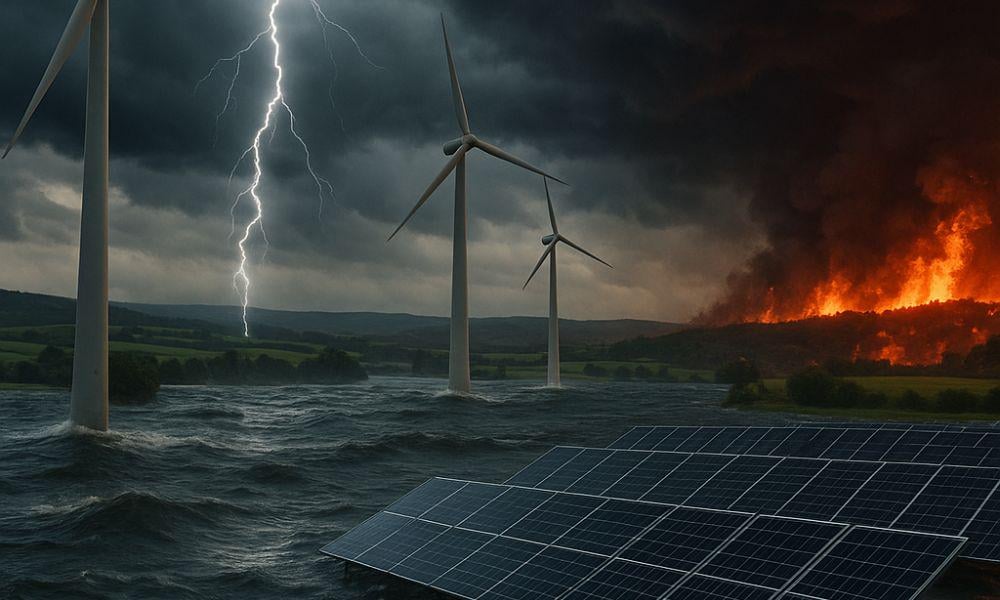
> Physical climate risks, including extreme weather events, are becoming more frequent and severe. These risks affect all forms of energy generation, but **renewable and storage assets are particularly exposed to perils such as strong winds, floods, hail and drought.**
> Insurance coverage for renewable energy projects is also under increased strain as natural catastrophe and extreme weather risks grow. In Europe, 2024 saw **record insured losses for renewables, with some projects facing exclusions for perils such as flooding.**
> Zurich emphasizes that clean, reliable and affordable energy is **essential for mitigating climate risks** and supporting economic success.
> The insurer’s findings indicate that physical climate risks already present a threat to energy assets across Europe. Data shows that by 2030, **46% of total renewable generation capacity will fall into a critical-risk category**, with solar assets making up 58% of that group. For storage, 82% of total capacity – pumped hydro and battery – will also face critical risk.
> Businesses are responding to severe weather by adopting new risk management procedures, but many remain focused on short-term challenges rather than long-term resilience. Resilience adaptation measures can mitigate potential risks, support further investment and strengthen the energy grid.
> Successful delivery of enhanced energy infrastructure resilience will require national planning, localized assessments and close cooperation between public and private sectors.
The thing is that wind and solar are not centralised like eg. coal which makes them invulnerable to localised events or partial outages if you have enough built. Also this is insurence news site so of course they talk about increase in rare events like as if it was the end of the world because it hurts the bottom line in that field.
OMG! No!
The things allegedly fixing the weather suffer the most from bad weather!
Obviously the weather resists the attempts to fix it !!!
How come? What does it mean? Can we stop renewables fast enough, before the planet kills us all?