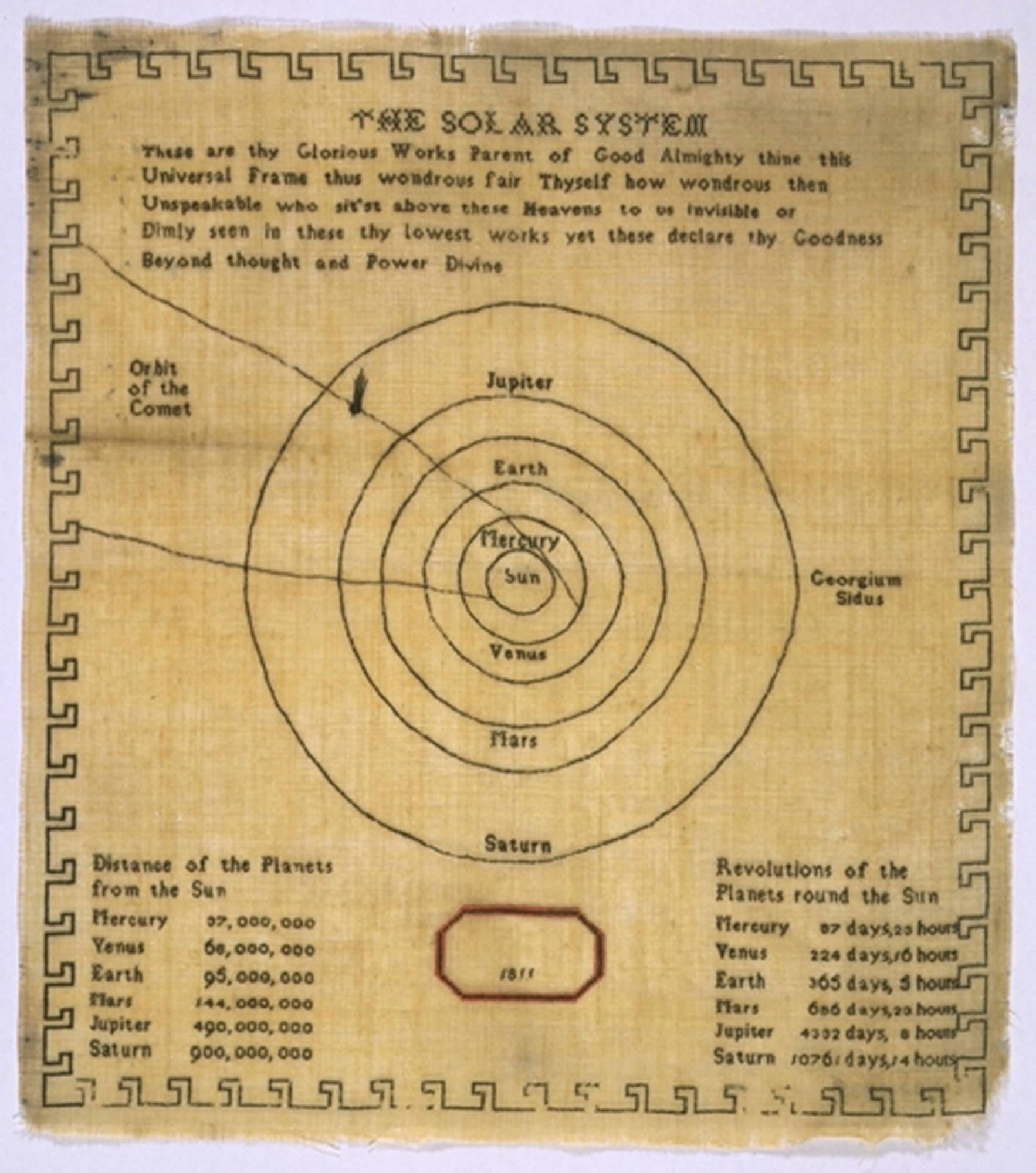
This English embroidery sampler dated 1811 is a rare example of astronomy in a needlework exercise from that time.
https://i.redd.it/qj1zgvlj8cmf1.jpeg

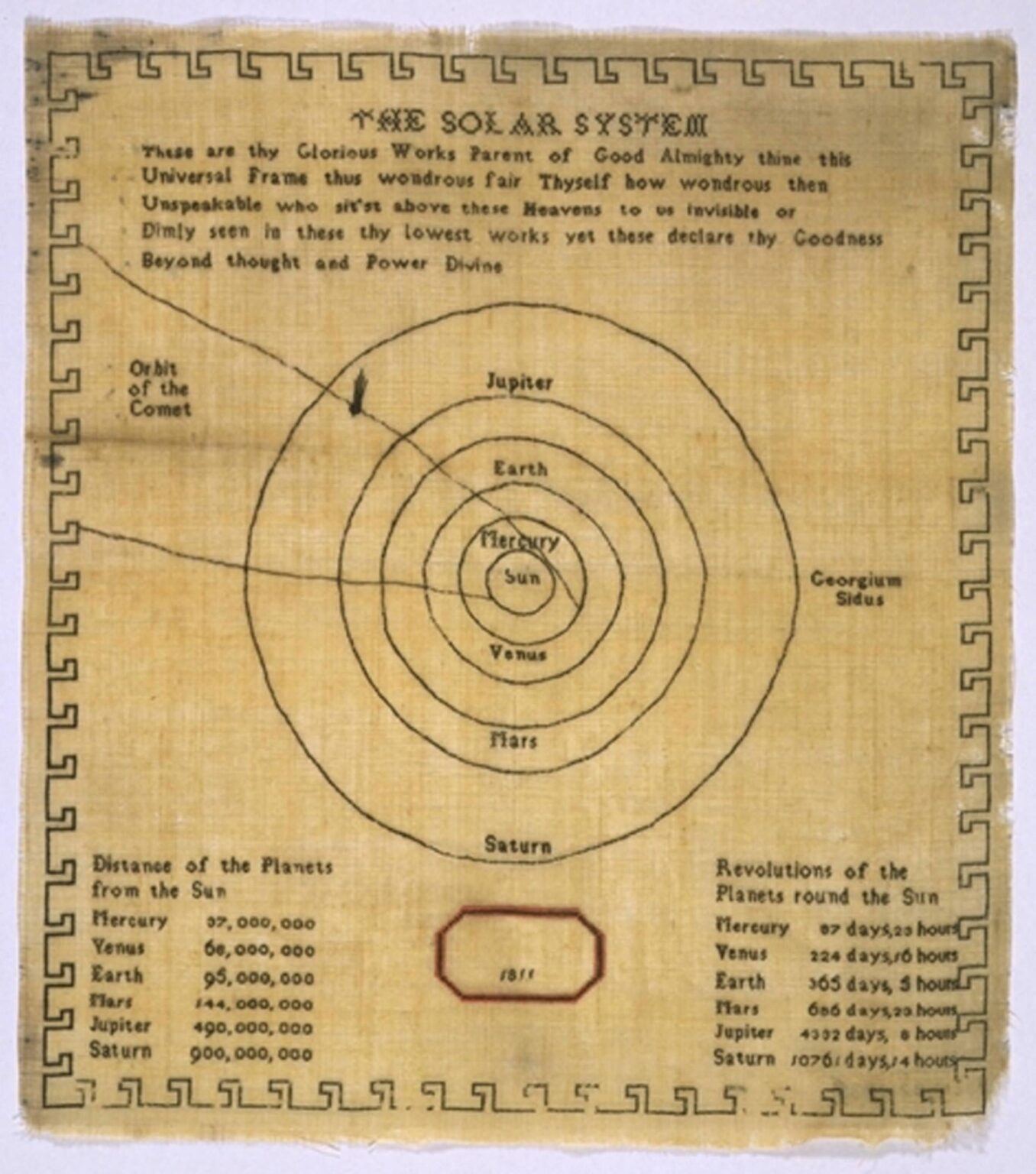
This English embroidery sampler dated 1811 is a rare example of astronomy in a needlework exercise from that time.
https://i.redd.it/qj1zgvlj8cmf1.jpeg
2 Comments
Image from here
[https://collections.vam.ac.uk/item/O70501/the-solar-system-sampler-unknown/](https://collections.vam.ac.uk/item/O70501/the-solar-system-sampler-unknown/)
Summary and Description included:
The earliest samplers were reference works for embroiderers. They showed ‘samples’ of patterns and stitches and recorded how to achieve particular effects. In Europe in the 17th century samplers provided instruction and practice for girls learning needlework. By the 18th century samplers were used to show more than just needlework skills. This sampler dated 1811 is a rare example of astronomy in a needlework exercise. It shows the planets of the solar system, their relationships to the sun, and the ‘Orbit of the Comet’.
Wool sampler embroidered with silk; English, 1811.
The ‘Georgium Sidus’ on the right hand side is the original name for Uranus which was discovered by William Herschel in 1781. He named it Georgium Sidus (George’s Star) after George III who was his patron.
The name Uranus was first suggested by Johann Bode just one year after its discovery, but Georgium Sidus still cropped up in British astronomical reports until the mid-19th Century.
‘Orbit of the Comet’ must be the Great Comet of 1811 which must have been extraordinary – it was visible to the naked eye for the best part of a year. Wish we could get a comet like that today.