
New bendable solar cells stay stable for 2,000 hours under heat and humidity | A European consortium has made progress in developing flexible, low-cost perovskite solar cells with carbon electrodes.
https://interestingengineering.com/innovation/bendable-solar-cells-hit-21-6-efficiency
3 Comments
From the article: European consortium has made progress in developing flexible, low-cost perovskite solar cells with carbon electrodes.
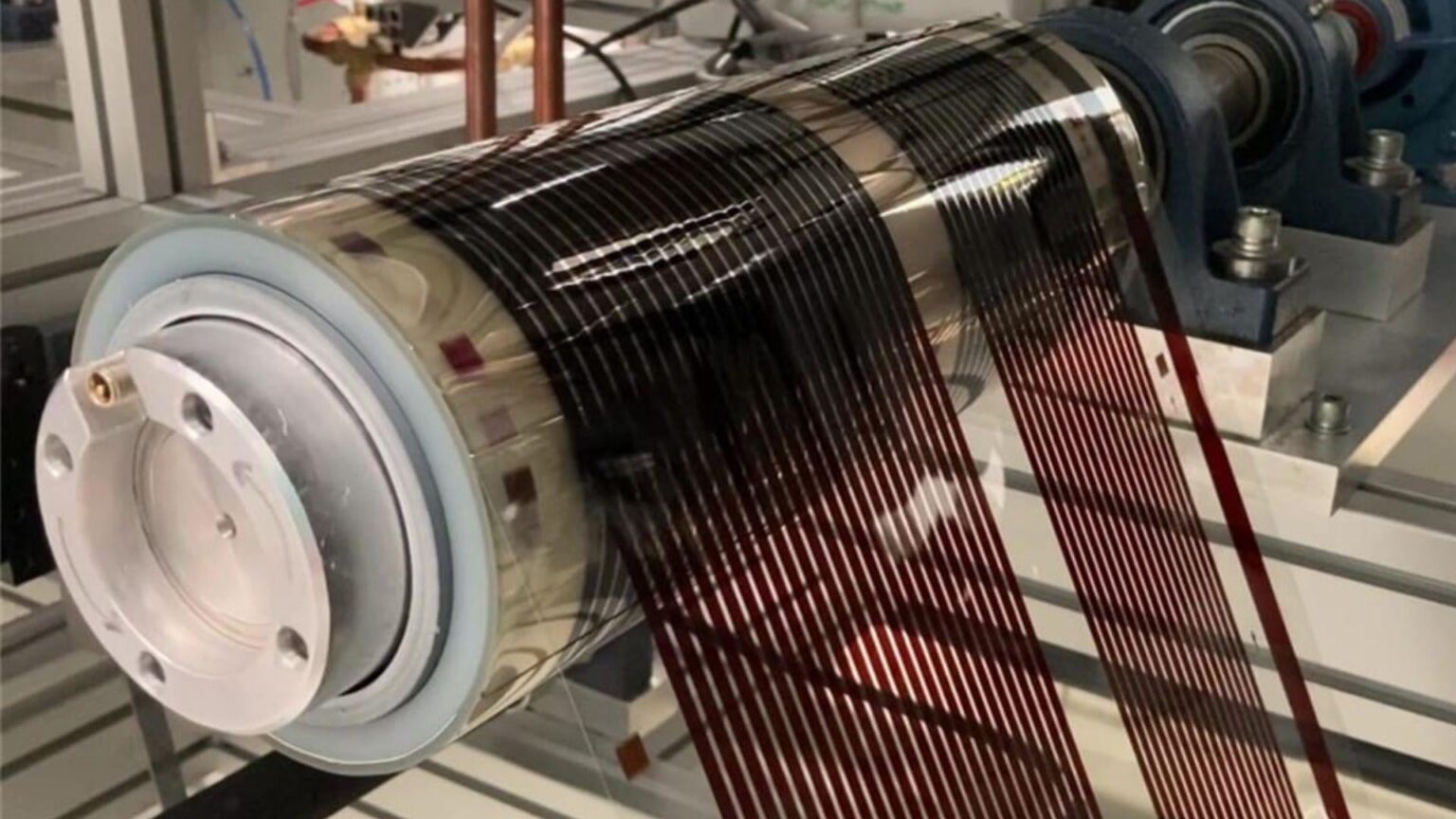
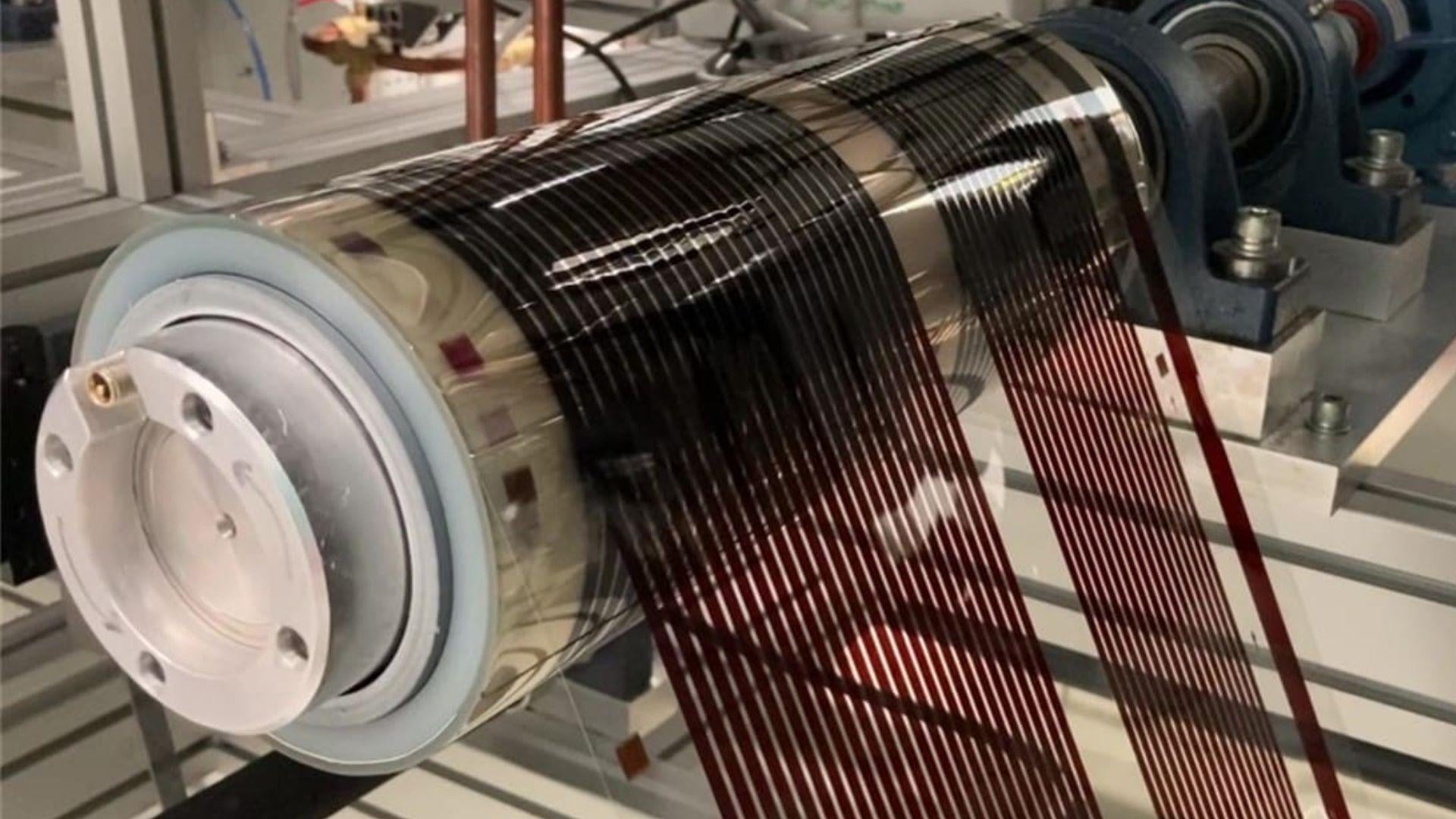
The PEARL consortium, a three-year Horizon Europe project, has already surpassed 21% efficiency on flexible, bendable substrates, bringing them closer to their 25% efficiency target.
The consortium uses the Roll-to-roll (R2R) manufacturing technique for producing flexible and thin-film products.
“Our flexible perovskite cells have already surpassed 21% efficiency on bendable substrates, and we’ve demonstrated scalable roll-to-roll processes,” said Dr. Riikka Suhonen, PEARL Project Coordinator at Finland’s Teknologian Tutkimuskeskus (VTT).
“These achievements bring us firmly within reach of our 25 % target – paving the way to low-cost, high-performance solar modules for applications from building-integrated photovoltaics to the Internet of Things,” Suhonen added.
The PEARL consortium [website](https://www.pearl-project.eu/about/) describes that the main goal is to create flexible perovskite solar cells with carbon electrodes that are industrially viable and environmentally friendly.
This approach aims to achieve a high efficiency of over 25% while simultaneously reducing production costs to below 0.3 EUR/Wp and minimizing emissions to less than 0.01 kg CO2eq/kWh.
Using carbon electrodes also improves device stability, surpassing the operational stability standards.
Recently, the consortium has improved the durability of its flexible solar cells by developing a new protective encapsulation.
This encapsulation allows the cells to remain stable for over 2,000 hours under extreme damp-heat conditions, specifically at a temperature of 85°C and 85% humidity.
The achievement demonstrates the solar cells’ robustness and potential for reliable performance in real-world environments.
Well, that is pretty good, but they need to slap a few rolls on some buildings and see how they test in the real world over a long period of time. years to decades.
So less than 3 month lifespan? Doesn’t sound low cost compared to 25+ years for monocrystalline panels.
What application would even remotely find these useful?