Japan advances embryo research without eggs or sperm, sparking ethical concerns
https://biz.chosun.com/en/en-science/2025/08/18/DFGVWREIZJDY3M5CQHUOYUR7BE/

Japan advances embryo research without eggs or sperm, sparking ethical concerns
https://biz.chosun.com/en/en-science/2025/08/18/DFGVWREIZJDY3M5CQHUOYUR7BE/
13 Comments
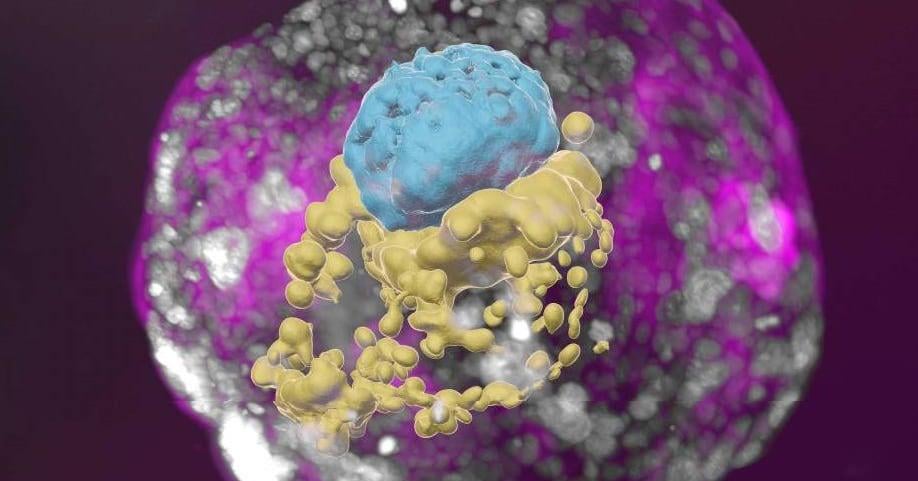
> The Japanese government has approved research to create human embryos (fertilized eggs) using only stem cells **without eggs and sperm**, paving a new path for human developmental research as well as infertility treatments. At the same time, there are voices expressing **concerns about social and ethical controversies**.
> By permitting embryonic creation research, the Japanese government has limited the research purposes to medical studies such as **infertility and genetic diseases**. The cultivation period is also stipulated to be a maximum of 14 days, the same as embryos derived from women. Implanting embryos into the uterus of humans or animals is also prohibited.
> In most countries, including Korea, the deadline for cultivating embryos in laboratories is set at 14 days. After this day, fertilized eggs do not split into two, thereby **losing the possibility of becoming twins** and beginning to grow as an independent human. From this point on, they finally **become subjects of legal protection**.
> Although there are restrictions, Japan has been evaluated as taking the lead in the field of stem cell-based human embryonic research with this decision. A representative area of research in Japan is in vitro gametogenesis (IVG), which is the technology of converting fully matured skin or blood cells into iPS cells and then recreating eggs and sperm. If this technology is commercialized, it will be possible to create eggs from skin cells **without the painful collection of eggs from women**, allowing for artificial fertilization procedures. This could reduce women’s physical burden and expenses, and theoretically, same-sex parents could each have children bearing their own genetic traits. Additionally, the ability to create multiple embryos at once increases the chances of filtering out embryos with genetic diseases through pre-implantation testing.
> Currently, not only Japan but also the United States, the United Kingdom, and others are competing in research in this field. In 2016, a research team from Osaka University in Japan gave birth to mice **with two biological fathers.**
That’s sounds nice. This, with a combination with artificial wombs, would be great
So murdering real human babies is ethical, but stem cells that just mimic it raises ethical concerns? People are stupid.
The ethical concern is the welfare child at the end of the procedure. That’s it.
In a process where we already allow men and women to use science to have children that couldn’t, I fail to see this as ethically different. You’ve already crossed the Rubicon from a natural selection standpoint.
There is a discussion to be had that you may start creating children that have no chance of natural reproduction and that’s very real, but it’s also a separate issue.
The aristocrats only need us for 2 things: work and breeding. When technology replaces both, they will wipe us out.
Japan will do literally anything to avoid reforming its economy to making life affordable for people or accept minor immigration.
This is how governments will use mass production in an attempt to complete the human instrumentality project and initiate the third impact.
So basically, Japan is building Coordinators.
Oh boy I can’t wait till we get a real life gundam jesus.
Not needing to go through the egg extraction process is a big step forward, although I wonder how they go from adult somatic cell to sex cell. Is there anywhere else to read about in vitro gametogenesis?
This is insane. Like sci-fi doing some new insane. Wow
Hypothetically asking if a female wanted to create eggs from her somatic cell, how long would she have to wait for this technology to get so well that the eggs will be nature grade?
Anti-science busy bodies continue to try and stop progress, news at 11.
If, as some scientists predict, men in industrialized countries will become sterile in as little as 20 years, due to chemicals in plastics that affect hormone production, we’ll need alternate means of reproduction.