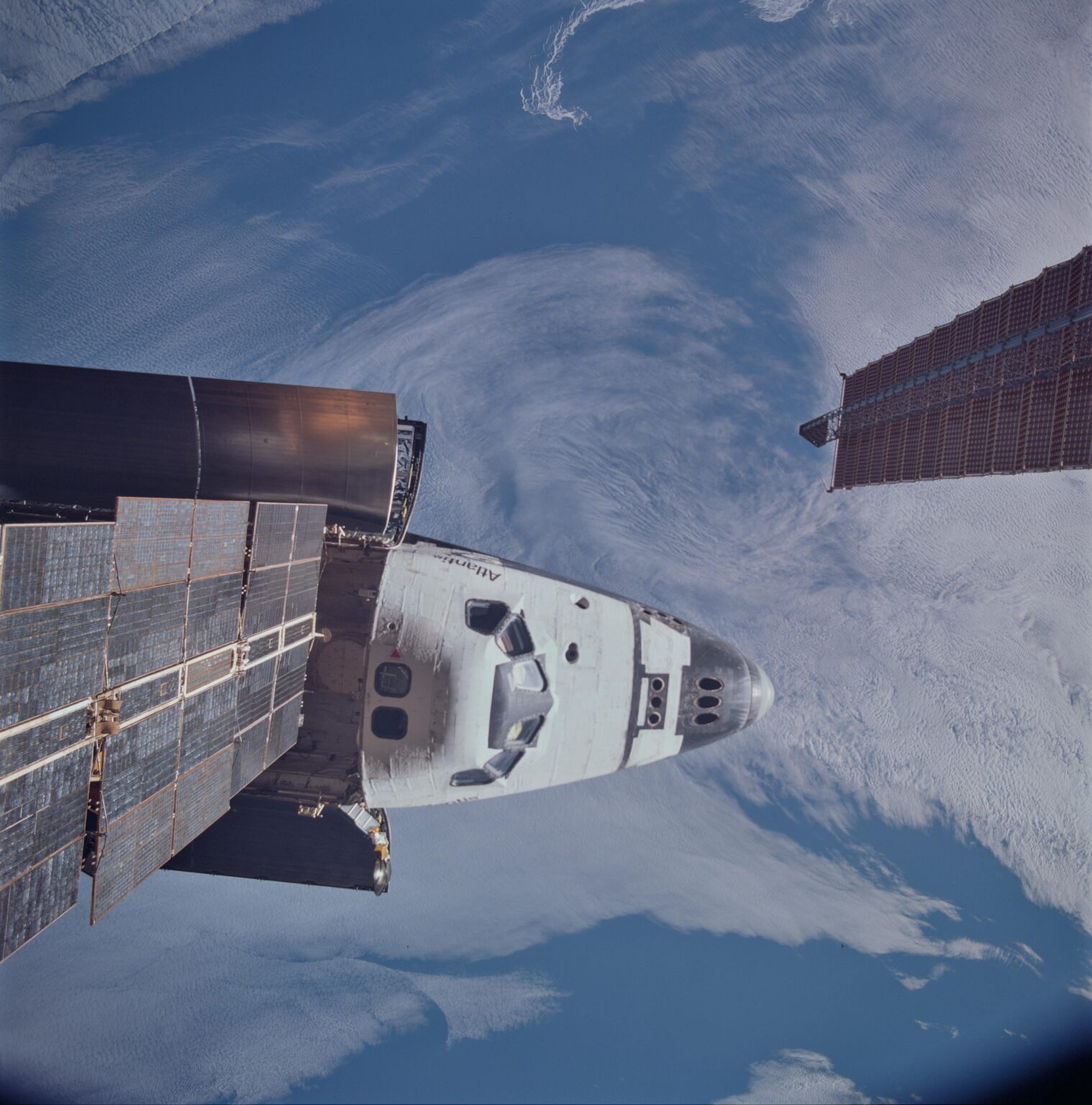
Man, I remember the Shuttle/Mir program. It was sketchy as hell, but neat to see the cooperation.
sojuz151 on
An interesting moment in history. At that point mir was at a decaying station built by a failed system. Also this shows how big shuttles were. A shuttle weight almost as much as the entire mir station.
DogeAteMyHomework on
Highly recommend NASA astronaut Jerry Linenger’s book *Off The Planet* describing his five months on Mir.
From his Wiki page:
While living aboard the space station, Linenger and his two Russian crewmembers faced numerous difficulties: the most severe fire ever aboard an orbiting spacecraft, failures of onboard systems (oxygen generator, carbon dioxide scrubbing, cooling line loop leaks, communication antenna tracking ability, urine collection and processing facility), a near collision with a resupply cargo ship during a manual docking system test, loss of station electrical power, and loss of attitude control resulting in a slow, uncontrolled “tumble” through space. In spite of these challenges and added demands on their time (in order to carry out the repair work), they still accomplished all mission goals-spacewalk, flyaround, and one-hundred percent of the planned U.S. science experiments.
nazihater3000 on
American components, russian components, all made in Taiwan!
Northwindlowlander on
I always find it fascinating that at the core of the ISS are still Zarya and Zvezda- Zvezda originally being built in the 1980s to be part of Mir-2 and directly descended from Salyut, and Zarya (and other later modules) being descended from the TKS FGB which was developed for Salyut. Talk about a lineage.
And that lineage goes from “shuttle goes to Mir” to “shuttle takes Unity to orbit and then mates Zvezda to Unity and basically creates the ISS”

5 Comments
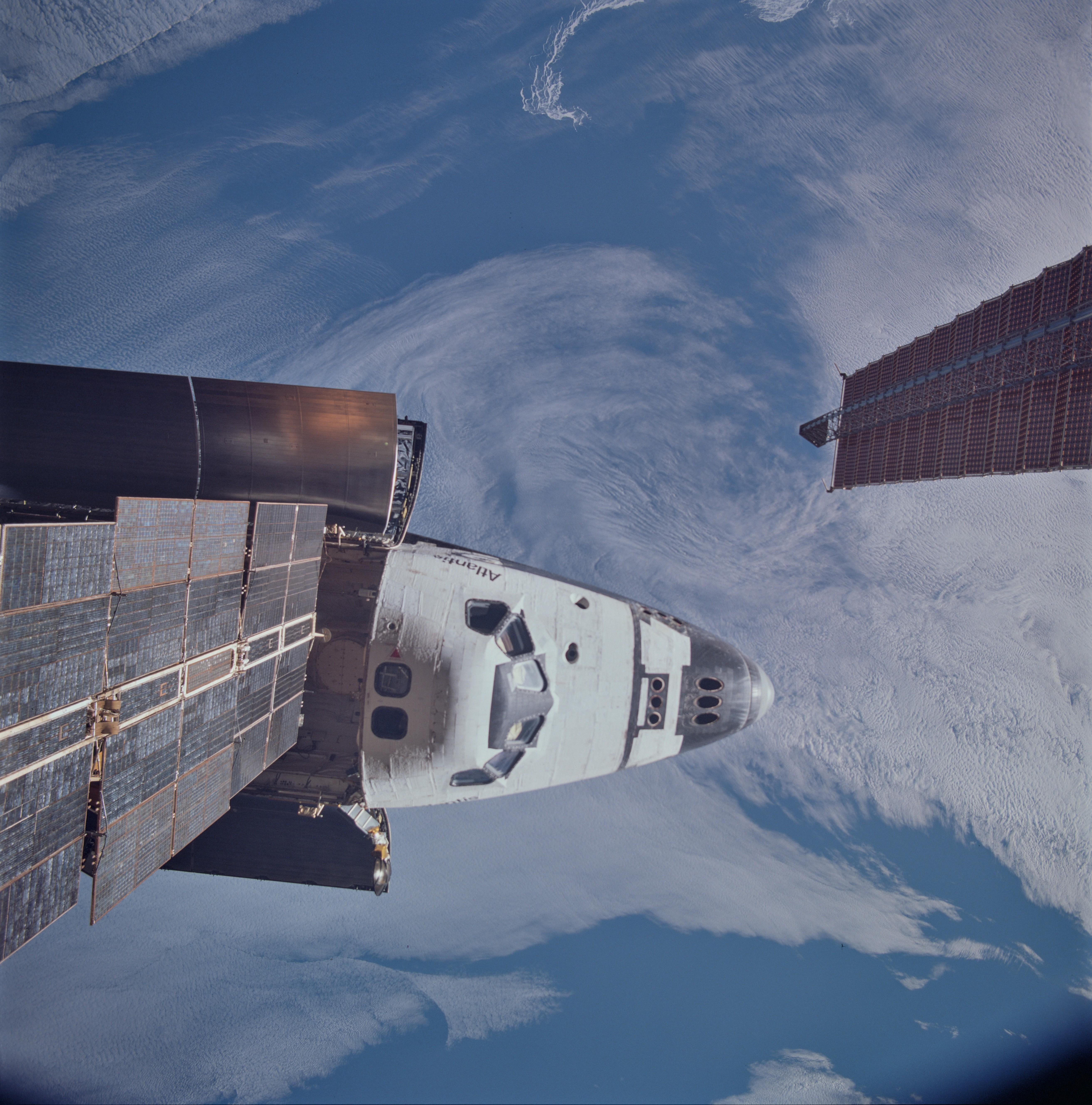
Man, I remember the Shuttle/Mir program. It was sketchy as hell, but neat to see the cooperation.
An interesting moment in history. At that point mir was at a decaying station built by a failed system. Also this shows how big shuttles were. A shuttle weight almost as much as the entire mir station.
Highly recommend NASA astronaut Jerry Linenger’s book *Off The Planet* describing his five months on Mir.
From his Wiki page:
While living aboard the space station, Linenger and his two Russian crewmembers faced numerous difficulties: the most severe fire ever aboard an orbiting spacecraft, failures of onboard systems (oxygen generator, carbon dioxide scrubbing, cooling line loop leaks, communication antenna tracking ability, urine collection and processing facility), a near collision with a resupply cargo ship during a manual docking system test, loss of station electrical power, and loss of attitude control resulting in a slow, uncontrolled “tumble” through space. In spite of these challenges and added demands on their time (in order to carry out the repair work), they still accomplished all mission goals-spacewalk, flyaround, and one-hundred percent of the planned U.S. science experiments.
American components, russian components, all made in Taiwan!
I always find it fascinating that at the core of the ISS are still Zarya and Zvezda- Zvezda originally being built in the 1980s to be part of Mir-2 and directly descended from Salyut, and Zarya (and other later modules) being descended from the TKS FGB which was developed for Salyut. Talk about a lineage.
And that lineage goes from “shuttle goes to Mir” to “shuttle takes Unity to orbit and then mates Zvezda to Unity and basically creates the ISS”