
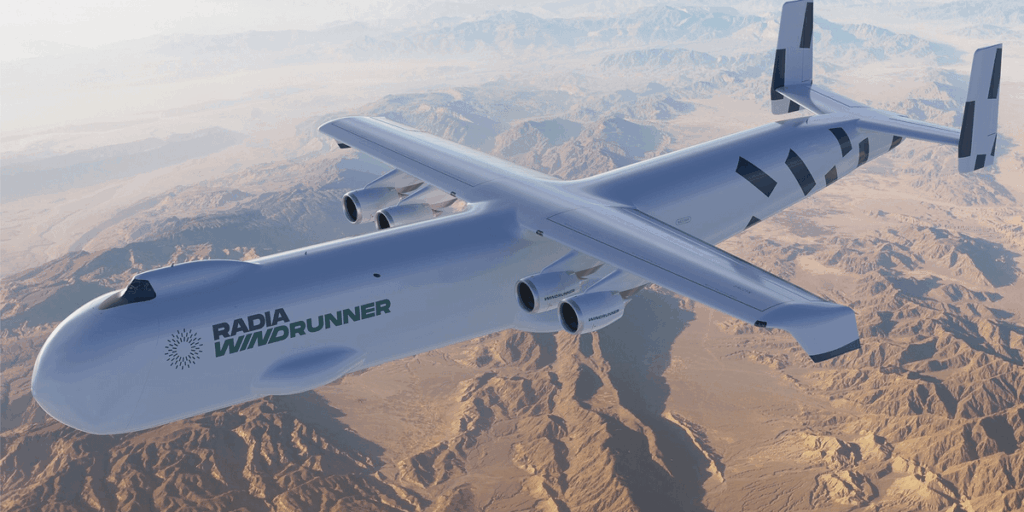
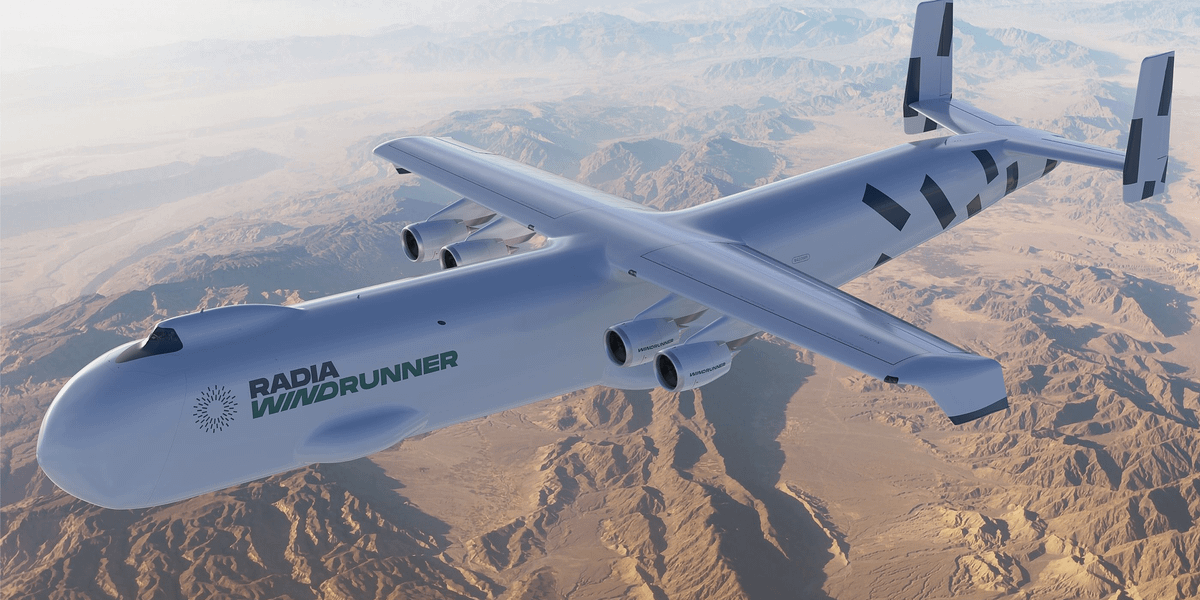
Going to all the trouble of designing and building the world's biggest ever airplane just to transport wind turbine blades might sound over the top, but there is sound logic behind it. Onshore wind turbine size is constrained by the transport option needed to deliver the blades – roads, bridge size, etc.
100-meter blade turbines could make wind energy 25% cheaper. Not only that, but this method of transport could expand the range of places where they could be built. You'd also need fewer turbines the bigger they are.
When you consider this might potentially be addressing 5-10% of Planet Earth's future energy supply, the idea doesn't sound so ludicrous.
50% longer than a 747, 12 times its cargo capacity, & designed to land on dirt tracks – a Colorado company is designing the world's biggest ever airplane to transport wind turbine blades.
byu/lughnasadh inFuturology
22 Comments
It’s a ridiculous project from a company that has never designed an aircraft ever before, and is trying to make their first the biggest thing ever built.
The math they present to justify it is ok at best, but their lack of experience makes this more of a vaporware type project, hoping for investment that likely won’t ever meet their needs.
I’d be surprised if they ever build a single prototype.
Their single rendering doesn’t inspire much confidence either. A wing design that seems grossly inefficient for anything longer than very short local flights. a fuselage that will have immense structural challenges.
oh and despite the talk about how it could land on dirt, it would still require a very long straight and level landing surface that would need to be prepared if they plan on doing a bunch of landings, which would be required at a major wind farm. That runway will be expensive no matter what.
Then, Trump’s attack on wind farms in general (started with offshore but he wants to end all wind and solar projects) basically deflates any potential demand for such an aircraft, at least in the US.
I think hybrid airships, of which there are already at least two functioning projects, would be more of a benefit for the job.
Anyone have a few hundred million to invest in my new venture? I (or more accurately chatgpt) made a rendering of 4 Sikorski’s stuck together in a quadcopter configuration for this exact same purpose. No runways needed! It will totally work for it’s intended purpose of transferring your money to me.
“12 times the cargo capacity” is somewhat misleading. Most of the parameters used to determine if an aircraft can actually fly are based on weight, not size.
It’s not 12x it’s cargo, but rather volume capacity. 747-8f used 137 ton payload capacity. This thing is at 50 ish.
Why don’t they design turbine blades that can be unfolded at destination?
Obviously this is a fantasy and there’s like 6 other more feasible ways to make really big wind farms, so what about semi mobile factory equipment that can be trucked in to just fabricate the blades on site?
Im surprised they aren’t trying some kind of dirigible
Perhaps Airships (blimps/dirigibles) would be a bit more feasible and understood ..that assumes that the blades require unibody construction. In WW2 we had planes that had fold up wings for storage and transport just thinking…
“Blades could one day be 3D-printed on-site, which could negate the need for an airplane, but that research is still in early stages,”
But building a completely new design for an airplane isn’t in early research stages? I think 3D printing them onsite has a better chance of becoming reality.
Is there any reason we can’t use an airship for this? It’s not as if delivery of wind turbine blades requires high speed
…wouldn’t it be easier to ship the turbine blade in pieces and assemble it on-site?
Couldn’t you just build the world’s biggest helicopter to transport them?
It would literally be easier to design a portable blade factory…
All that jet fuel wasted for something that may never generate more energy than it takes to create.
What about airships?
Siemens Gamesa’s 14 blades are 108m long and weigh 65.6 tonnes per blade.
E.g. Atlas’ ATLANT cargo airships are unmanned, rigid-body hybrid airships that could carry up to 165 tonnes of cargo with a cruise speed of 120km/h. With the ability to land on hard runways, soil, water, ice, snow, wetlands, and sand…
https://atlas-lta.com/atlant_cargo_airship/
only 2 blades?
most wind turbines have 3 blades
this is the hot dog and hot dog bun controversy all over again.
I don’t think the rendering is as bad as people think. The thing people aren’t considering is that while the turbine blades are large they are relative to their volume light weight, being composed largely of fiberglass and other composites. The weight of some of the largest wind turbine blades are light enough for a C130 to carry, but would never fit inside. So if you’re building something to carry only that kind of load, but requiring a fuselage 3-4 times the length of a C130, the proportion of wings to the fuselage would be smaller than that proportion of a C130’s fuselage to wings. The determining factor for wing span of this aircraft is in larger part dependent on what its going to be made and how many of these turbine blades they intend to carry more than their weight.
I feel like having a helicopter on each end would be more practical since it could actually go directly to the job site without building a runway.
What a wild wing design for something so large. Thats a “yeah idk about that” from me. Id love to be wrong, but the aerospace engineer in me isn’t convinced.
Amory Lovins holding curled up monkey paw: “wow. Wow, that’s a really big airplane. Seems awfully … hard. Can’t they make them … softer?”
Not going to happen. We have fine ships and trucks to transport them and this is not at all economical
Where are they going to land it? Most wind turbine sites are in rural or remote places. And youve still got to go the last mile(s) from the airport.