
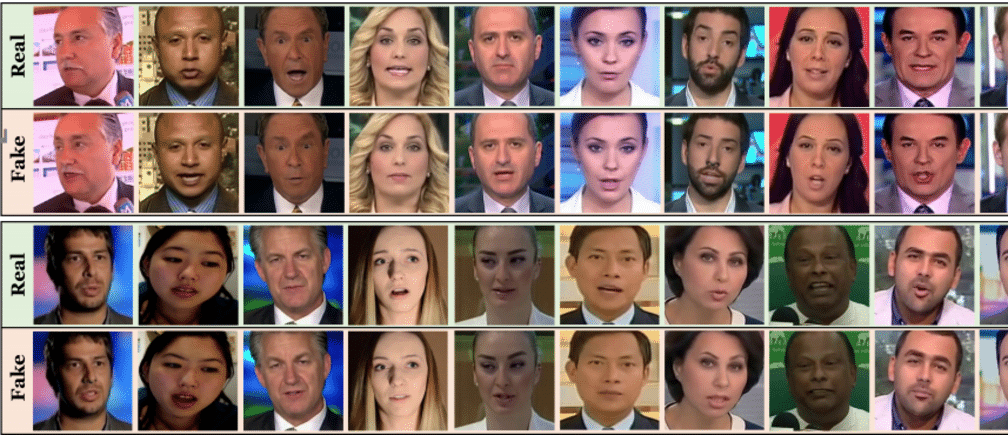
More Resources & TL;DR: At the end
In 2025 it’s become extremely cheap and easy to generate an AI video of almost anything you can imagine.
Soon it may be impossible to detect digital forgery with the naked eye.
So rather than trying to spot each photoshop or deepfake in the wild, use the following principle to determine if it’s disinformation:
No matter how realistic something looks, whether it’s a screenshot or a photo or a video, question the person showing you the content, not the content itself.
The people who make the content or share it can always lie, no matter what the content is or how real it looks.
Here are the priorities of modern media literacy:
Always assume it could be fake
- Realism ≠ authenticity.
- Treat every image or video online as potentially generated, altered, or misused.
- Watch for signs of editing or generation, e.g. “Uncanny valley” sensations, visual anomalies such as shifting details or over-smoothing, audio mismatch, anything that feels “off”.
- Signs of missing watermarks: weird cropping such as black bars at the top/bottom of a vertical video, scrubbed metadata
Inspect the source: WHO put this content out there?
- Prioritize their motive over the content itself.
- Who is sharing it? A random account? A stranger? A media outlet? Your elderly aunt?
- Where is it being shared? Social media? A news article? Peer to peer?
Consider why they might spread disinformation:
- Power & Ideology
- To control a narrative, manipulate public opinion, or discredit rivals. E.g. news outlets, governments, institutions, corporations, your local Karen.
-
To promote their personal belief system or worldview.
-
Profit
-
Clickbait, ad revenue, subscriber boosts, SEO.
-
Intense emotions drive engagement and traffic.
-
To grow a following or build a brand.
-
Fake expertise or hot takes garner more attention.
-
Malice
-
To smear, shame, or discredit a person, group, or company.
-
For chaos, cruelty, or sport.
-
Unintentionally
-
Believing something dangerous and wanting to "warn others," even if false.
-
Amplifies disinfo without malicious intent.
-
Sharing content that aligns with in-group identity, regardless of accuracy.
-
Satirical content that gets decontextualized and believed.
-
They believed things that felt right or confirmed their bias.
-
If it feels true, they just shared.
VERIFY VERIFY VERIFY
- Use reverse image/video search tools.
- See where else the content appears and how it was originally described.
- Trace the clip, frame, or image back to its first appearance online.
- Look for original context before it was clipped, cropped, or recaptioned.
If it's real, credible news orgs or fact-checkers will likely have it too.
Don’t share fakes and lies
- If you feel outrage, fear, awe = could be manipulation bait.
- Any intense emotion, think before you believe or share.
- It’s not only “is this fake?” but also “is this real but being misrepresented?”
- Suspicion is free, use it a lot and often.
Share Media Responsibly
- KNOW: Why am I sharing this? What do I want others to think or feel?
- ASK: Who created this? Who first posted it? Is that source credible? Has it been verified by any reputable source or fact-checker?
- Link to the original post, article, or uploader if known.
- Say when and where the image/video was taken or posted, if you know.
- Use phrases like: “Unconfirmed,” “Context unclear,” “Could be altered,” if you’re not sure.
- Add your own framing: Is it funny? Serious? Real? Fake? Historical? Your reaction will set the tone.
- Don’t add a dramatic caption that wasn’t in the original post. Don’t exaggerate.
- Sharing content when you’re angry, sarcastic, or panicked often strips away nuance.
- If the image is AI-generated or modified, designate that clearly.
If you're entirely unsure about the content’s accuracy or origin, don’t share it like you are.
More Resources:
https://lab.witness.org/backgrounder-deepfakes-in-2021/
https://deepfakes.virtuality.mit.edu/
TL;DR:
Always assume digital media could be fake. Focus on who is sharing it and why. Check for visual anomalies, missing context, and emotional manipulation. Verify through reverse searches and credible sources. Share content responsibly by including source info, clarifying uncertainty, and avoiding exaggeration. If you’re not sure it’s true, don’t pass it on like it is.
Sora 2 Released: How to Spot DeepFakes
byu/beeting inFuturology
6 Comments
How do you practice media literacy in the modern day?
Do you educate friends and family for how to spot online fakes and scams? How so?
What worries you most about deepfakes?
I’d imagine the standard rules with everything else. If you see a video that makes some astounding claim, verify it with two to three trusted sources for authenticity. If you see a video with something absolutely amazing, but not entirely unbelievable happening, like kittens bouncing on a trampoline, assume its fake until someone provides information that states otherwise.
The end road of all this AI slop, I’d imagine, is going to be a decrease in exploratory usage as online communities close their gates and folks stick to content from people they know. Quite possibly, this might lead to a decrease in the popularity of social media.
I like that you asked GBT to write a massive post about how to spot fake content.
Sorry not reading.
How come Moroccan figures are included in the examples. (Nabil BenAbdellah and Sanae Rahimi) ?
I mean, every Sora 2 video I’ve seen so far looks like a fever dream of dogshit. That’s probably one indicator.
My day job is video editing so maybe it’s different for others but I still haven’t seen a video that looks “real” they all have something that feels very artificial. Movement, lighting, cuts, transitions, composition, camera angles or even colors give every AI video I’ve seen very distinct fakeness to it.