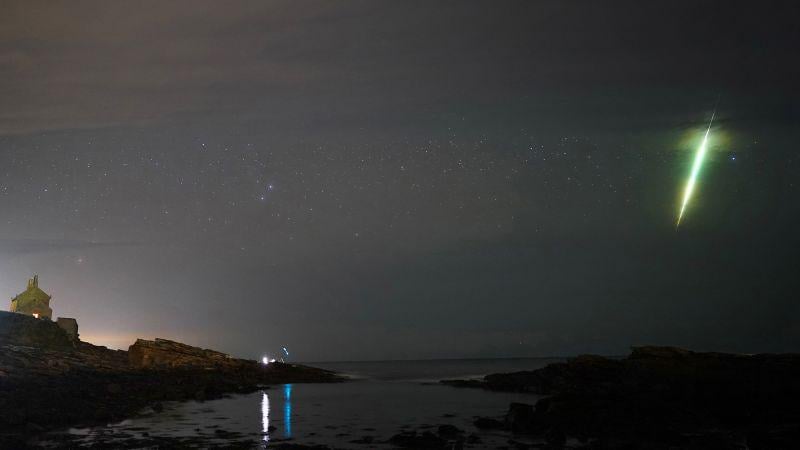
The Draconid meteor shower is peaking this week. Here’s what to know
https://www.cnn.com/2025/10/08/science/draconid-meteor-shower-peak?utm_medium=social&utm_campaign=missions&utm_source=reddit

The Draconid meteor shower is peaking this week. Here’s what to know
https://www.cnn.com/2025/10/08/science/draconid-meteor-shower-peak?utm_medium=social&utm_campaign=missions&utm_source=reddit
2 Comments
The Draconid meteor shower, which is known to produce meteors during the evening rather than early morning, is set to peak at 3 p.m. ET Wednesday, according to EarthSky.
“The Draconids are a very quick shower,” said Robert Lunsford, fireball report coordinator for the American Meteor Society. “We on Earth pass through debris (from the comet [21P/Giacobini-Zinner](https://science.nasa.gov/solar-system/comets/21p-giacobini-zinner/)) in just a few days, and the main maximum (activity) actually only lasts a few hours. So it’s here and gone just like that.”
This year, the shower peaks just a few days after October’s supermoon, The silvery orb was reaching its nearest point to our planet, making it appear larger and fuller. It’s unlikely that sky-gazers will see much Draconid activity because the brightness of the moon will continue to block most visible activity.
But for die-hard sky-watchers hoping to spot meteors, it’s recommended to look “toward the northern part of the sky,” Lunsford said.
Release the full interview with Stephen Miller claiming Trump has ‘Plenary Authority’ over the Armed Forces! Why are you hiding this clip from the public?
https://www.reddit.com/r/law/comments/1o0np7b/stephen_miller_says_trump_has_plenary_authority/