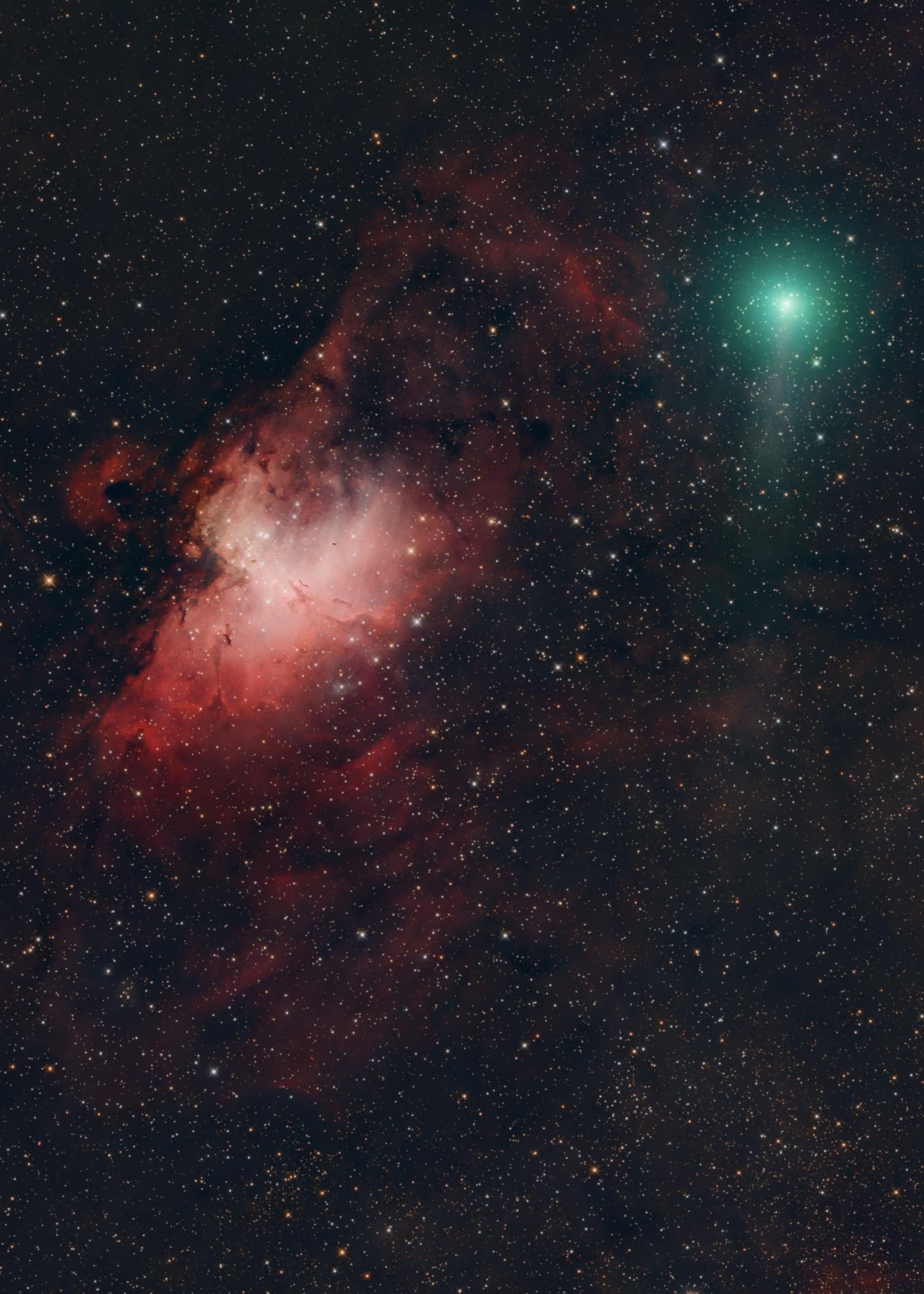
Last night I photographed a once in a lifetime occurrence — a comet passing by the “Pillars of Creation”
https://i.redd.it/s7u16dgxvyvf1.jpeg

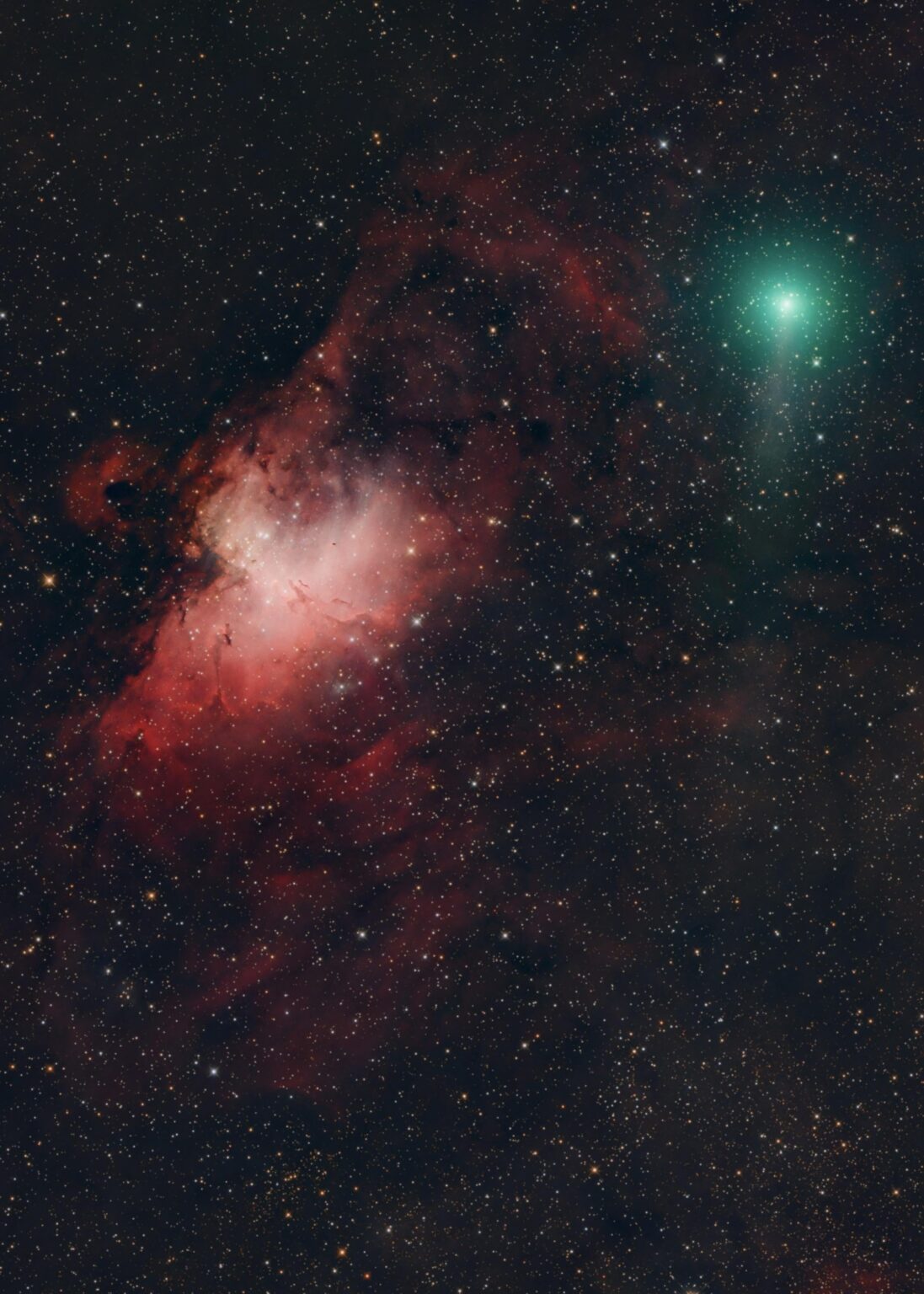
Last night I photographed a once in a lifetime occurrence — a comet passing by the “Pillars of Creation”
https://i.redd.it/s7u16dgxvyvf1.jpeg
4 Comments
There are currently two bright comets in the sky, c/2025 R2 (SWAN) and c/2025 A6 (Lemmon). As an astrophotographer, comets are my favorite thing to shoot — they are constantly evolving, unpredictable, and beautiful. Given the rare opportunity to photograph two around the same time, I booked a trip to the Chihuahuan desert in southern New Mexico to be able to observe these celestial visitors under dark and clear skies.
Last night, the fainter of the two, R2 (SWAN) made a fortuitous pass by one of the most famous nebula in the sky — the Eagle Nebula — which continues the well-known “Pillars of Creation” photographed by the Hubble Space telescope. That image was shot in “false color” to show the different gases present in the star forming region of the pillars. This image shows that area in its true color form — the vibrant red of the hydrogen gas which dominates the nebula.
I had planned this shot for months, but when the time came, clouds came in, obscuring the target. Thankfully, with only an hour before the comet set below the horizon, I was able to get clear skies and a half hour of good images.
This final image is a crop of a larger image showing the comet passing between both the Eagle Nebula, and the coincidentally named, Swan Nebula. You can see that image on [my instagram page](https://www.instagram.com/brennanmgilmore?igsh=MTNjejkwYzZzc3Q1dw%3D%3D&utm_source=qr).
Technical details:
C/2025 R2 (SWAN) on October 18, 0200-0300 UTC
30x60s, ZWO ASI2600MC, Takahashi e-130d, f/3.8, 430mm focal length; ZWO AM3 mount
It’s insane that shit like this is just out there existing inconceivable distances away. Whenever I see photos like this I’m just awestruck and am consumed with a sense of wanderlust.
It’s just so incredibly fascinating. Wonderful work OP.
I wish there was a type of Google Earth for the universe.
This is actually really cool Ive never seen a photo of the pillars from this far away. Really puts it into scale.
Just friggin’ stunning! Big thanks for sharing the image & backstory 👍